The push for AI automation is undeniable, but the rush to implement it often outpaces IT security protocols. For organizations adopting AI, the greatest threat isn't the technology itself—it is shadow IT. When employees independently connect unvetted AI tools to corporate networks, they bypass critical security controls. A governance-first approach ensures that AI workflow integration enhances productivity without compromising compliance or data security.
The Pillars of Governed AI Adoption
To safely integrate AI into your service architecture, organizations must establish technical guardrails. Governed AI adoption relies on four foundational pillars:
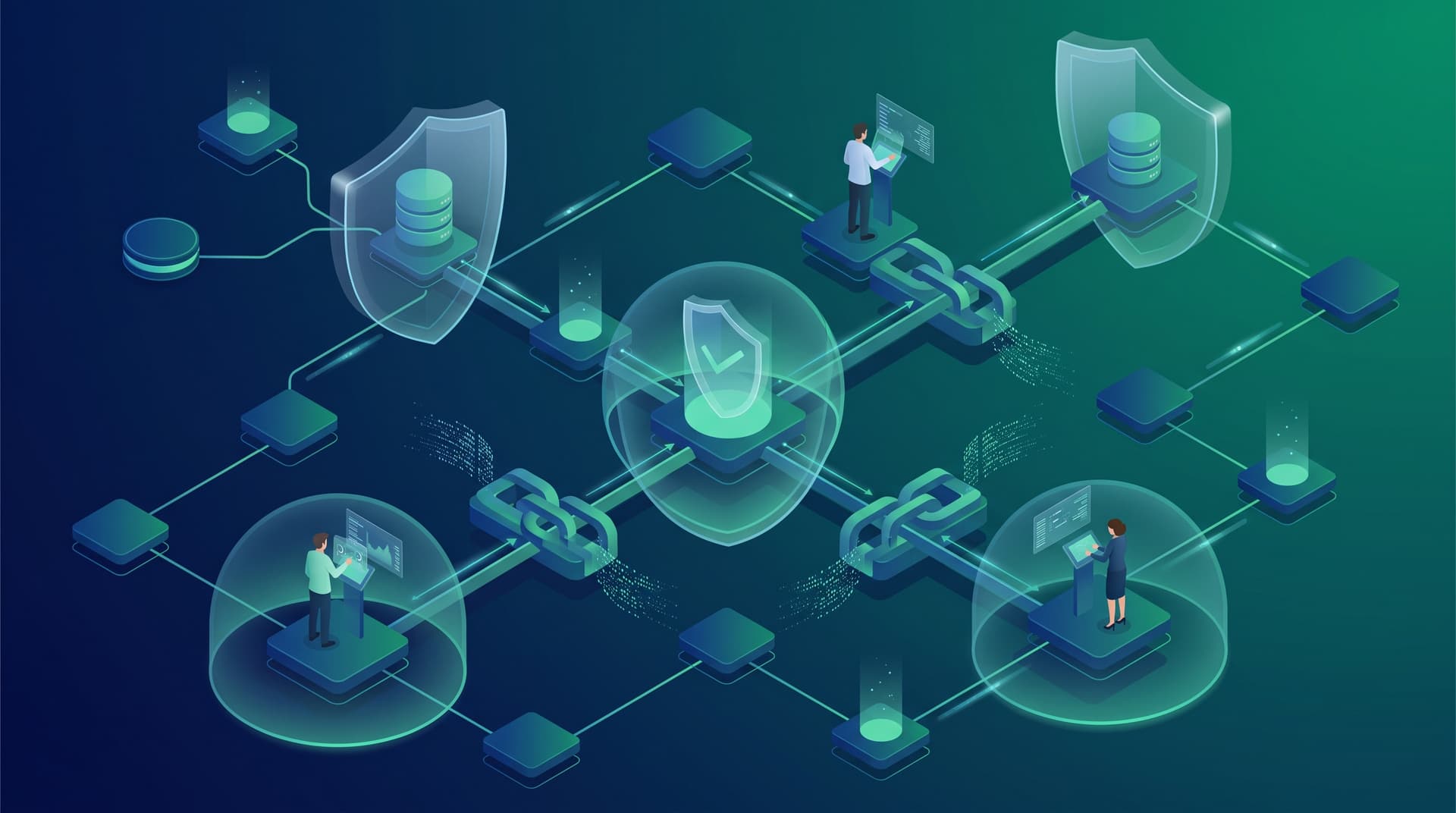
- Strict Data Boundaries: AI models must be restricted from accessing unauthorized data stores. Ring-fencing sensitive information ensures that large language models (LLMs) only process data explicitly approved for their use.
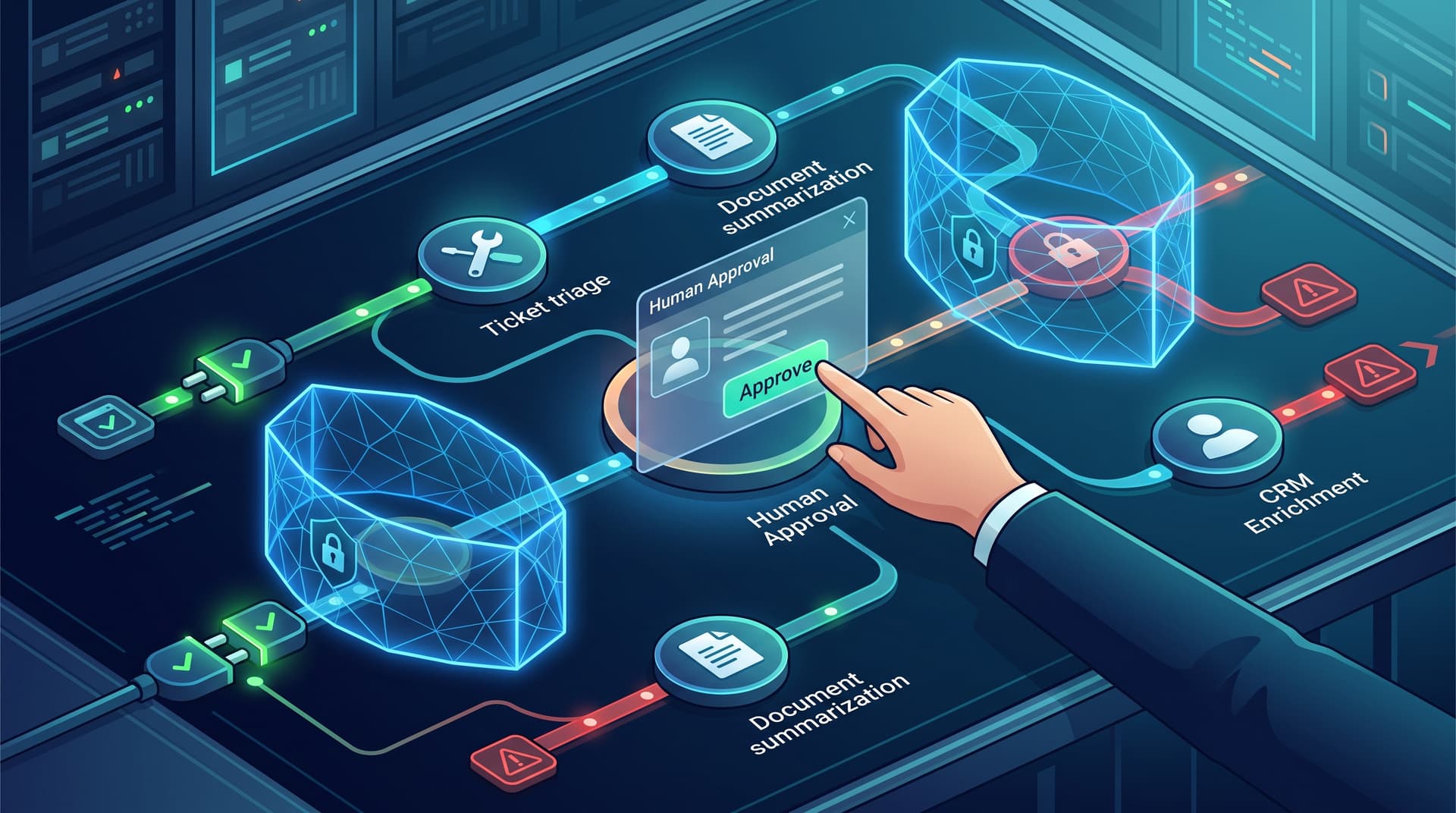
- Robust Approval Flows: Automation should not operate in a vacuum. Critical decisions generated by AI require human-in-the-loop approval processes, especially when modifying client records or authorizing financial transactions.
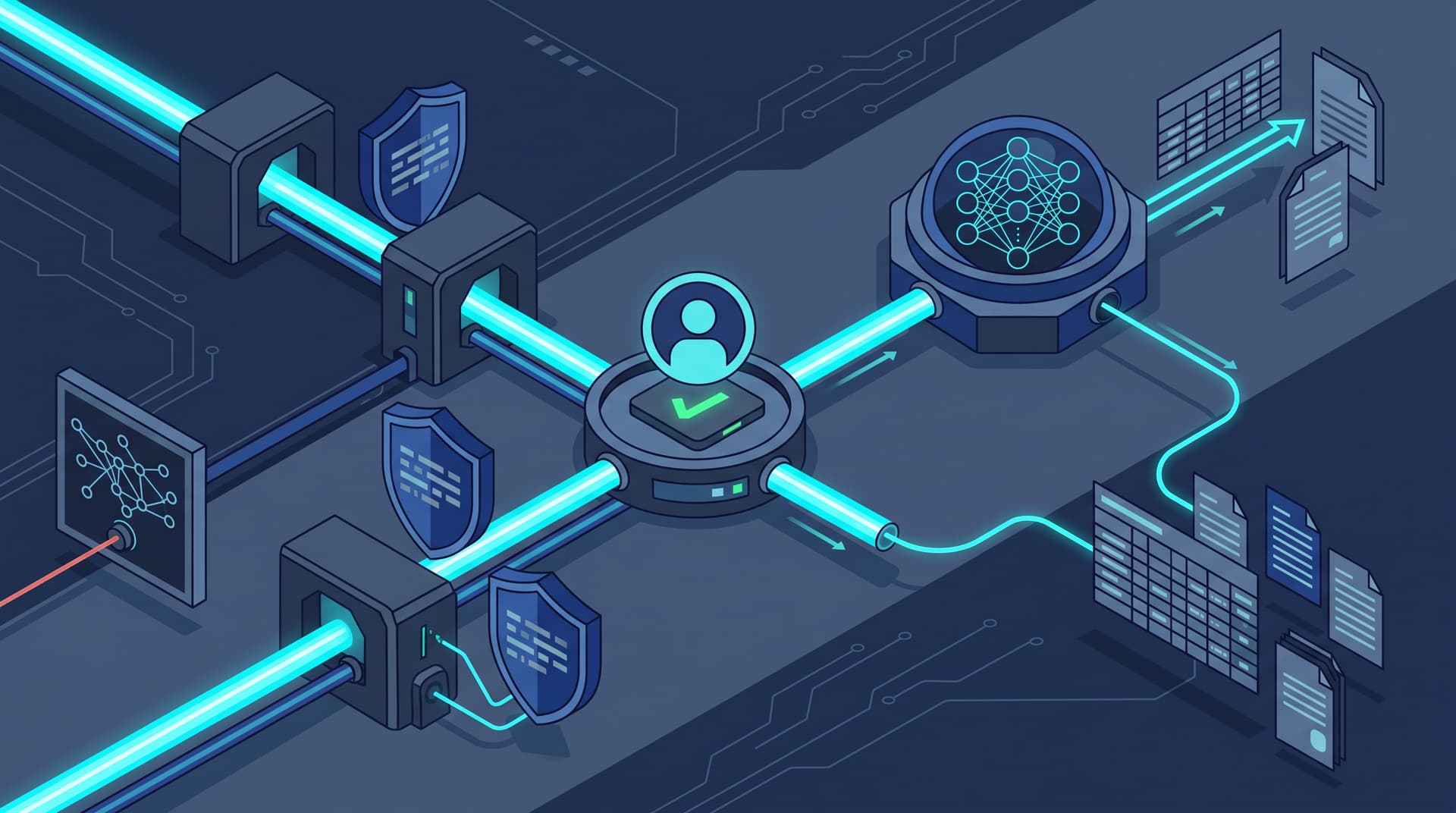
- Comprehensive Logging: Every AI-driven action must be auditable. Detailed logging tracks what data was sent to the model, the model's output, and the exact workflow path, enabling rapid incident response and compliance reporting.
- Connector Security: API connectors bridging AI models and enterprise platforms (like CRMs or ERPs) must enforce least-privilege access, utilizing secure authentication methods to prevent unauthorized data exfiltration.
Real-World MSP Use Cases (And Their Risks)
Managed Service Provider (MSP) clients frequently request AI to handle repetitive tasks. While these use cases drive immense value, they carry specific risks that governance must address.
1. Automated Ticket Triage
AI can rapidly analyze incoming IT support tickets, categorize them, and assign them to the appropriate tier or technician based on sentiment and urgency.
- The Risk: Support tickets often contain Personally Identifiable Information (PII), passwords, or proprietary network details. Routing this data through public, consumer-grade LLMs can result in massive data exposure. Governed workflows scrub sensitive data before processing or utilize private, tenant-isolated models.
2. Document Summarization
Legal, compliance, and sales teams use AI to distill lengthy contracts, vendor agreements, and meeting transcripts into actionable summaries.
- The Risk: Intellectual property leakage is a primary concern, alongside AI "hallucinations"—where the model invents contract terms or misinterprets critical clauses. Governed adoption mandates that all AI-generated summaries pass through a human verification step before being used for executive decision-making.
3. CRM Data Enrichment
AI workflows can scrape public data sources or analyze email threads to automatically update CRM records, ensuring sales teams have the most current contact details and company information.
- The Risk: Without guardrails, an AI agent might overwrite accurate historical data with incorrect or hallucinated information, corrupting the database. Implementing strict approval flows ensures that CRM updates are staged for review before permanent commits are made.
Securing Your AI Future
Integrating AI into your daily operations does not require sacrificing security. By focusing on data boundaries, comprehensive logging, and human-in-the-loop approvals, organizations can harness the power of AI automation while fully mitigating the risks of shadow IT.
Ready to explore what safe AI looks like in practice? Talk to Bitscaled about AI workflow pilots designed with built-in guardrails and measurable ROI.