Case studies

Representative work from real managed IT pressure

These anonymized examples show how Bitscaled approaches support stability, security hygiene, backup confidence, automation, and executive visibility for SMB teams.

Bitscaled Technology MSP banner

Outcome pattern

Clear ownership, safer systems, and visible next actions.

Engagement examples

What the work looks like in practice

The specifics change by environment, but the operating pattern is consistent: understand the risk, fix the ownership gap, and leave a usable support model behind.

Healthcare operations case study

Healthcare operations

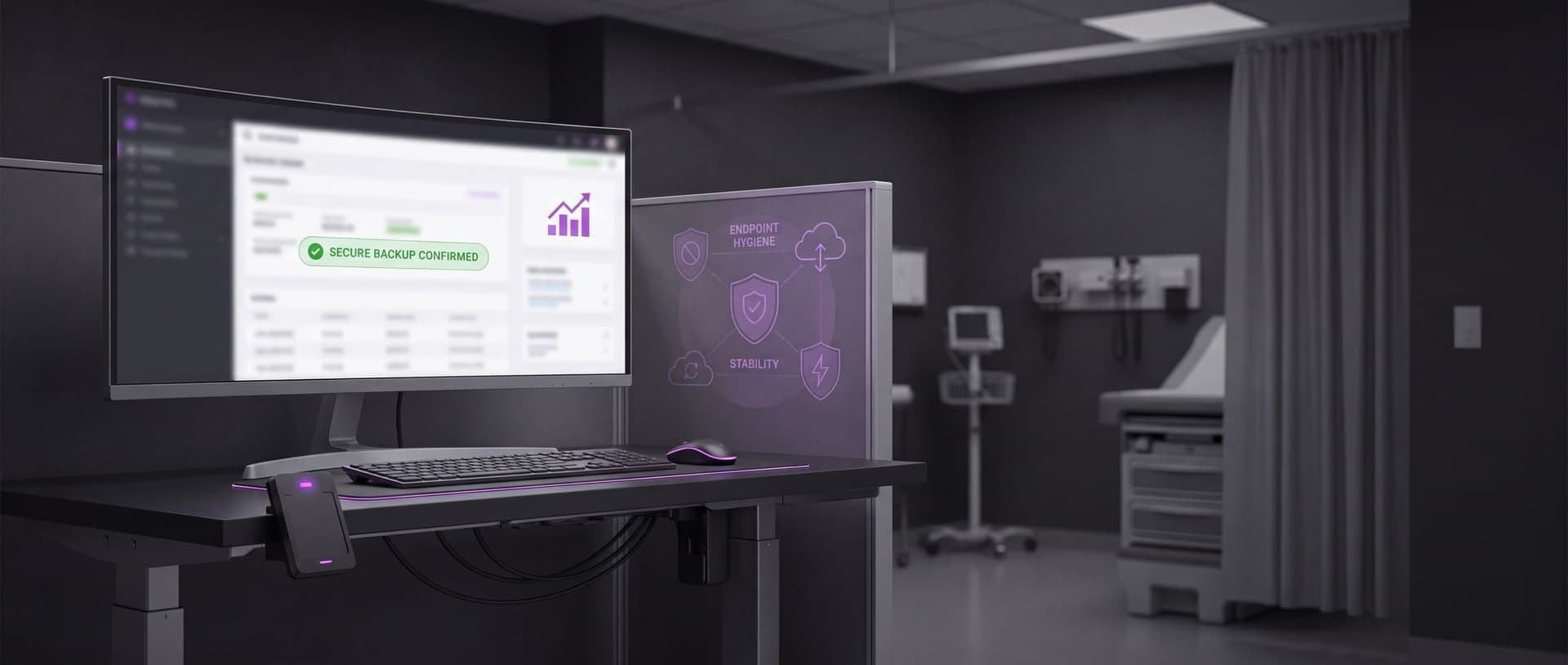
Stabilizing support for a growing care team

A small clinical team needed clearer support ownership, better endpoint hygiene, and backup confidence without adding internal IT headcount.

Bitscaled response

  • Mapped recurring support issues into a practical response model.
  • Reviewed identity, endpoint, and backup controls against operational risk.
  • Created a plain-language support path for urgent and routine requests.

Representative outcomes

  • Fewer unresolved ownership gaps between vendors and internal staff.
  • Cleaner security and backup documentation for business reviews.
  • A more predictable intake path for clinical-impacting support needs.
Manufacturing floor case study

Manufacturing floor

Reducing plant downtime from fragile IT handoffs

Production leadership had visibility into symptoms but not the network, device, and escalation dependencies behind them.

Bitscaled response

  • Documented the production-critical infrastructure path.
  • Separated urgent continuity issues from routine workstation support.
  • Prioritized monitoring and remediation around operational chokepoints.

Representative outcomes

  • Sharper escalation paths for production-affecting incidents.
  • Better planning around network, endpoint, and vendor dependencies.
  • A practical roadmap for resilience work after the immediate fixes.
Professional services case study

Professional services

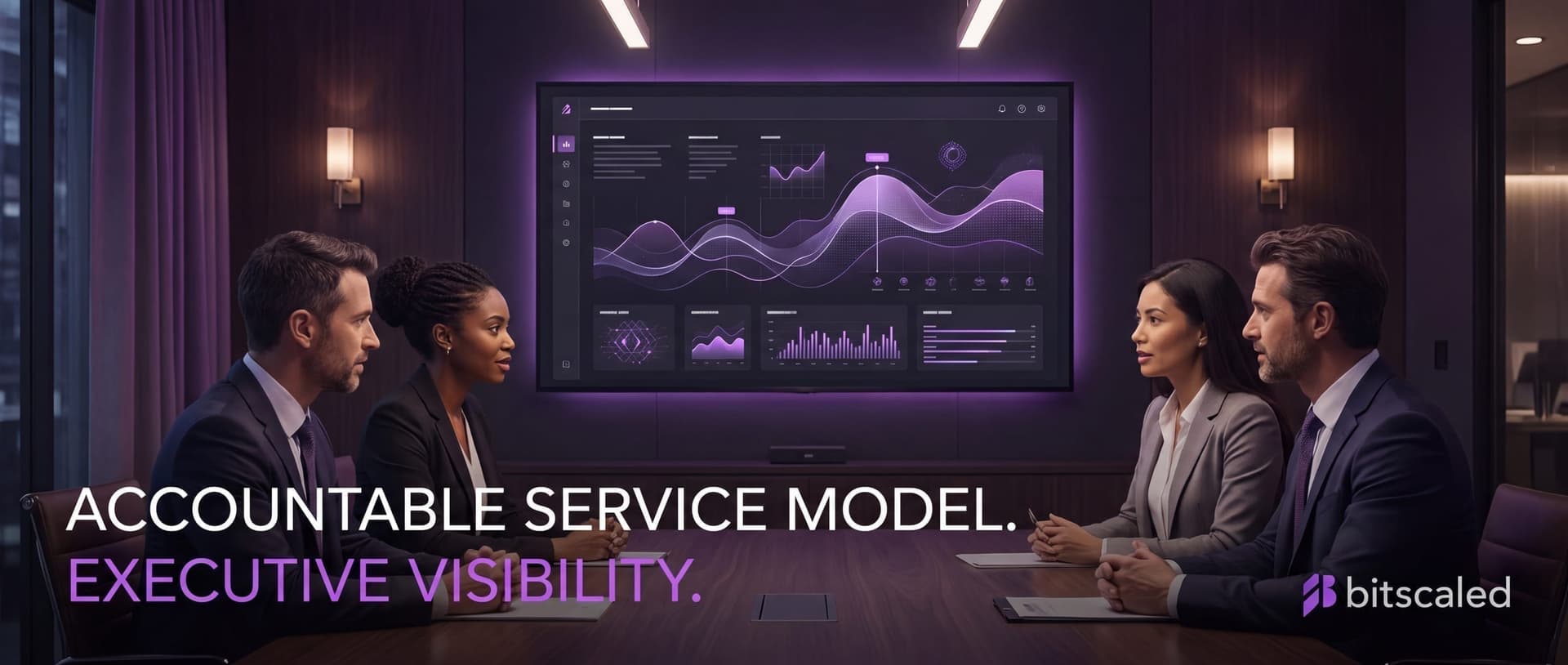
Turning scattered tools into an accountable service model

A client-facing team had too many manual follow-ups, inconsistent ticket context, and limited reporting confidence.

Bitscaled response

  • Reviewed support workflows from request intake through resolution.
  • Separated automation candidates from process issues that needed ownership.
  • Built reporting expectations around service visibility and next actions.

Representative outcomes

  • Clearer accountability for active work and stale follow-ups.
  • Better signal for which automations were worth building first.
  • Improved executive visibility without exposing internal operating noise.

How we measure progress

Proof is operational, not decorative

Bitscaled case-study work focuses on visible improvements a client can keep using: cleaner documentation, sharper escalation, reduced ambiguity, and better review evidence.

Discovery before scope

We map the current environment and failure modes before recommending recurring coverage or remediation.

Security-aware delivery

Access, backup, endpoint, and vendor decisions are reviewed as part of the operating model, not as an afterthought.

Operational cadence

Engagements leave behind clearer response paths, priorities, and next-step ownership for the client team.

Bring us the messy version of the problem

The first conversation should clarify what is broken, what is risky, and what should be handled first. From there, we can shape the right service path.