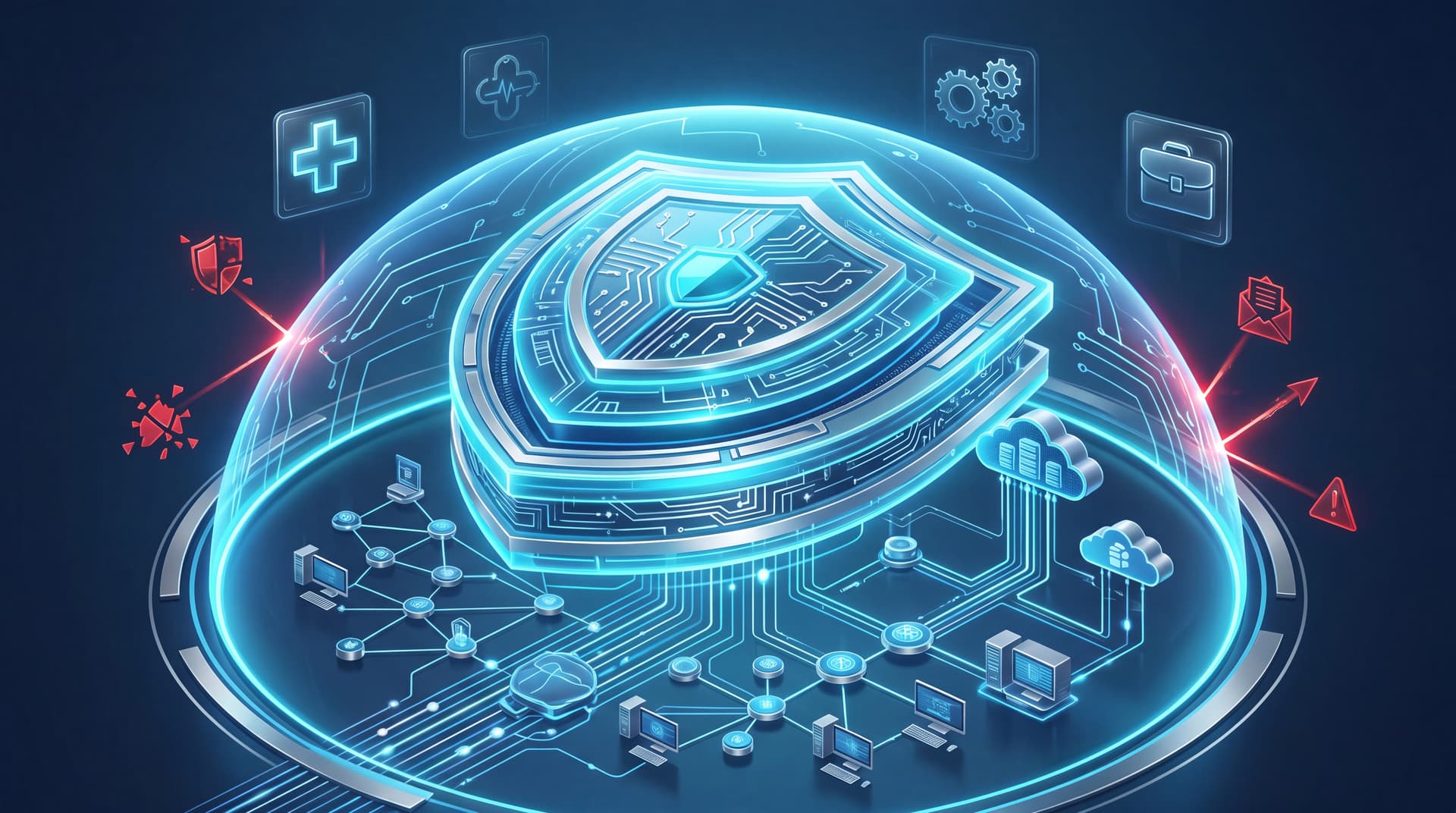
Navigating the Late-June 2026 Cyber Threat Landscape: Essential Defenses for SMBs\n\nAs we move through late June 2026, the cybersecurity landscape for small and medium-sized businesses (SMBs) continues to grow in complexity. Threat actors are increasingly targeting healthcare providers, manufacturing facilities, and professional services firms, recognizing that these sectors often possess highly sensitive data but may lack enterprise-grade security teams. Understanding the current threat matrix and deploying robust defense frameworks is no longer optional—it is a critical business imperative.\n\n## The Escalation of AI-Enhanced Phishing Campaigns\n\nPhishing remains the primary initial access vector for most cyberattacks. However, the campaigns observed in mid-2026 are highly sophisticated. Attackers are leveraging generative AI to craft flawless, context-aware emails that bypass traditional spam filters. For professional services firms dealing with financial transactions or healthcare organizations managing patient records, a single compromised credential can lead to devastating data breaches.\n\nActionable Defense: Transition from legacy multifactor authentication (MFA) to phishing-resistant authentication methods, such as FIDO2 security keys or biometrics. Furthermore, continuous security awareness training must be updated to reflect AI-generated social engineering tactics.\n\n## Ransomware Targeting Critical SMB Operations\n\nModern ransomware operators have shifted their focus toward operational disruption. In manufacturing, attackers are targeting Industrial Control Systems (ICS) and Operational Technology (OT) networks. In healthcare, the disruption of Electronic Health Records (EHR) systems puts patient safety at direct risk, increasing the pressure to pay extortion demands.\n\nActionable Defense: Implement rigorous endpoint security measures, including Endpoint Detection and Response (EDR) solutions. Maintain immutable backups that are physically and logically separated from the primary network to ensure rapid incident response and recovery without yielding to ransom demands.\n\n## Neutralizing Threats with a Zero Trust Architecture\n\nThe traditional 'castle-and-moat' security model is obsolete. A Zero Trust framework operates on the principle of 'never trust, always verify.' By assuming breach, Zero Trust limits lateral movement if an attacker successfully infiltrates the network. For SMBs, this means enforcing least-privilege access, micro-segmenting networks, and continuously validating the security posture of every device attempting to connect to corporate resources.\n\n## Leveraging Azure M365 for Enterprise-Grade Protection\n\nFor organizations utilizing the Microsoft ecosystem, Azure and Microsoft 365 offer powerful, built-in security capabilities that align perfectly with Zero Trust principles. Features such as Microsoft Entra ID provide robust identity and access management, while Microsoft Defender for Business delivers AI-driven endpoint protection specifically tailored for SMBs. Configuring features like Conditional Access policies ensures that only compliant devices and verified users can access sensitive company data.\n\n## Conclusion\n\nThe cyber threats of mid-2026 are relentless, but they are not unbeatable. By adopting a proactive security posture centered around Zero Trust and maximizing the capabilities of platforms like Azure M365, SMBs in healthcare, manufacturing, and professional services can build resilient, secure operations. Do not wait for a breach to prioritize your cybersecurity strategy.\n\nBook a discovery call with Bitscaled today to assess your vulnerabilities and fortify your defenses against the latest cyber threats.