Defending SMBs Against Q3 2026 Cyber Threats: A Strategic Approach
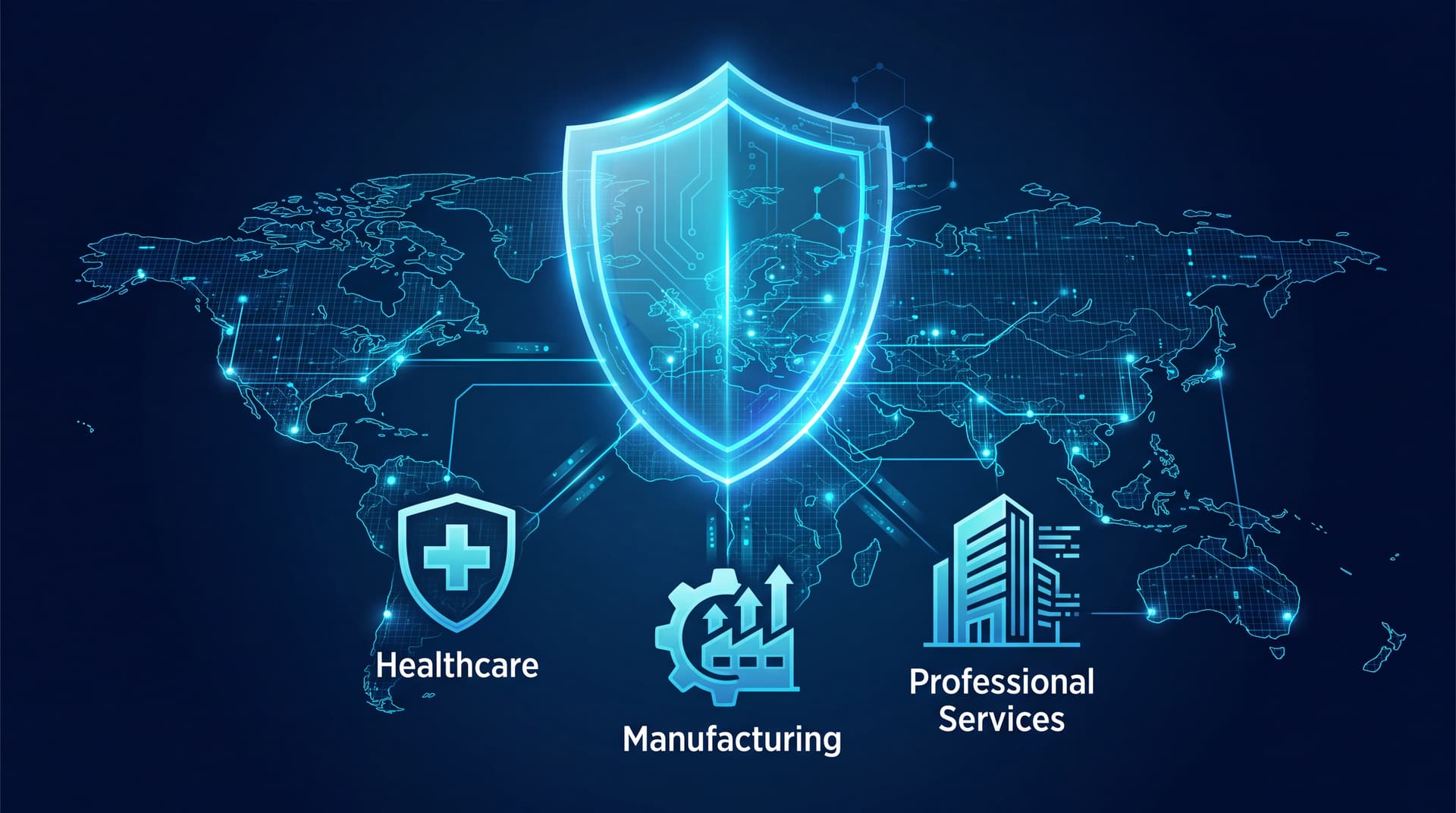
As we enter the third quarter of 2026, the cybersecurity threat landscape continues to grow in complexity. For small to medium-sized businesses (SMBs) in healthcare, manufacturing, and professional services, relying on legacy security models is no longer sufficient. Threat actors are deploying increasingly sophisticated tactics, making it critical for B2B technology decision-makers to adopt proactive defense strategies.
The Evolving Threat Landscape for SMBs
Cybercriminals are targeting specific vulnerabilities within critical industries, leveraging automation and advanced social engineering to breach defenses.
1. Ransomware Disruptions in Manufacturing
Manufacturing SMBs are facing a surge in ransomware attacks targeting the convergence of IT and Operational Technology (OT) networks. Attackers exploit legacy industrial control systems to halt production lines, forcing companies into costly downtime. Securing these environments requires strict network segmentation and real-time threat monitoring.
2. Sophisticated Phishing in Professional Services
Professional services firms handle sensitive financial and legal data, making them prime targets for Business Email Compromise (BEC). Phishing campaigns in mid-2026 have become highly targeted, utilizing AI-generated lures to bypass traditional email gateways. These attacks aim to compromise credentials and intercept wire transfers.
3. Endpoint Vulnerabilities in Healthcare
Healthcare providers are rapidly adopting Internet of Medical Things (IoMT) devices to improve patient care. However, these endpoints often lack native security features, creating new entry points for cybercriminals. Protecting patient health information (PHI) demands rigorous endpoint security and continuous device authentication.
Fortifying Defenses with Zero Trust and Azure M365
To combat these evolving threats, SMBs must shift from perimeter-based security to a modern, identity-centric approach.
Implementing a Zero Trust Architecture
The core principle of Zero Trust is simple: never trust, always verify. By implementing Zero Trust, SMBs ensure that every access request is fully authenticated, authorized, and encrypted before granting access, regardless of where the request originates.
Leveraging Azure and Microsoft 365 Security
Microsoft's security ecosystem provides enterprise-grade protection scaled for SMBs:
- Conditional Access Policies: Automatically block or grant access based on user location, device compliance, and real-time risk levels.
- Microsoft Defender for Endpoint: Deliver next-generation antivirus and endpoint detection and response (EDR) to identify and neutralize threats across all devices.
- Identity Protection: Utilize Azure Active Directory (Microsoft Entra ID) to detect anomalous sign-in behaviors and strictly enforce multi-factor authentication (MFA).
Conclusion
The cybersecurity threats of mid-2026 demand a resilient, forward-thinking approach. By embracing Zero Trust principles and maximizing the capabilities of Azure M365 security frameworks, SMBs in healthcare, manufacturing, and professional services can safeguard their critical assets against ransomware, phishing, and endpoint vulnerabilities.
Ready to secure your business against the latest cyber threats? Book a discovery call with Bitscaled today to build a customized, robust defense strategy.