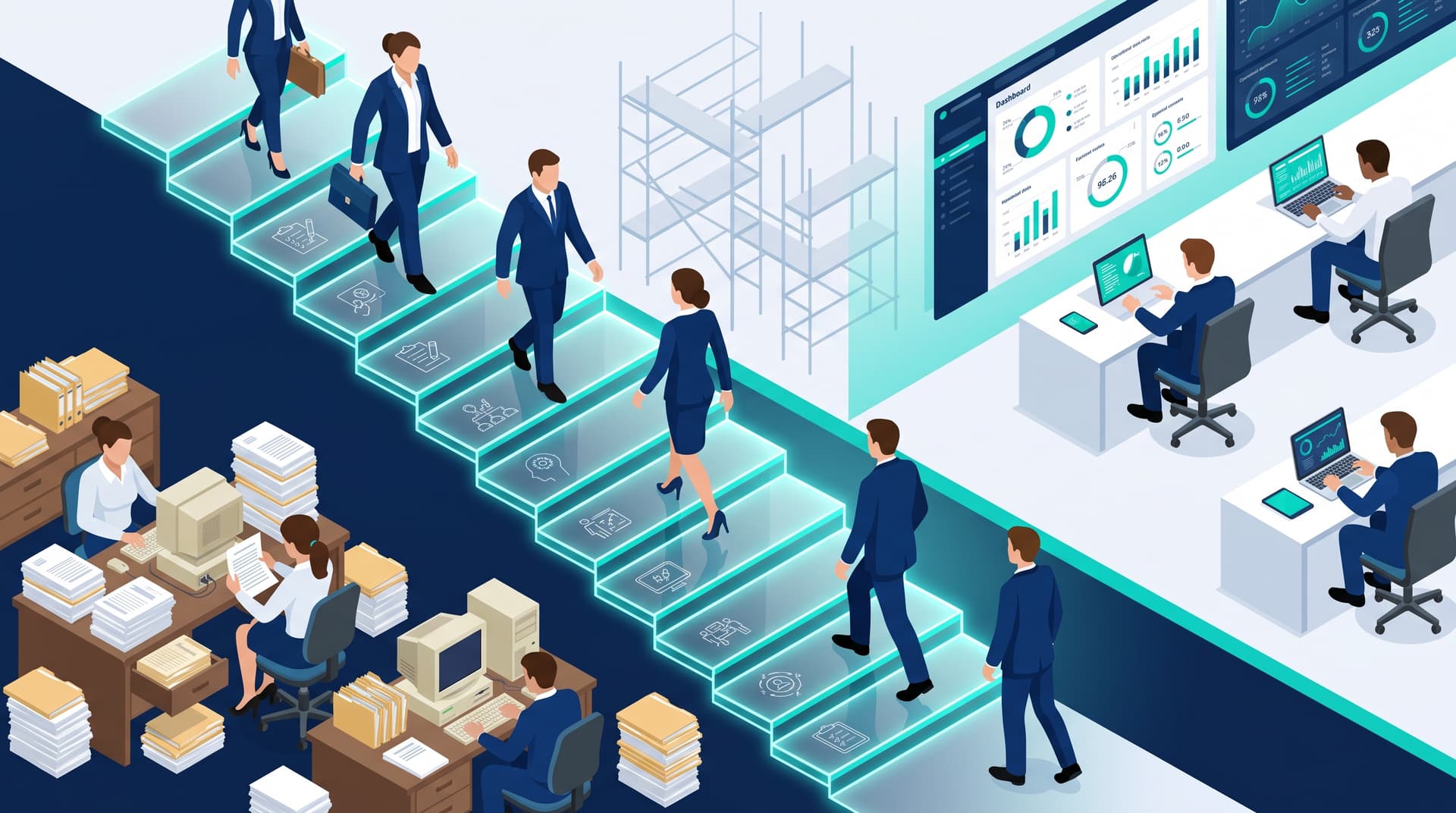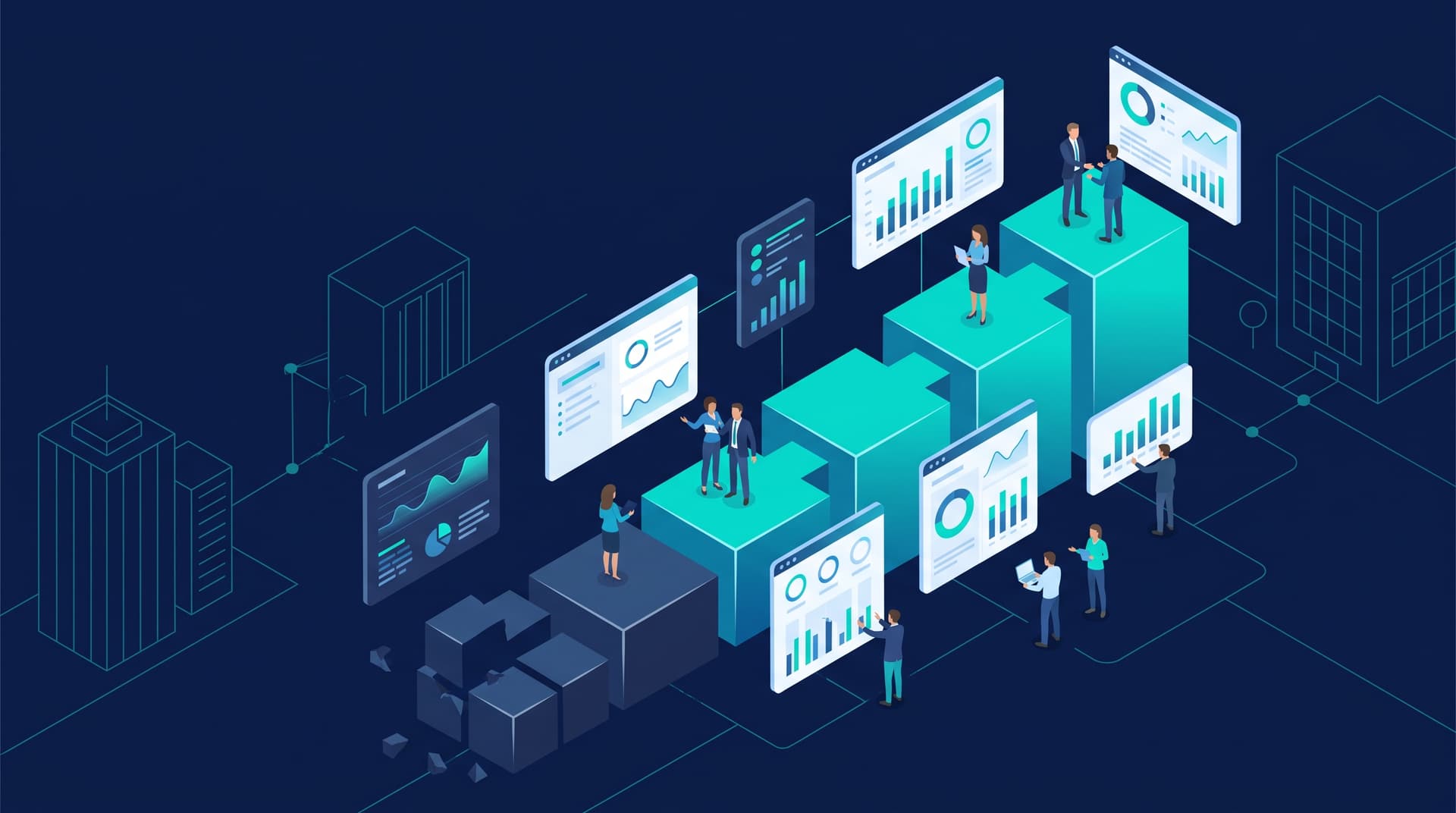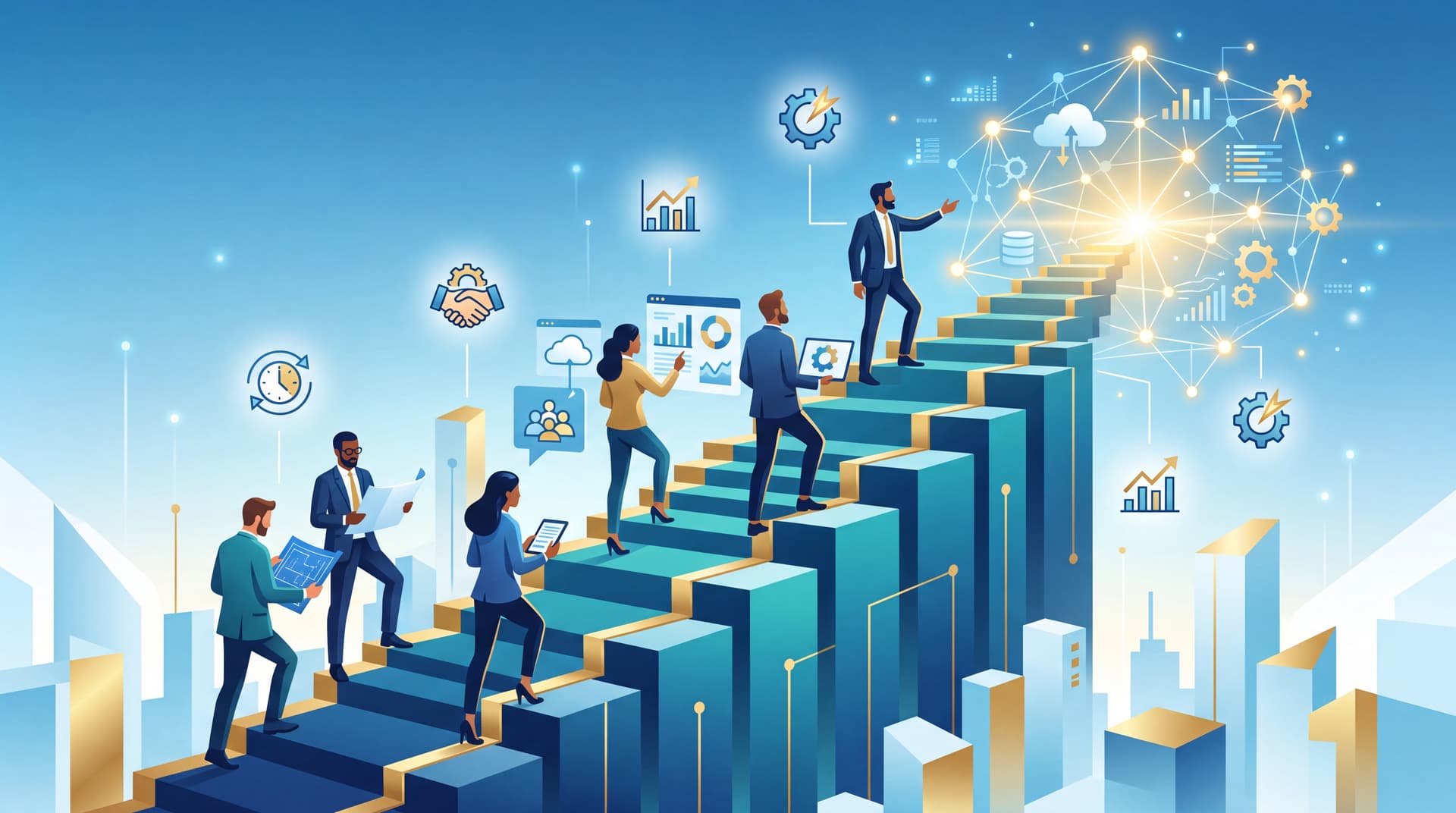
Many executives view digital transformation as a massive, multi-year overhaul—a "big-bang" replatforming that promises to fix every operational inefficiency overnight. In reality, these monolithic projects often become costly boondoggles plagued by low user adoption, budget overruns, and scope creep.
For small to mid-sized businesses (SMBs), a smarter, more sustainable path exists. By prioritizing phased delivery, robust change management, and continuous adoption tracking, organizations can modernize operations without disrupting their core business.
The Advantage of Phased Delivery
Rather than attempting to replace all legacy systems simultaneously, a phased approach breaks modernization into manageable, high-value initiatives. This strategy offers several critical advantages:
- Risk Mitigation: Deploying smaller changes isolates potential issues, preventing catastrophic system-wide failures.
- Accelerated ROI: Quick wins fund future phases. By solving immediate bottlenecks first, the business realizes value in months rather than years.
- Agility: A phased roadmap allows leadership to pivot based on market changes or new technological advancements without discarding millions in sunk costs.
Change Management: The True Measure of Success
New software is useless if your team refuses to use it. True digital transformation relies heavily on change management—guiding your workforce through the transition.
Measuring adoption is just as important as measuring technical uptime. Executives should track metrics such as daily active usage, reduction in legacy process workarounds, and employee feedback scores. If a new system is deployed but the team reverts to old spreadsheets, the transformation has failed, regardless of the technology's sophistication.
The SMB Digital Maturity Model: Self-Score Your Organization
To chart a course forward, you must first understand where you stand. Use this simplified maturity model to self-score your current operations:
Level 1: Manual & Reactive (Score: 1-2)
- Heavy reliance on paper, spreadsheets, and manual data entry.
- Siloed departments with little to no cross-functional data sharing.
- IT is viewed purely as a cost center for fixing broken hardware.
Level 2: Opportunistic Digitization (Score: 3-5)
- Individual departments use SaaS tools, but systems are not integrated.
- Some automated reporting exists, but requires manual data manipulation.
- Initial awareness of the need for structured change management.
Level 3: Integrated & Process-Driven (Score: 6-8)
- Core business systems (ERP, CRM, Finance) communicate seamlessly.
- Leadership uses real-time dashboards to make proactive decisions.
- Change management is a formal part of every new technology rollout.
Level 4: Optimized & Predictive (Score: 9-10)
- Automation and AI workflows handle routine tasks across the organization.
- Technology adoption is near 100%, with employees actively suggesting digital improvements.
- Technology is recognized as a primary driver of business growth and competitive advantage.
Next Steps for Modernization
Moving from one maturity level to the next doesn't require a chaotic, all-at-once disruption. It requires a strategic, iterative roadmap focused on clear outcomes and human adoption.
Ready to map out your next steps without the risk of a multi-year IT boondoggle? Plan a phased modernization roadmap with Bitscaled today.