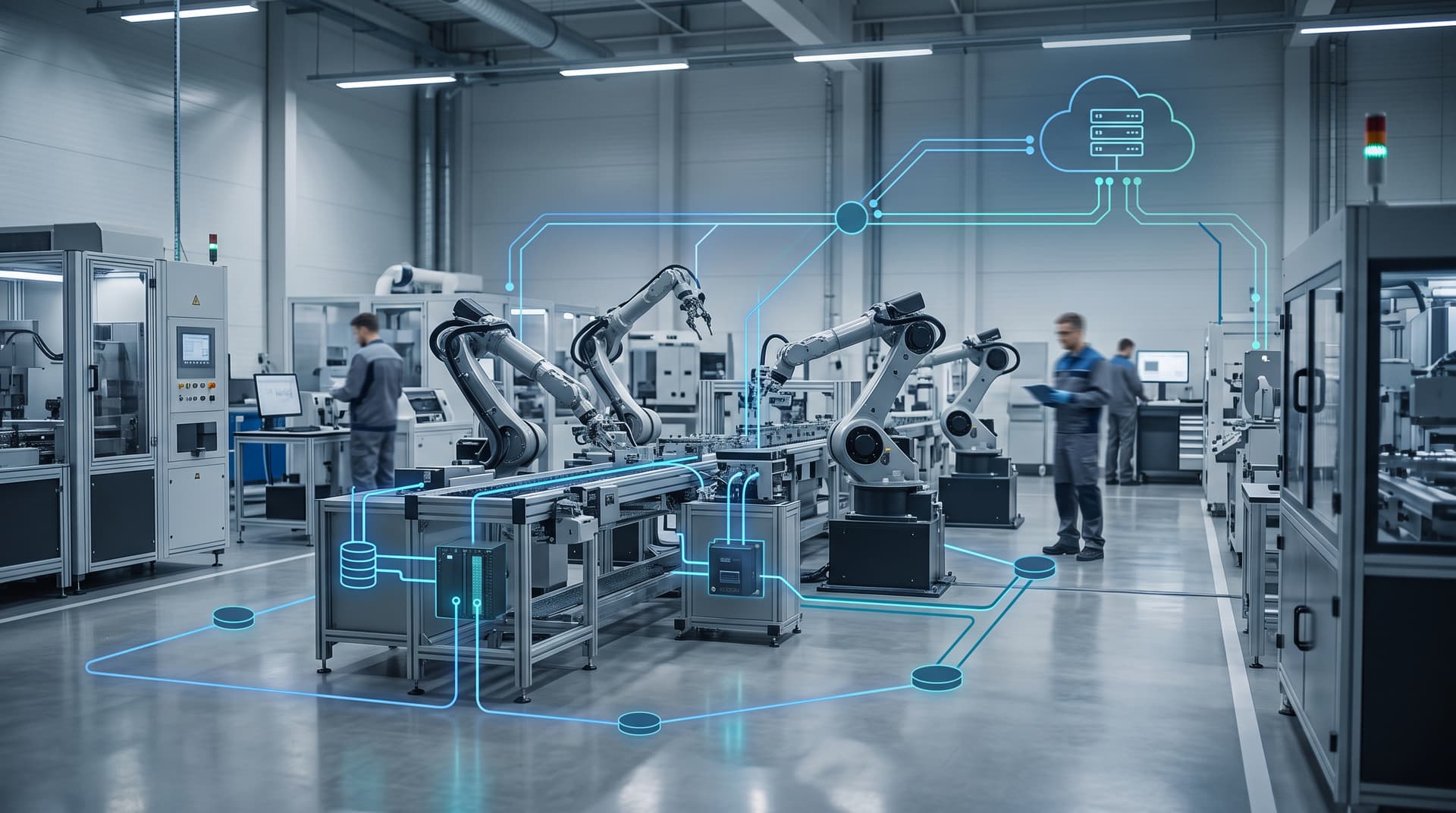
Synchronizing the Plant Floor: ERP Availability and OT/IT Alignment
In advanced manufacturing, unplanned downtime is one of the most expensive anomalies a facility can face. While the exact financial impact varies by scale and sector, the cascading costs are universal: idled labor, lost yield, missed shipping windows, and severe SLA penalties from downstream customers. Frequently, the root cause of these stoppages isn't a mechanical failure, but a digital one.
When enterprise IT systems and operational technology (OT) are misaligned, production grinds to a halt. To maintain consistent plant uptime, operations leaders must seamlessly integrate ERP availability, enforce strict OT/IT boundaries, optimize patch windows, and secure supplier networks.
ERP Availability as the Production Heartbeat
Modern manufacturing relies on Enterprise Resource Planning (ERP) systems to orchestrate the plant floor. Bills of material, inventory levels, routing instructions, and production schedules all live within the ERP. If the ERP goes down or loses connectivity to the plant floor, automated lines stop because they lack the necessary data to continue operations. Ensuring high ERP availability requires redundant network architecture and failover mechanisms that keep the plant floor connected to mission-critical data at all times.
Enforcing OT/IT Boundaries
While the ERP must communicate with the plant floor, flat networks introduce massive risk. A malware infection in the corporate accounting department should never be able to pivot into the manufacturing execution system (MES) or programmable logic controllers (PLCs).
Establishing strict OT segmentation is non-negotiable. By implementing proper firewalls, demilitarized zones (DMZs), and strict access controls between IT and OT environments, operations leaders can ensure that data flows securely without exposing vulnerable legacy plant equipment to enterprise IT threat vectors.
Navigating Patch Windows Without Disrupting Yield
One of the most common friction points between IT and plant managers is system patching. Traditional IT schedules patch windows for evenings or weekends, assuming systems are idle. However, advanced manufacturing facilities often run 24/7. Taking systems offline for an update can directly disrupt yield.
Resolving this requires a manufacturing IT approach. Patching must be phased, tested in a sandbox environment that mirrors the OT setup, and executed during planned maintenance windows or changeovers. This ensures security vulnerabilities are addressed without sacrificing production targets.
Securing Supplier Portals
Advanced manufacturing is highly dependent on just-in-time supply chains. Supplier portals that feed data directly into the ERP are essential for maintaining inventory flow, but they also represent a significant third-party risk. If a supplier's credentials are compromised, malicious actors could manipulate production schedules or inject ransomware into the ERP. Securing these portals through multi-factor authentication (MFA), role-based access controls, and continuous monitoring is vital to protecting the plant's operational integrity.
Conclusion
Aligning your ERP system with plant floor operations requires a delicate balance of connectivity, security, and specialized maintenance. By establishing clear OT/IT boundaries and synchronizing IT maintenance with production schedules, you can protect your facility from unnecessary downtime.
Stabilize production systems with Bitscaled manufacturing IT programs.