Securing Compliance Through Workspace Governance
In today's regulatory landscape, demonstrating compliance is just as critical as achieving it. For compliance-minded clients and security stakeholders, the ability to rapidly produce verifiable trust evidence is an operational necessity. The Trust & Governance module within Bitscaled Workspace (/platform/governance) is engineered to centralize this process, transforming how organizations manage, protect, and distribute sensitive compliance data.
The Power of Immutable Evidence
At the core of our governance architecture is the concept of immutable evidence. When an audit occurs or a client requests proof of security controls, organizations cannot rely on easily altered spreadsheets or disparate logs. Workspace Governance captures security events, policy acknowledgments, and system state changes as tamper-proof records. This cryptographic certainty ensures that all compliance evidence remains verifiable and trustworthy from the moment it is generated, giving auditors and stakeholders absolute confidence in your data.
Centralizing Legal Artifacts
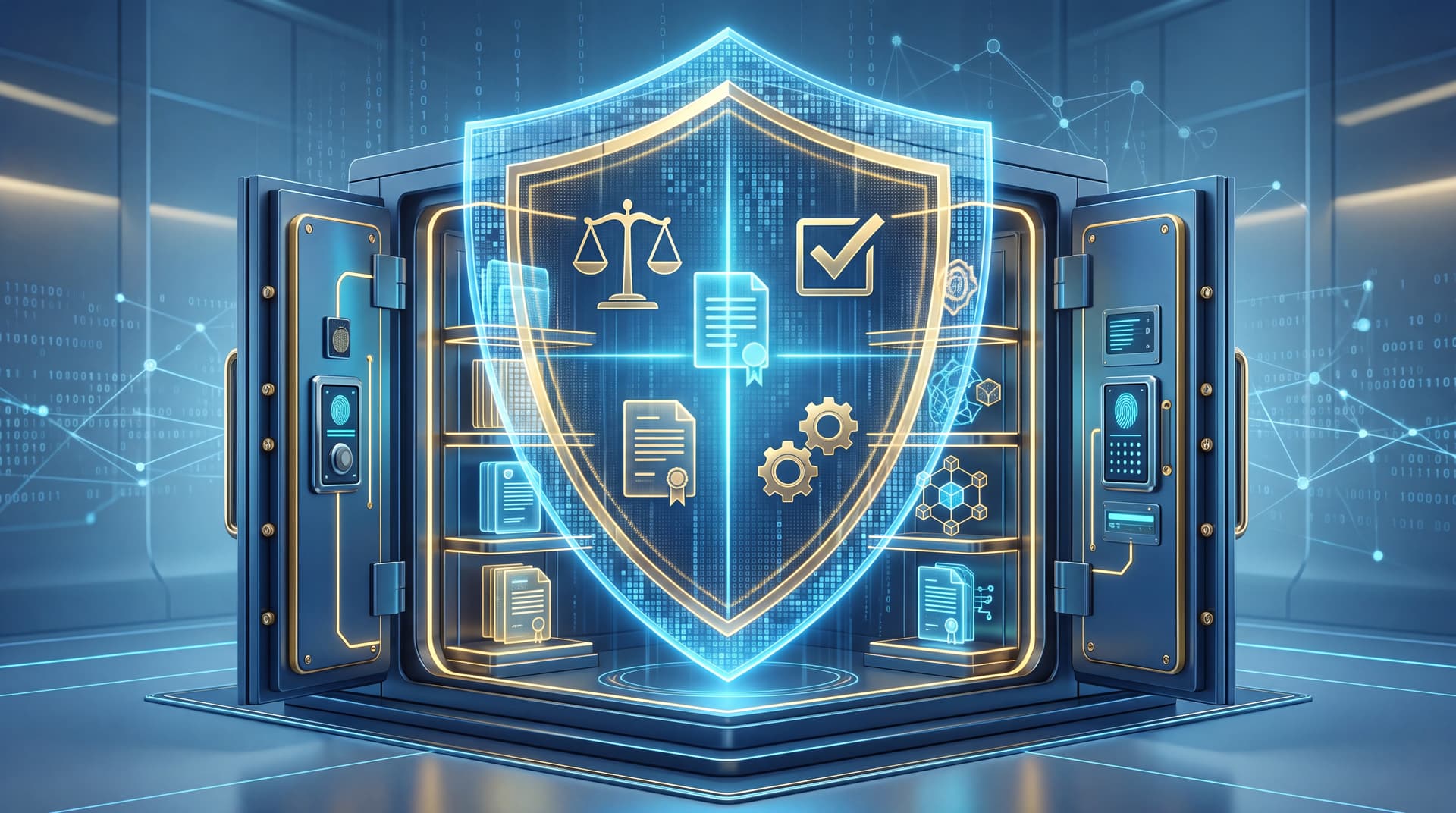
Managing legal artifacts—such as Data Processing Agreements (DPAs), Non-Disclosure Agreements (NDAs), and Service Level Agreements (SLAs)—often involves navigating a fragmented maze of shared drives and email attachments. The Workspace Trust Center consolidates these critical documents into a single, secure vault. By centralizing legal artifacts, organizations can ensure that the most current and authoritative versions are always deployed, referenced, and protected from unauthorized modification.
Role-Aware Access Control
Not all evidence should be available to every user. Workspace Governance utilizes strict role-aware access controls to protect sensitive compliance documentation. Internal administrators can define granular permissions, ensuring that:
- Auditors receive read-only access to specific time-bound logs and system states.
- Clients can view public attestations and mutually signed agreements relevant only to their accounts.
- Internal Security Teams maintain full administrative oversight of the entire trust center.
This role-based architecture minimizes the risk of unauthorized data exposure while drastically streamlining the audit and procurement processes.
Streamlining How Clients Consume Attestations
The ultimate goal of a trust center is to reduce friction for the end user and your security personnel. Rather than manually responding to repetitive security questionnaires or emailing sensitive certifications, organizations can direct stakeholders to their Workspace Governance portal. Here, clients can autonomously consume compliance attestations, such as SOC 2 reports, ISO certifications, and continuous security metrics, in a highly curated, self-service environment.
Conclusion
Maintaining a robust governance posture requires more than just following best practices; it requires verifiable proof, secure artifact management, and intelligent access control. By leveraging a dedicated trust center, you can prove your security posture to the market with minimal overhead.
Call to action: See how Workspace centralizes trust and legal artifacts to streamline your compliance operations today.