The Flaw in Replatforming Everything at Once
For many small and mid-sized businesses (SMBs), traditional digital transformation initiatives feel like high-stakes gambles. Multi-year "big-bang" replatforming efforts often run over budget, disrupt operational stability, and fail to secure internal buy-in. When legacy systems are ripped away overnight, teams struggle with whiplash, leading to shadow IT workarounds and lost productivity.
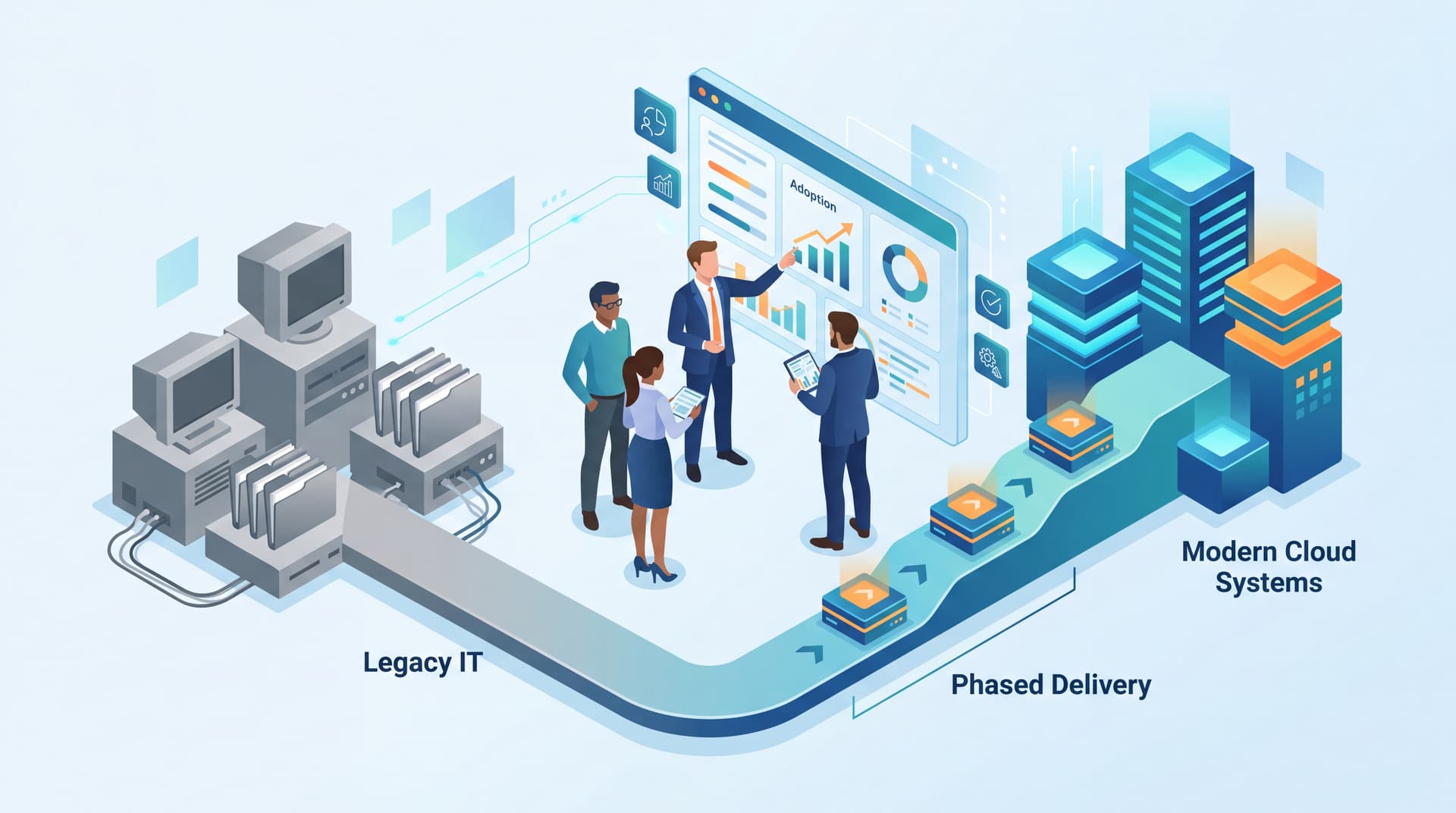
A pragmatic approach prioritizes incremental, high-value delivery. By modernizing operations in targeted phases, leadership minimizes risk while delivering visible efficiency gains every quarter.
The SMB Digital Modernization Maturity Model
To determine where your organization should focus first, evaluate your operations against this four-tier self-scoring framework:
- Level 1: Reactive & Manual. Core processes rely on spreadsheets, manual data entry, and isolated legacy software. System failures disrupt daily output.
- Level 2: Connected Core. Key departments use cloud-hosted tools, but integration is minimal. Workflows require periodic manual reconciliation.
- Level 3: Optimized & Automated. Cross-functional workflows are automated via APIs. Data flows dynamically across operations with real-time status visibility.
- Level 4: Continuous Innovation. Processes are continuously measured and refined. Intelligence tools proactively identify bottlenecks and suggest optimizations.
Scoring your operations highlights immediate priority zones, allowing you to sequence modernizations based on operational ROI rather than theoretical completeness.
Executing Phased Delivery Without Operational Friction
Phased delivery breaks transformation into actionable 60-to-90-day sprints. Each cycle focuses on a specific operational friction point—such as automating invoice intake or unifying client onboarding data.
- Isolate the Bottleneck: Identify workflows with high transaction volumes and high error rates.
- Deploy Modular Tools: Introduce lightweight cloud applications or integration middleware that connect existing systems rather than replacing them entirely.
- Validate and Refine: Run side-by-side pilot testing with a single department before rolling out changes company-wide.
This modular strategy preserves business continuity while ensuring early wins fund subsequent transformation phases.
Operationalizing Change Management and Adoption
Technology is only as effective as user adoption. True change management requires proactive operational support, clear communication, and empathetic feedback loops:
- Identify Internal Champions: Empower power-users across departments to train peers and advocate for streamlined workflows.
- Iterative Training: Replace lengthy upfront training sessions with concise micro-learning modules tied to immediate daily tasks.
- Reward Process Compliance: Align team incentives with system adoption milestones to reinforce continuous usage.
Measuring True Adoption Metrics
Measuring success requires tracking human adoption alongside system performance:
- Time-to-Value (TTV): Days required for a user cohort to complete core tasks faster in the new system versus legacy tools.
- Active Workflow Rate: Percentage of daily business transactions processed via automated pathways without manual override.
- User Support Ticket Trends: Tracking the drop in operational help requests as team familiarity matures.
Step Confidently Into Pragmatic Transformation
Modernization does not demand total operational disruption. By focusing on phased delivery, structured change management, and measurable adoption, SMB leadership builds a resilient enterprise capable of adapting to future market shifts.
Ready to build an actionable strategy without multi-year project fatigue? Plan a phased modernization roadmap with Bitscaled today.