Defending the Modern SMB: Building Five-Layered Operations and Evaluating Active MDR
For small and mid-sized businesses (SMBs), cybersecurity strategy has fundamentally shifted. Traditional edge defenses, such as simple network firewalls and basic desktop antivirus software, are no longer sufficient against modern credential harvesting, lateral movement, and supply chain threats. To maintain operational resilience, organizations must adopt a defense-in-depth model that distributes security controls across every layer of the technology stack.
Building an effective posture does not require enterprise-level budgets, but it does require clarity on defense architecture, operational response capabilities, and realistic resource allocation. Through modern Bitscaled Cybersecurity Services, organizations can establish resilient operational controls that combine automated defenses with expert monitoring.
The Five Pillars of SMB Layered Defense
A resilient security architecture relies on independent, overlapping controls. If an adversary bypasses one security layer, subsequent controls must detect, slow, or contain the intrusion. For SMBs, five core technical and operational pillars form the backbone of modern defense in depth.
1. Identity Infrastructure and Access Control
Identity serves as the primary security boundary in cloud-native and hybrid workplaces. Weak identity controls allow attackers to leverage legitimate credentials, rendering network-level blocks ineffective.
- Multi-Factor Authentication (MFA): Enforce phishing-resistant MFA (such as FIDO2 security keys or authenticator apps using push matching) across all primary productivity environments and remote access gateways.
- Least Privilege Access: Apply role-based access controls (RBAC) to ensure employees retain only the permissions required for their immediate duties. Regularly audit administrative permissions.
- Conditional Access Policies: Restrict authentication attempts based on context, such as device health, geographical anomalies, and risk scores.
2. Email and Communication Security
Email remains the predominant entry point for initial access, business email compromise (BEC), and financial fraud. Perimeter spam filters alone cannot stop identity-based email threats.
- Advanced Inbox Protection: Deploy API-integrated security solutions that inspect incoming messages for zero-day phishing payloads, malicious links, and social engineering patterns.
- Authentication Protocols: Enforce strict SPF, DKIM, and DMARC policies to prevent domain spoofing and preserve brand integrity. IT teams can test their current external exposure using the Bitscaled Email Spoof Test.
- Out-of-Band Verification: Establish formal business protocols requiring non-email verification (e.g., voice or secondary authorization) for wire transfers and payroll modifications.
3. Endpoint Security and Hardening
Endpoints represent the operational surface where users interact with critical data. Endpoint protection must go beyond signature-based scanning.
- Endpoint Detection and Response (EDR): Deploy telemetry-rich EDR software on all workstations and server infrastructure to capture behavior, detect abnormal process execution, and support immediate network isolation.
- Patch and Configuration Management: Automate operating system and third-party application updates. Disable outdated protocols (such as SMBv1) and restrict administrative rights on user endpoints.
- Device Compliance Enforcement: Block unmanaged or non-compliant personal devices from accessing corporate cloud applications.
4. Immutable Backup and Recovery Architecture
When preventative and detective controls fail, resilient data backup infrastructure represents the final defense against operational disruption and ransomware attacks.
- The 3-2-1-1-0 Rule: Store three copies of critical data on two distinct media types, with one copy offsite, one copy strictly immutable or air-gapped, and zero unverified restoration procedures.
- Immutable Storage: Utilize write-once-read-many (WORM) cloud repositories or isolated vault environments to prevent unauthorized encryption or backup deletion during an incident.
- Routine Restoration Testing: Perform quarterly restoration exercises to validate recoverability speed and data integrity under simulated disaster conditions. Explore integrated capabilities within Bitscaled Backup & Recovery Solutions.
5. Human Response and Operational Awareness
Technology alone cannot block every sophisticated threat. Operational readiness depends on how employees recognize anomalies and how quickly IT teams respond.
- Pragmatic Security Awareness: Conduct regular, low-friction training focused on realistic phishing tactics, credential hygiene, and prompt anomaly reporting.
- No-Fault Reporting Channels: Encourage employees to report suspicious emails or unexpected MFA prompts immediately without fear of administrative penalties.
- Defined Escalation Paths: Provide clear internal contact workflows so staff know exactly how to reach IT operational resources during potential security incidents.
Alert Tooling vs. Active MDR: Knowing When to Upgrade
Many SMBs invest heavily in security software licenses, such as EDR, SIEM, or firewall subscriptions, under the assumption that owning the software guarantees protection. However, software generates alerts; it does not analyze or resolve them. This distinction creates a major operational divide between alert-only tooling and Managed Detection and Response (MDR).
The Alert-Only Reality
Alert-only tooling forwards log data or triggers notifications when security rules are breached. In internal IT environments with limited dedicated security personnel, this model frequently leads to key operational challenges:
- Alert Fatigue: IT administrators are overwhelmed by hundreds of routine notifications, leading to critical security alerts being overlooked.
- Off-Hours Vulnerability: Cyber attackers frequently execute ransomware or exfiltration activities during nights, weekends, or holidays when internal teams are offline.
- Investigation Bottlenecks: Triaging complex telemetry requires specialized threat-hunting expertise. Generalist IT staff often lack the time or tooling to correlate multi-vector attacks quickly.
The Active MDR Advantage
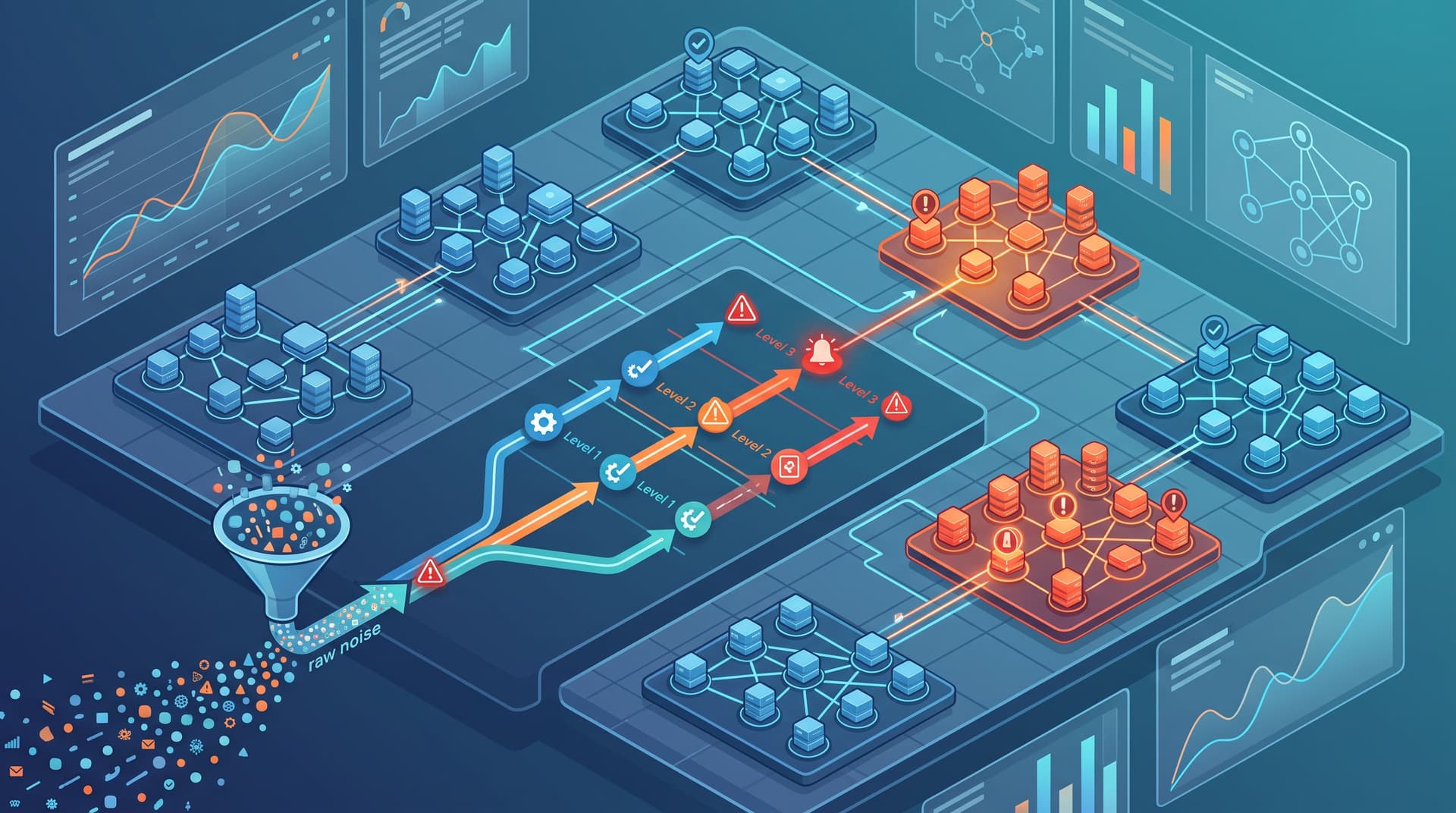
Managed Detection and Response shifts the paradigm from passive alerting to continuous human-led security operations. An MDR provider supplies 24/7 continuous monitoring, automated threat containment, and expert investigation.
| Capability Dimension | Alert-Only Tooling | Active MDR Operations |
|---|---|---|
| Monitoring Scope | Business hours / Automated logging | 24/7 Continuous SOC Coverage |
| Threat Containment | Manual IT intervention required | Automated host isolation & active intervention |
| Triage & Analysis | In-house generalist IT team | Specialized SOC threat analysts |
| Investigation Focus | Disjointed event alerts | Correlated attack storylines |
Evaluating the ROI of MDR
Upgrading to an active MDR service is typically warranted when:
- The organization handles sensitive client data, regulated compliance frameworks (e.g., CMMC, HIPAA, SOC 2), or critical operational IP.
- Internal IT staff spend excessive hours filtering false positives instead of advancing strategic infrastructure initiatives.
- The business cannot sustain 24/7 dedicated internal Security Operations Center (SOC) coverage.
To evaluate your organization's exposure level, complete the interactive Bitscaled Ransomware Readiness Scorecard.
First-Hour Incident Response: Pragmatic Action Without FUD
When a potential security compromise occurs, the actions taken within the first sixty minutes govern whether the incident remains a minor disruption or escalates into a catastrophic outage. Security leads must execute calm, structured incident response (IR) procedures focused on containment and evidence preservation.
Takeaway: First-hour incident response requires rapid isolation and rigorous evidence preservation. Avoid wiping systems or turning off host power prematurely, as volatile memory contains vital operational evidence.
Action 1: Network Isolation (Containment)
Immediately disconnect compromised or suspicious systems from the network to stop lateral movement and command-and-control (C2) communication.
- Do: Disconnect physical network cables and disable Wi-Fi on target endpoints. Leverage your EDR platform to initiate software-level network isolation.
- Don't: Immediately power off or reboot systems. Powering down flushes RAM, destroying volatile forensic data needed to understand the breach mechanism.
Action 2: Account Revocation and Credential Reset
Assume that any credentials associated with compromised systems may be exposed.
- Revoke active user sessions within identity providers (e.g., Microsoft 365, Google Workspace).
- Reset passwords and invalidate existing MFA tokens for impacted accounts.
- Enforce global conditional access rules if widespread credential theft is suspected.
Action 3: Out-of-Band Communication Protocol
Do not communicate about an active security incident over standard internal email or messaging channels if identity compromises are suspected.
- Shift the incident command team to pre-established out-of-band communication channels (e.g., secure secondary messaging platforms or phone lines).
- Brief internal leadership and security response partners using vetted, objective facts.
Action 4: Evidence Capture and Triage Analysis
Preserve audit telemetry and host diagnostics before initiating remediation or restoration steps.
- Export cloud identity logs, sign-in records, and message trace logs.
- Capture memory dumps and disk artifacts from isolated hosts when feasible.
- Document every observed anomaly, step taken, and time stamp in a central incident log.
Action 5: Notification and Partner Engagement
Engage relevant partner channels based on your operational response playbook.
- Notify legal counsel and cyber insurance carriers early to ensure compliance with notification windows and policy requirements.
- Engage specialized external incident response partners, such as Bitscaled IT Infrastructure Support, to assist with root-cause analysis and systemic remediation.
Structuring Your Security Operations Roadmap
Achieving strong cybersecurity resilience is an ongoing operational process, not a one-time product deployment. SMB leaders should evaluate their posture systematically:
- Assess Baseline Posture: Audit identity configurations, patch frequency, and external exposure. Run the Bitscaled Microsoft 365 Security Snapshot to identify initial configuration gaps.
- Close Core Gaps: Enforce phishing-resistant MFA across all accounts, harden endpoints, and isolate immutable backup repositories.
- Transition to Active Operations: Shift from alert-heavy software to managed 24/7 detection capabilities through structured MDR services.
- Test Response Protocols: Conduct tabletop IR exercises twice a year to ensure administrative and technical teams understand their first-hour duties.
Ready to transform your security strategy from reactive maintenance into robust operational resilience? Book a cybersecurity posture review with Bitscaled today to consult with our security operations experts.