The High-Stakes Operations Environment of Modern Distribution
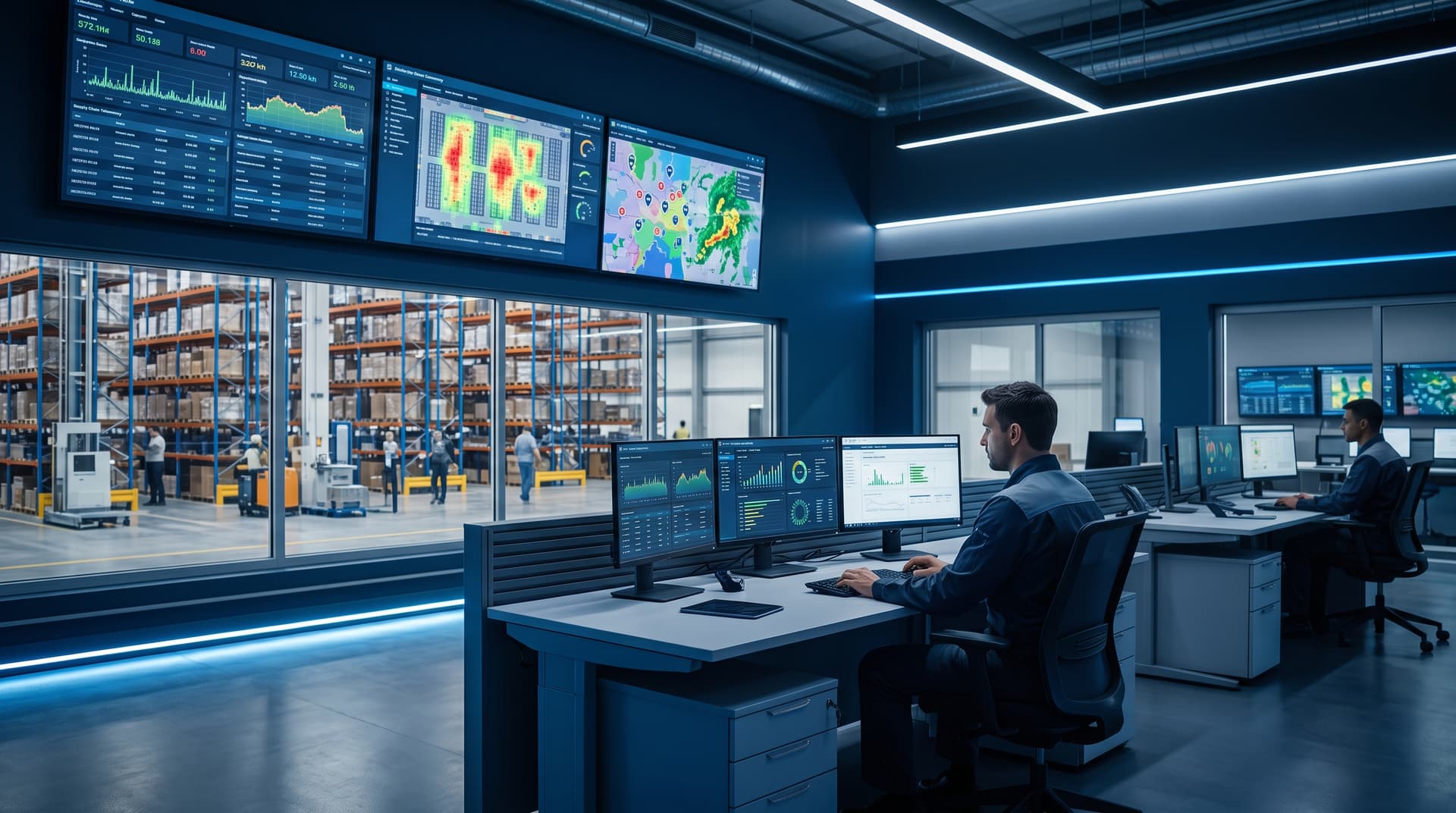
In modern supply chain management, distribution centers operate on razor-thin margins and aggressive service-level agreements (SLAs). When order selectors, forklift drivers, and inventory auditors experience network disruptions or system sluggishness, every second lost compounds into delayed shipments, carrier detention fees, and missed customer delivery windows. For warehouse operations executives and transportation leaders, keeping the Warehouse Management System (WMS) and Transportation Management System (TMS) responsive and online is an essential operational requirement.
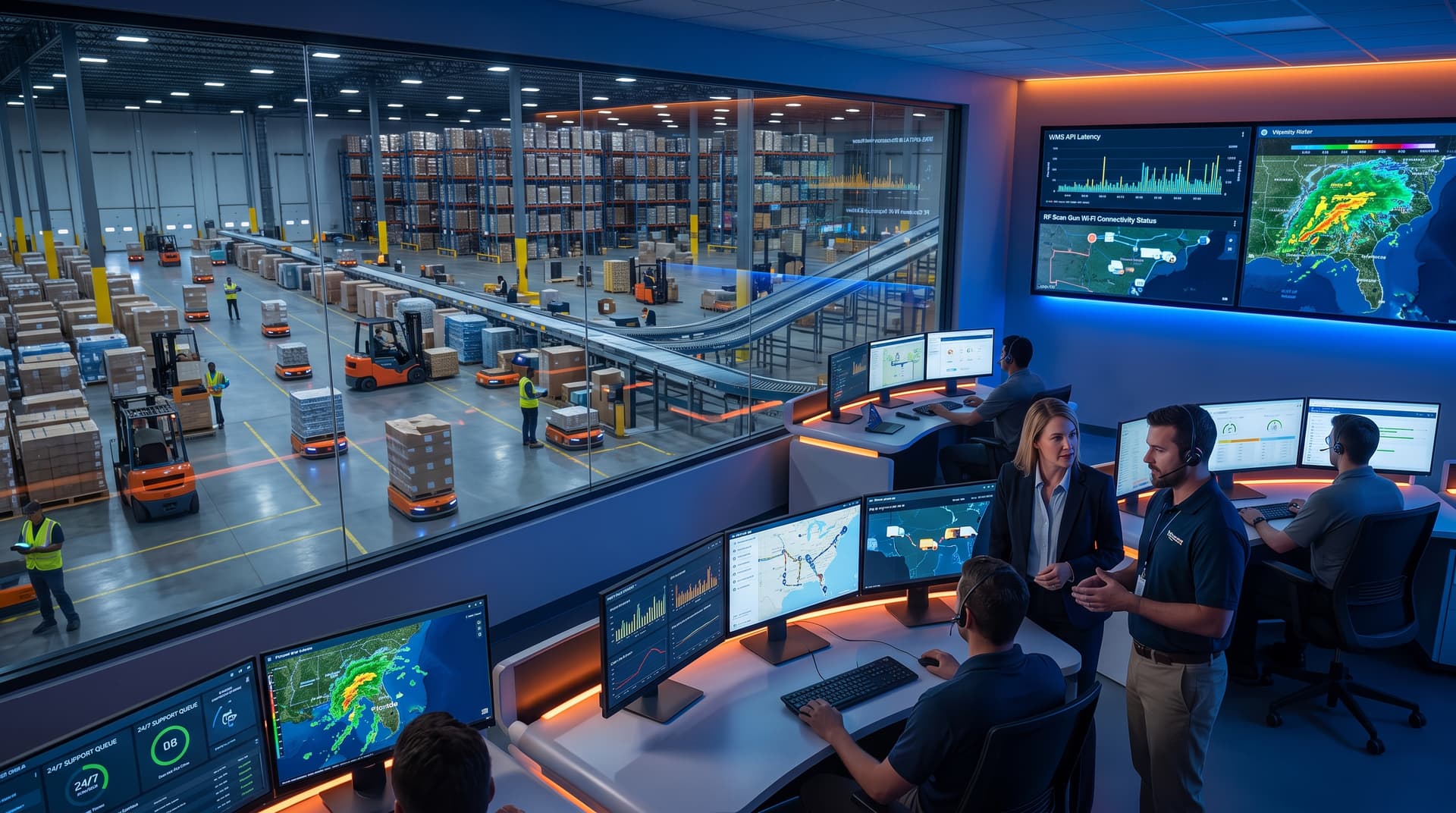
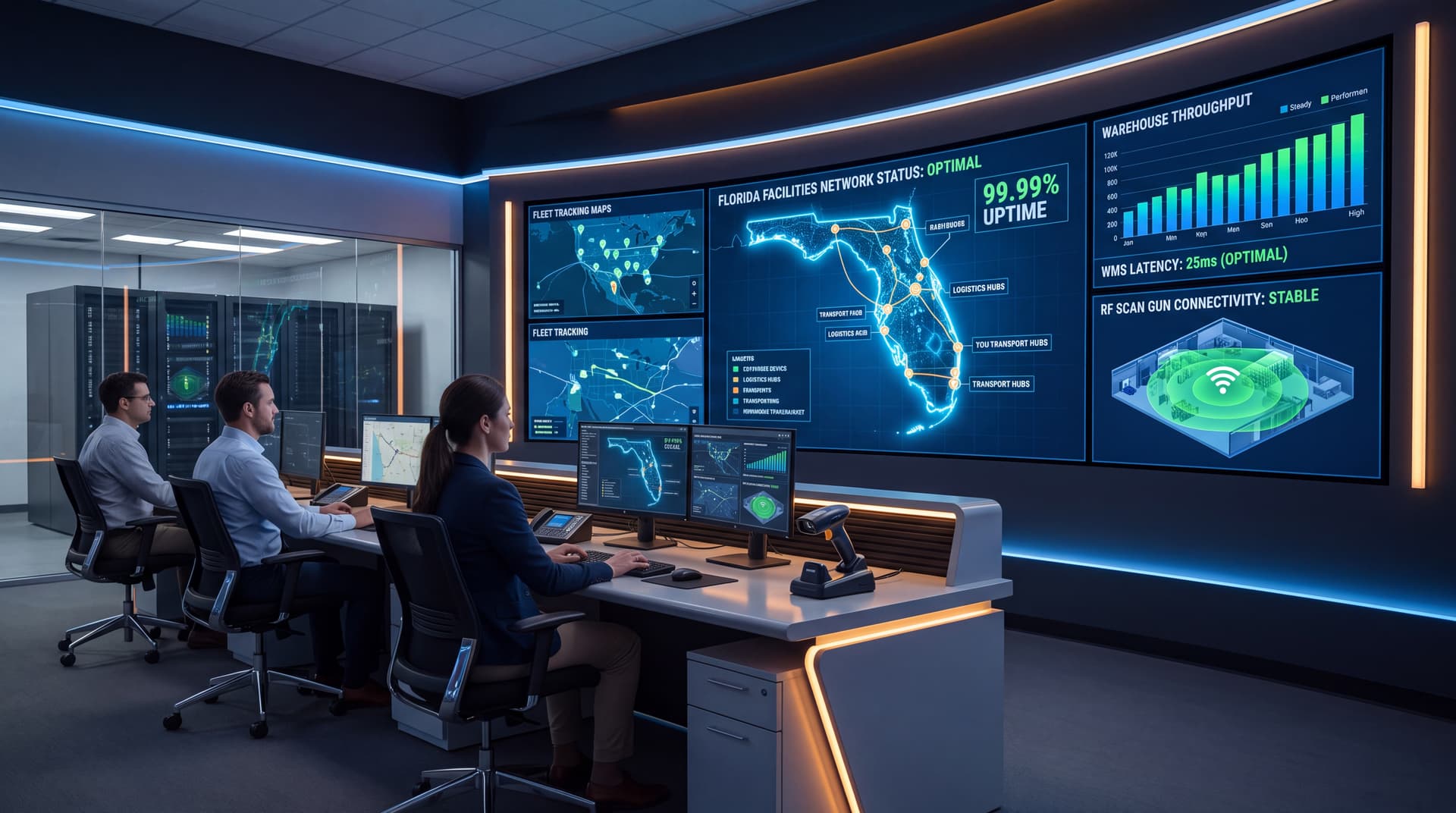
In high-throughput facilities—particularly across logistical hubs in Florida and the Southeast—technical vulnerabilities frequently stem from four distinct pain points: handheld scanner Wi-Fi disconnections, database latency in cloud or hosted WMS environments, lack of immediate after-hours IT support during night picking shifts, and severe weather disruptions during tropical storm seasons. Resolving these challenges requires a target architecture that bridges physical warehouse infrastructure, enterprise wireless design, robust infrastructure monitoring, and localized disaster recovery protocols.
By proactively addressing these potential failure points, logistics directors can achieve predictable picking rates, streamline cross-docking operations, and protect critical throughput regardless of external environmental threats.
Eliminating Handheld RF Scan Gun Dropouts in High-Density Facilities
Handheld radio-frequency (RF) barcode scanners and vehicle-mounted terminals are the primary interface for warehouse staff. However, standard enterprise Wi-Fi deployments frequently fail in logistics environments due to the unique RF properties of distribution facilities. High-bay racking, dense inventory compositions (such as liquids, metals, or dense paper stock), and dynamic physical blockages created by moving machinery create severe signal attenuation, multipath distortion, and unexpected dead zones.
When a scan gun drops its Wi-Fi connection during an active pick, the session state between the handheld terminal and the WMS application server is interrupted. The picker must pause, re-authenticate, and frequently re-scan items to ensure inventory accuracy. Multiply this occurrence across dozens of operators across multiple shifts, and throughput degrades substantially.
Engineering High-Density Warehouse Wireless Architecture
To prevent RF scan gun dropouts, logistics IT teams must deploy wireless networks specifically engineered for industrial spatial dynamics rather than standard office layouts:
- Directional Patch Antennas over Omnidirectional Nodes: Standard omnidirectional access points (APs) mounted on high ceilings bounce signals off metal roof trusses and metal racking, creating severe multipath interference. Utilizing directional patch antennas aimed down aisleways concentrates RF energy where picking occurs while minimizing signal bleed into adjacent aisles.
- Aggressive Roaming Optimization (802.11k/v/r): Industrial scan guns attached to moving forklifts transition rapidly between AP coverage zones. Implementing fast BSS transition protocols (IEEE 802.11r) alongside neighbor reporting (802.11k) allows scan guns to roam between APs in under 50 milliseconds without tearing down TCP sessions.
- Dedicated SSID and Band Separation: Legacy scan gun hardware often struggles with 5 GHz signal absorption through packed pallets. Configuring a dedicated, isolated SSID tailored for handheld devices on predictable channels prevents interference from corporate devices and guest users.
- Quality of Service (QoS) Tagging: Prioritize WMS scan packets (DSCP 46 / EF) over non-critical background traffic, ensuring transactional barcode validation takes priority even during peak network utilization.
| Infrastructure Layer | Standard Enterprise Setup | Optimized Logistics IT Setup | Operational Impact |
|---|---|---|---|
| Antenna Configuration | High-ceiling omnidirectional APs | High-bay directional patch antennas | Eliminates aisle dead zones and signal reflection |
| Roaming Protocol | Default client-driven roaming | Fast BSS Transition (802.11r/k/v) | Seamless coverage transition for forklift operators |
| Traffic Prioritization | Best-effort packet delivery | DSCP 46 / EF QoS queueing for WMS | Guarantees instant pick confirmation response times |
| Band Isolation | Blended 2.4/5GHz SSID with band steering | Dedicated industrial SSID with tuned transmit power | Prevents unexpected client dropouts and sticky clients |
Takeaway: Industrial wireless design requires directional antenna alignment, tuned roaming thresholds, and strict QoS prioritization to eliminate RF scan gun dropouts in high-racking environments.
Reducing WMS and TMS Application Latency
Even with pristine wireless connectivity, operational slowdowns occur when the backend WMS or TMS environment experiences high application latency. A delay of two to three seconds per barcode scan creates noticeable operational friction. During peak order processing hours, backend query bottlenecks can cascade into system hangs, forcing order selectors to stand idle while waiting for batch allocations or location updates.
Root Causes of Logistics Software Latency
WMS and TMS latency typically originates from three architectural areas:
- Unindexed Database Queries: As transaction history scales into millions of historical inventory records, unindexed database queries on staging, picking, and shipping tables degrade lookup speeds.
- Inadequate Cloud/Edge Transit: Cloud-hosted WMS platforms relying on single public internet connections suffer from variable latency, packet loss, and routing hops across public backbones.
- Monolithic API Sync Locks: Frequent real-time synchronizations between TMS dispatch boards, ERP order intake, and WMS inventory ledgers can lock transactional tables if integration middleware is not decoupled.
Architectural Fixes for Rapid Response Times
To maintain low latency (under 200ms round-trip scan response), infrastructure managers should implement edge gateway caching and managed network connectivity. Deploying local edge servers at major distribution hubs allows local scan transactions to validate instantly against localized database replicas while asynchronously syncing changes to the central WMS core.
Additionally, organizations leveraging hosted WMS platforms benefit from dedicated direct cloud connections (such as AWS Direct Connect or Azure ExpressRoute) combined with managed SD-WAN technology. SD-WAN automatically routes WMS transaction traffic over the lowest-latency path, bypassing public internet congestion.
Bridging the Gap: 24/7 Support for After-Hours Dispatch and Night Shifts
Distribution centers rarely operate strictly from 9 to 5. Night shifts, early morning dispatch cycles, and weekend fulfillment windows handle significant volume. However, traditional IT support models often reduce staffing or rely on basic ticketing after business hours. When an access point fails at 2:00 AM or a TMS dispatch queue locks during late-night staging, operational leaders cannot wait until morning for resolution.
Establishing Robust After-Hours IT Operational Protocols
To safeguard continuous output, logistics companies require dedicated IT monitoring and support capabilities tailored to shift schedules:
- Proactive Synthetic Transaction Monitoring: Rather than waiting for shift supervisors to report a system outage, automated synthetic probes should emulate scan gun transactions and TMS route queries continuously. If transaction response times exceed established thresholds, automated alerts trigger immediate escalation.
- Tier-3 Logistics-Aware Desk Support: Helpdesk personnel managing off-hours tickets must possess specific expertise in logistics technology—including handheld OS configurations, zebra printer drivers, and WMS staging queues—ensuring rapid root-cause identification without basic triage delays.
- Defined Escalation Trees for Critical Systems: Establish direct escalation workflows connecting shift managers to specialized network and database engineers, backed by strict SLAs for system-restoration times.
Florida Storm-Season Continuity: Preparing Infrastructure for Weather Disruption
To ensure Florida warehouse operations remain online during severe weather, logistics leaders must implement multi-layered redundancy across power, data connectivity, and application availability:
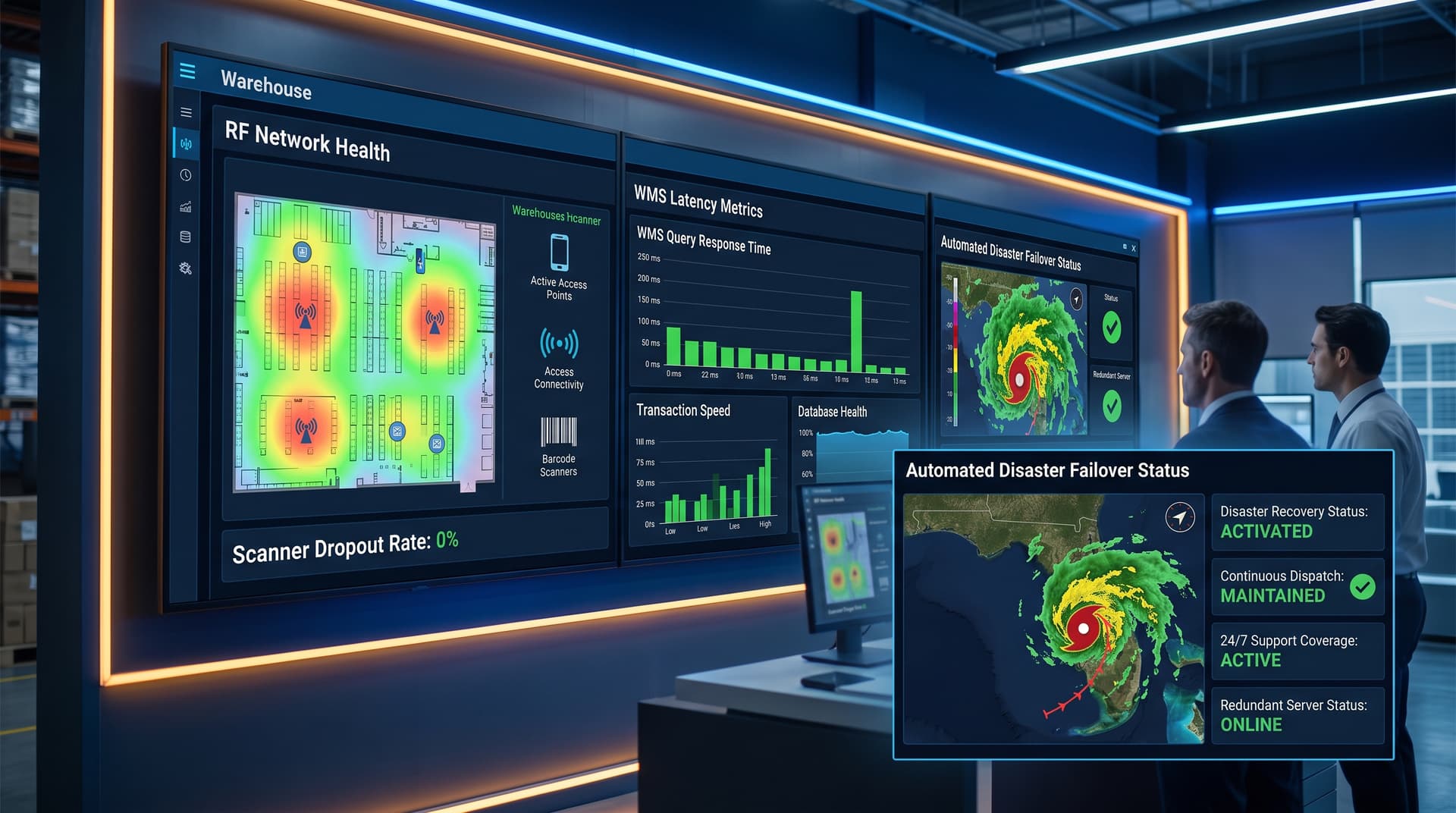
- Diverse WAN Infrastructure with Automated Failover: Relying on a single landline fiber connection exposes facilities to fiber cuts from fallen trees or utility pole damage. Facilities should deploy SD-WAN firewalls paired with primary fiber, secondary broadband, and low-latency satellite (such as Starlink) or 5G cellular backup. SD-WAN maintains active WMS and TMS sessions by instantly rerouting traffic without dropping active connections.
- Sequenced Power Protection and Generation: Uninterruptible Power Supply (UPS) battery systems must cover all core MDF/IDF network closets, supporting access points, core switches, and local gateways for at least 30 to 60 minutes. This provides a clean transition window for automated backup generators to start, stabilizing power across racking lights, conveyor belts, and network hardware.
- Offsite Queue Protection & Offline Mode Capabilities: Modern WMS configurations should support offline transactional batching. If connectivity to central cloud endpoints is temporarily severed, handheld scanners store completed picks locally in encrypted memory and automatically flush updates to the server once WAN paths restore.
Strategic Action Plan: Upgrading Logistics IT Reliability
Achieving high-throughput logistics IT performance requires systematically identifying infrastructure weaknesses and applying industry-tested remediation measures.
Logistics IT Infrastructure Checklist
- Perform comprehensive RF site surveys with directional antennas tuned to active inventory heights.
- Implement fast roaming protocols (802.11r/k/v) across all warehouse wireless access points.
- Configure QoS rules prioritizing WMS/TMS transaction traffic over enterprise data.
- Deploy SD-WAN with dual-carrier fiber and satellite/5G automatic failover.
- Integrate synthetic monitoring to test WMS scan latency 24/7/365.
- Establish 24/7 dedicated IT support coverage aligned with full shift schedules.
- Verify UPS battery health and generator transfer switches ahead of storm season.
By combining optimized wireless infrastructure, low-latency application transport, 24/7 proactive monitoring, and storm-hardened redundancy, distribution centers eliminate productivity drains and protect bottom-line performance.
Streamline Your Logistics Operations with Bitscaled
Are scan gun dropouts, database delays, or weather risks threatening your warehouse throughput? Bitscaled Managed IT Services delivers high-reliability network design, 24/7 specialized support, and robust disaster recovery solutions engineered for logistics and warehousing environments. Explore our tailored industry solutions at Bitscaled Logistics & Warehousing or contact our engineering team to improve dispatch and warehouse uptime today.