High-Throughput Logistics IT: Resolving Scan Gun Drops, WMS Latency, and Weather Disruptions
In fast-paced distribution hubs, technology is as critical to moving freight as forklifts and conveyer belts. When handheld RF scan guns disconnect, Warehouse Management Systems (WMS) lag, or dispatch databases stall, order fulfillment grinds to a halt. For operations leaders across Florida and the Southeast, these technical bottlenecks are compounded by severe summer storm seasons and round-the-clock shipping schedules.
Maintaining high throughput requires an infrastructure engineered specifically for industrial environments, continuous monitoring, and proactive incident management.
Eliminating RF Scan Gun Disconnections on the Warehouse Floor
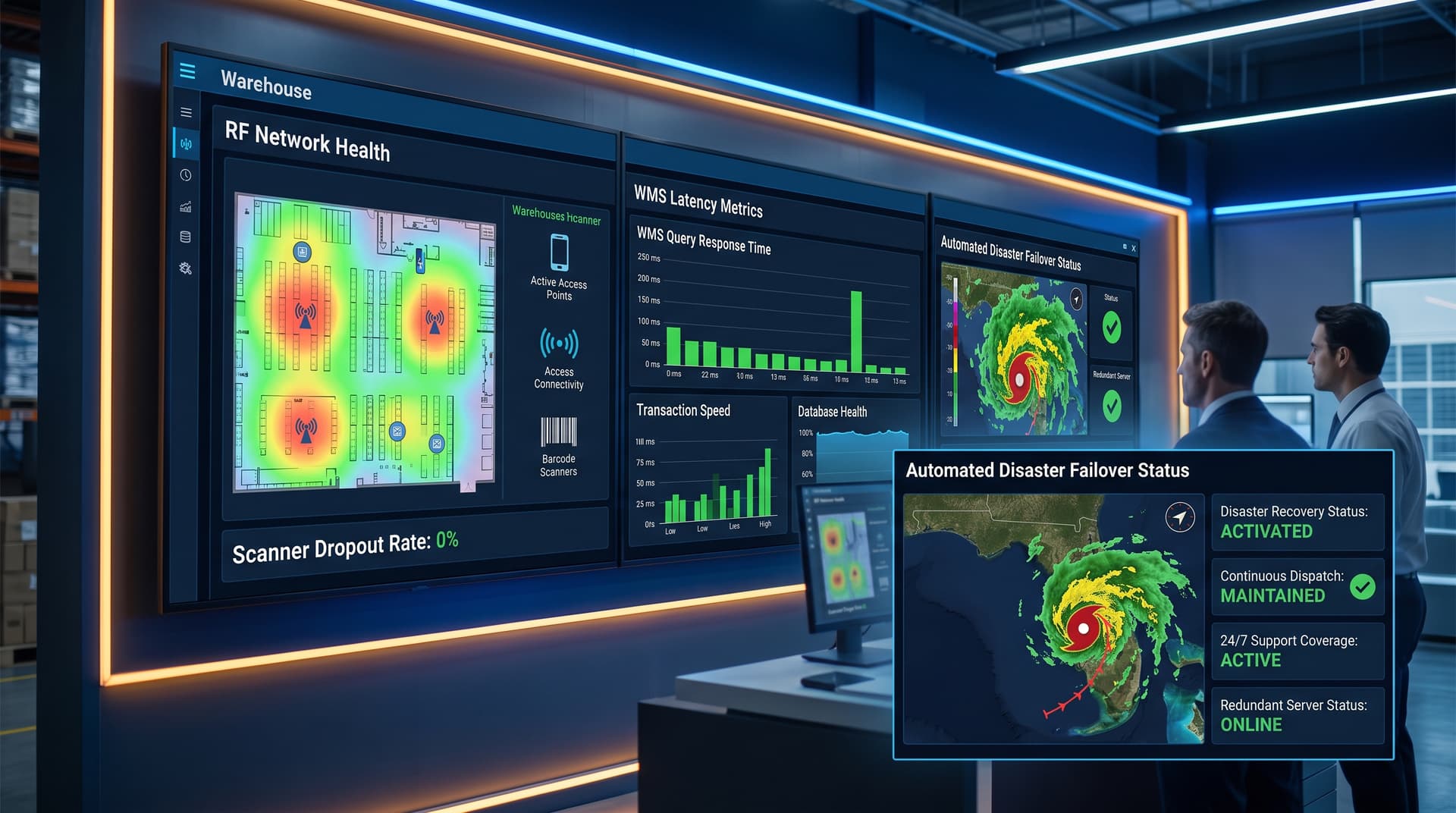
Dropouts on handheld scanners directly translate to lost picking time, missed scans, and inventory discrepancies. Warehouse environments present unique wireless challenges—high metal racking, dense stock, changing aisle layouts, and signal interference from heavy equipment.
To guarantee uninterrupted connectivity:
- Conduct High-Density RF Site Surveys: Evaluate signal propagation under full inventory conditions, not just in empty spaces.
- Deploy Industrial-Grade Access Points: Utilize directional antennas aligned with aisle geometries to prevent coverage dead zones.
- Optimize Seamless Roaming Protocols: Configure fast BSS transition (802.11r/k/v) so scan guns switch between access points instantaneously as operators drive down picking paths.
Overcoming WMS and TMS Latency
A fraction of a second delay on every barcode scan or shipping label generation accumulates into hours of lost productivity across a shift. WMS and Transportation Management System (TMS) latency often stems from database bloat, network congestion, or unoptimized cloud integrations.
Key actions to restore sub-second response times include:
- Local Network Segment Isolation: Separate scan gun traffic, security cameras, and guest Wi-Fi onto dedicated Virtual LANs (VLANs) with Quality of Service (QoS) priorities set for transaction data.
- Database and API Optimization: Clean up legacy transaction logs and ensure middleware connectors between TMS and WMS are operating efficiently.
- Edge Computing Deployment: Process critical scan validation locally before batch-syncing to main ERP databases, preventing network delays from locking up scan workflows.
Establishing 24/7 After-Hours IT Support
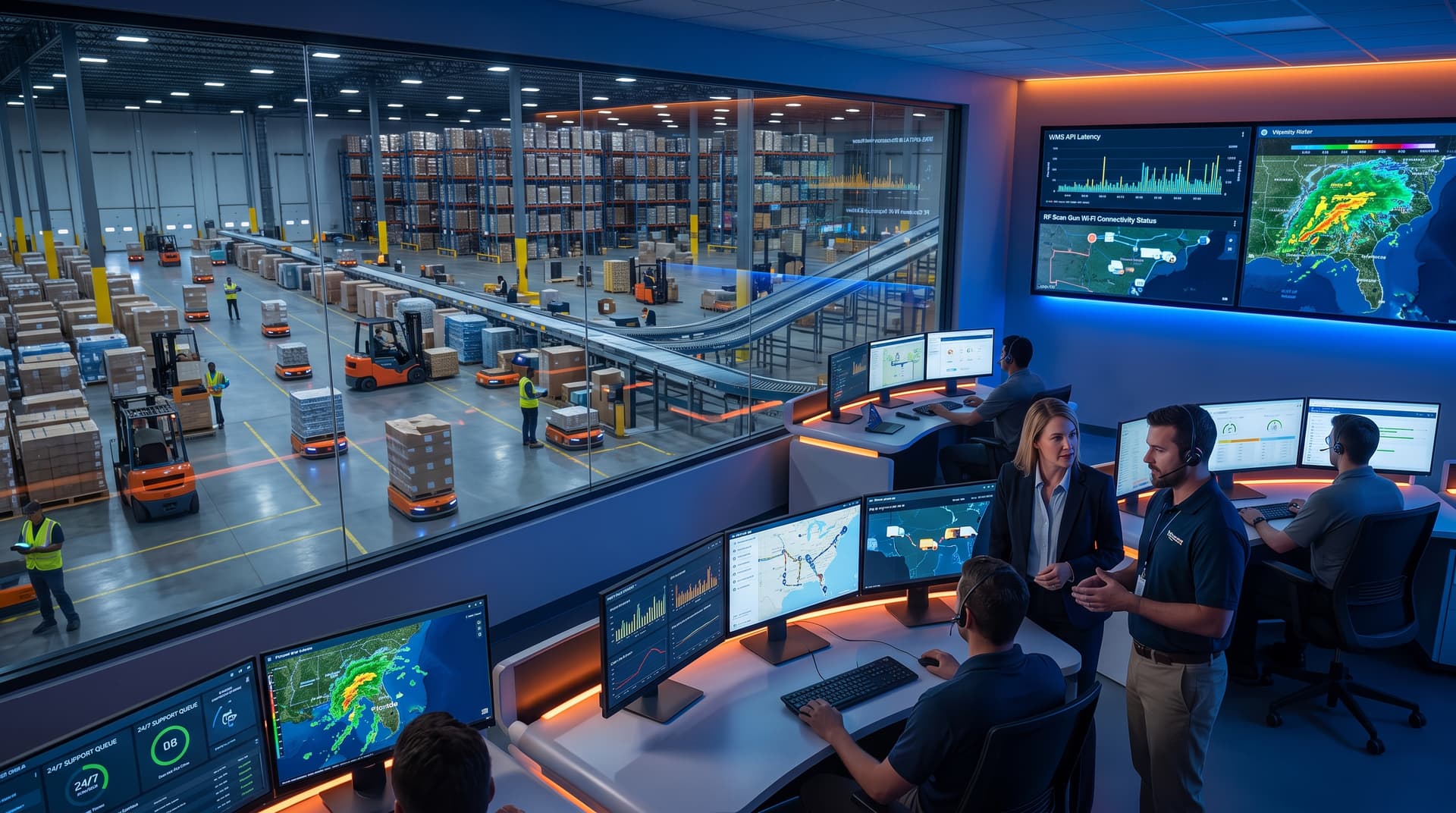
Warehouses and distribution hubs rarely operate on a standard 9-to-5 schedule. A failed label printer at 2:00 AM on a Sunday can stall an entire fleet dispatch if support isn't readily available.
Operations require dedicated after-hours IT coverage that understands logistics workflows:
- Proactive Remote Monitoring: Catch failing access points, offline printers, or server memory spikes before workers report issues.
- Rapid Escalation Paths: Provide immediate access to engineers who can remotely reset print queues, reconfigure warehouse switches, or reboot hanging database services.
Storm-Season Continuity for Florida Facilities
Operating in Florida means preparing for severe weather, sudden power outages, and ISP line cuts. Maintaining supply chain continuity during tropical storms demands redundant, resilient architecture.
- Dual-ISP Failover: Combine primary fiber lines with automatic failover to low-latency satellite or high-speed cellular networks.
- UPS and Generator Integration: Ensure network switches, server racks, and wireless access points are tied to uninterruptible power supplies that bridge the gap during generator startup.
- Offsite Cloud Backups: Secure real-time replication of WMS data to out-of-state data centers, enabling rapid recovery if a local facility suffers physical damage.
Streamline Your Logistics IT Operations
In logistics, downtime directly impacts bottom-line performance. By hardening warehouse Wi-Fi, cutting software latency, and preparing for severe weather, operations leaders can safeguard throughput year-round.
Improve dispatch and warehouse uptime with Bitscaled.