Engineering Reliable Bot Operations: A Guide to RPA Solutions
For operations managers overseeing repetitive back-office workflows, Robotic Process Automation (RPA) offers a direct path to improved efficiency and accuracy. However, deploying workflow bots requires a process-engineering mindset to ensure long-term reliability. Successful RPA is not just about automating tasks; it is about selecting the right candidates, engineering robust exception handling, and maintaining strict oversight.
Process Selection Criteria
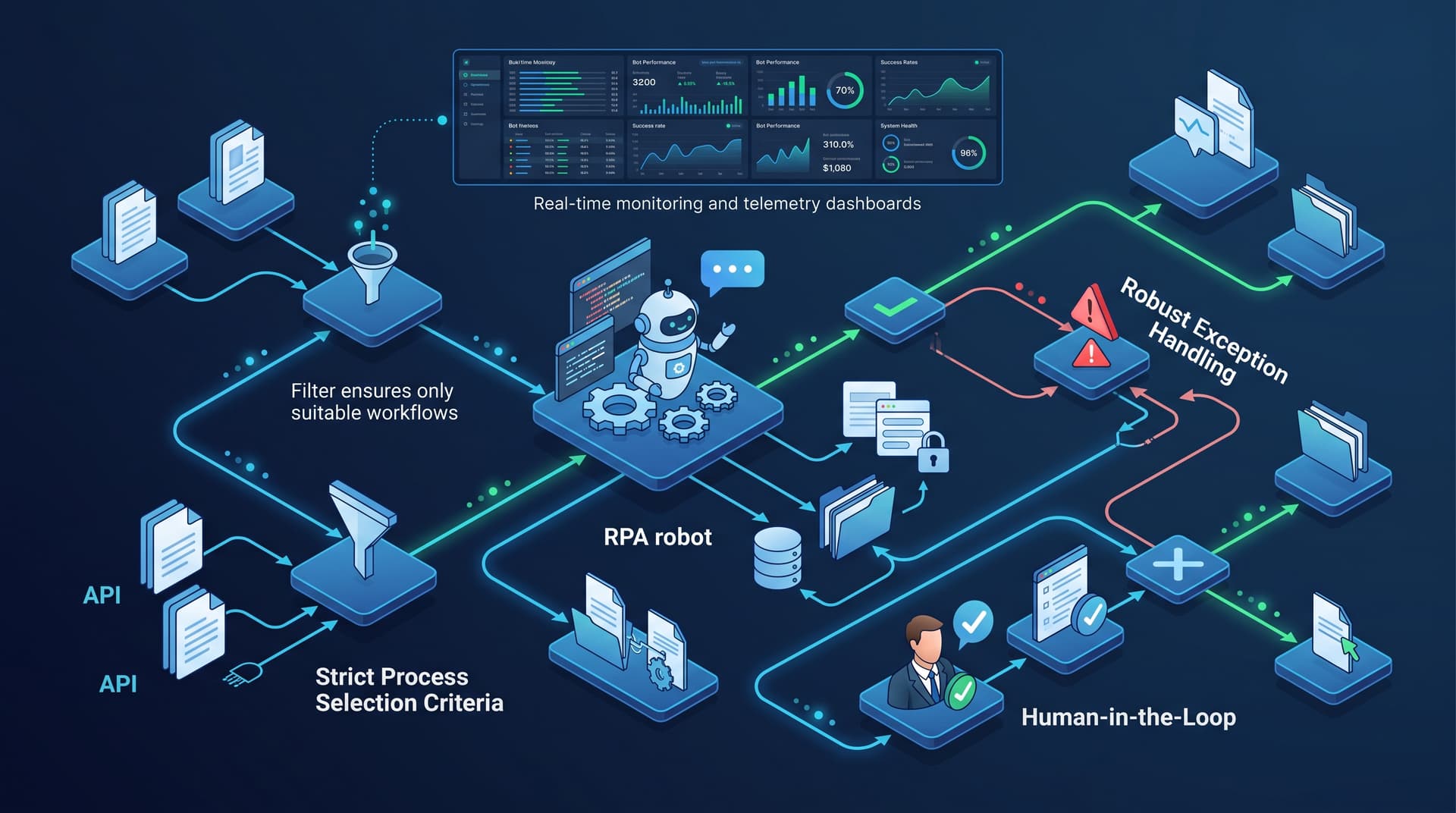
The foundation of a reliable bot operation lies in choosing the right processes. Ideal RPA candidates share specific characteristics:
- Rule-Based Logic: The workflow must rely on clear, definitive rules rather than subjective human judgment.
- High Volume and Repetition: The process should occur frequently enough to justify the development effort.
- Standardized Inputs: Data entering the workflow must be structured and predictable (e.g., standardized forms, templates, or database exports).
- System Stability: The underlying applications accessed by the bot should have stable interfaces. Frequent UI updates will break bot scripts.
When NOT to Use RPA
Deploying RPA in the wrong environment creates maintenance nightmares. Avoid using workflow bots for:
- Broken Processes: Automating an inefficient process only scales the inefficiency. Always optimize and lean out the workflow before introducing automation.
- Cognitive Decision Making: Tasks requiring negotiation, subjective analysis, or complex problem-solving are better suited for AI agents or human operators.
- Highly Variable Environments: Processes that deal with unstructured data or constantly changing vendor portals will lead to high failure rates.
Exception Handling and Monitoring
Even the most stable processes encounter anomalies. Reliable bot operations require engineered resilience.
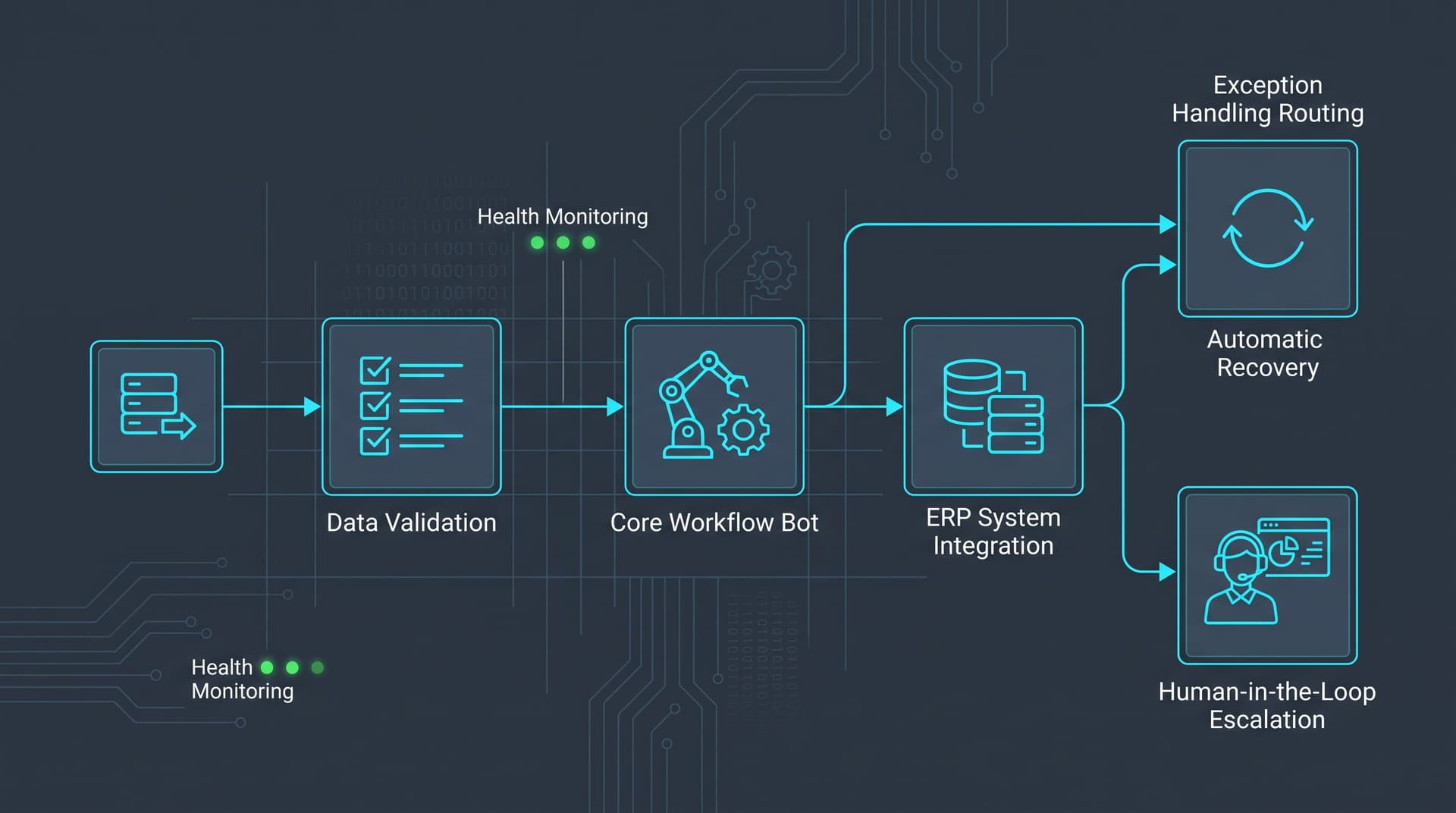
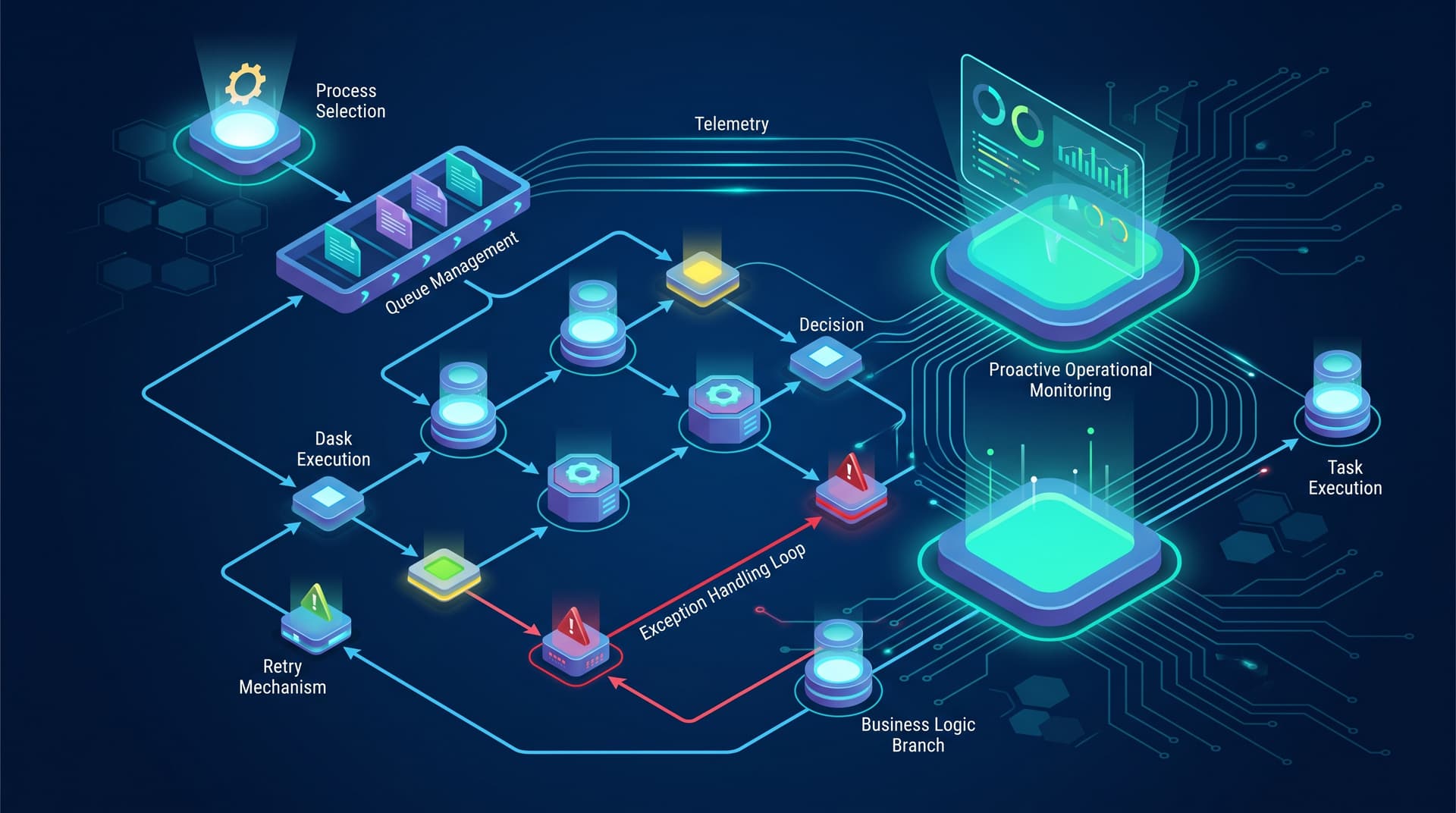
- Exception Handling: Design bots to recognize when they cannot complete a task. Instead of failing silently or crashing, the bot should safely pause the specific transaction, log the error, and route it to a human operator for resolution while continuing with the rest of the queue.
- Active Monitoring: Implement dashboards to track bot utilization, success rates, and average handling times. Monitoring ensures that performance degradation or sudden spikes in exceptions are flagged immediately for intervention.
Before and After: Finance Workflow Example
To illustrate the impact of process-engineered RPA, consider a standard Accounts Payable workflow.
Before RPA (Manual State): An operations clerk monitors a shared inbox for vendor invoices. They download each PDF attachment, manually read the data, open the ERP system, and type in the invoice number, date, and amount. Finally, they email a manager for approval.
After RPA (Automated State): A workflow bot continuously monitors the inbox. Upon receiving an email, it extracts the attachment and reads the structured data. The bot logs into the ERP using its own credentials, inputs the data instantly, and triggers the system's automated approval routing. If an invoice format is unrecognizable, the bot flags it as an exception and forwards it to the clerk for manual review.
Next Steps
Building a resilient automated workforce starts with a single, well-chosen process. Identify your first RPA candidate process with Bitscaled, and let our engineers help you build a reliable foundation for your back-office automation.