Enterprise Voice Architecture: Balancing On-Premises Control with Cloud Telephony
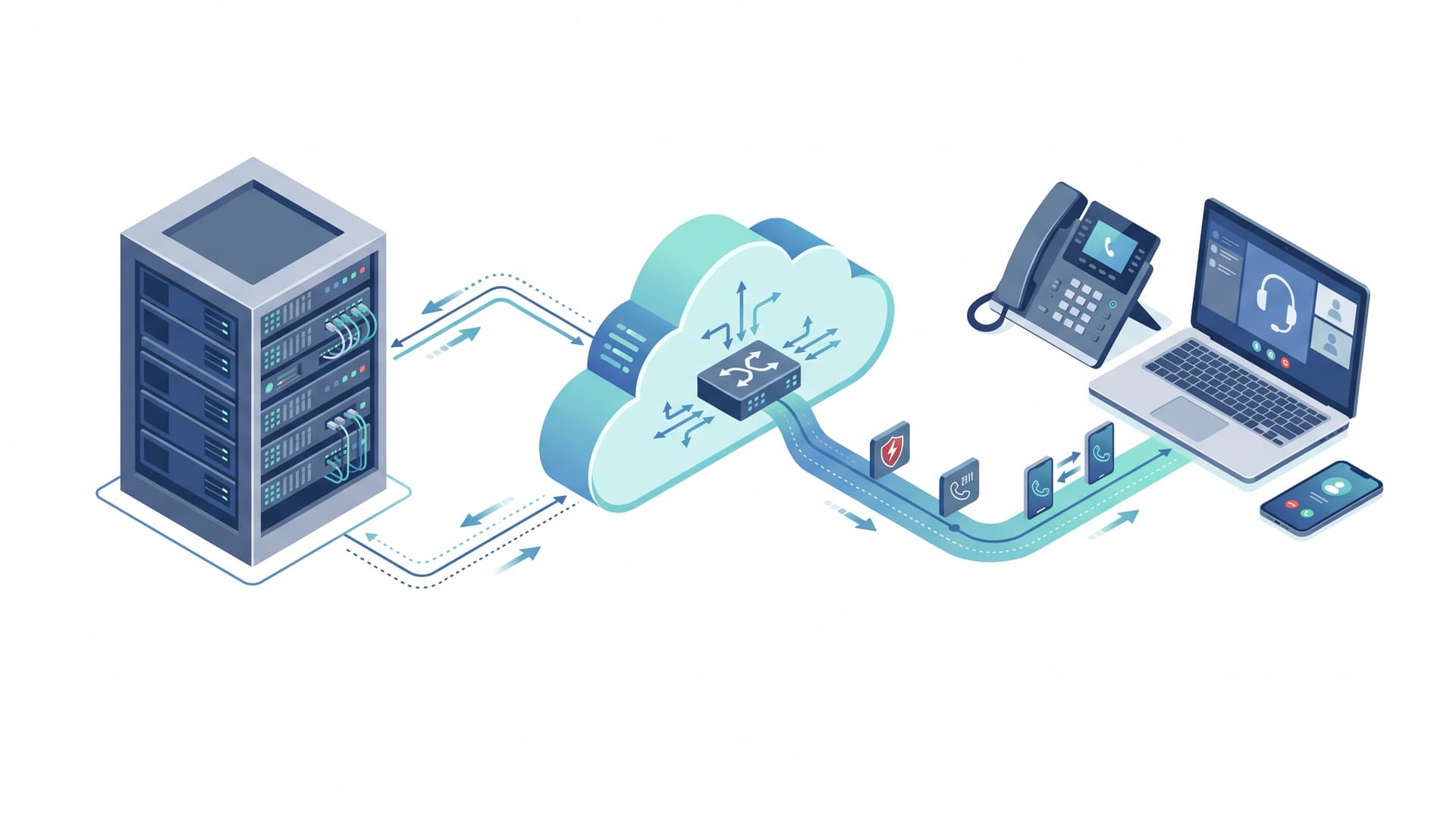
Modernizing organizational communications rarely happens overnight. While cloud-based Unified Communications as a Service (UCaaS) offers undeniable agility and low hardware overhead, many enterprise environments retain existing on-premises PBX hardware due to legacy integrations, analog endpoints, or specialized compliance needs. Navigating a hybrid voice strategy allows IT leaders and office managers to modernize at their own pace without compromising uptime.
On-Premises vs. Cloud Voice: Architectural Trade-Offs
Choosing between traditional on-premises PBX systems and cloud-hosted platforms requires balancing capital expenditure, operational flexibility, and administrative control.
- On-Premises Systems: Offer complete control over data paths, localized call routing, and direct integration with legacy paging or elevator systems. However, they demand significant hardware investment, specialized maintenance contracts, and rigid capacity limits.
- Cloud Voice (UCaaS): Eliminates local server hardware, scales licenses on demand, and supports remote and mobile workers seamlessly. The trade-off shifts reliance entirely onto high-availability internet transport and vendor service level agreements (SLAs).
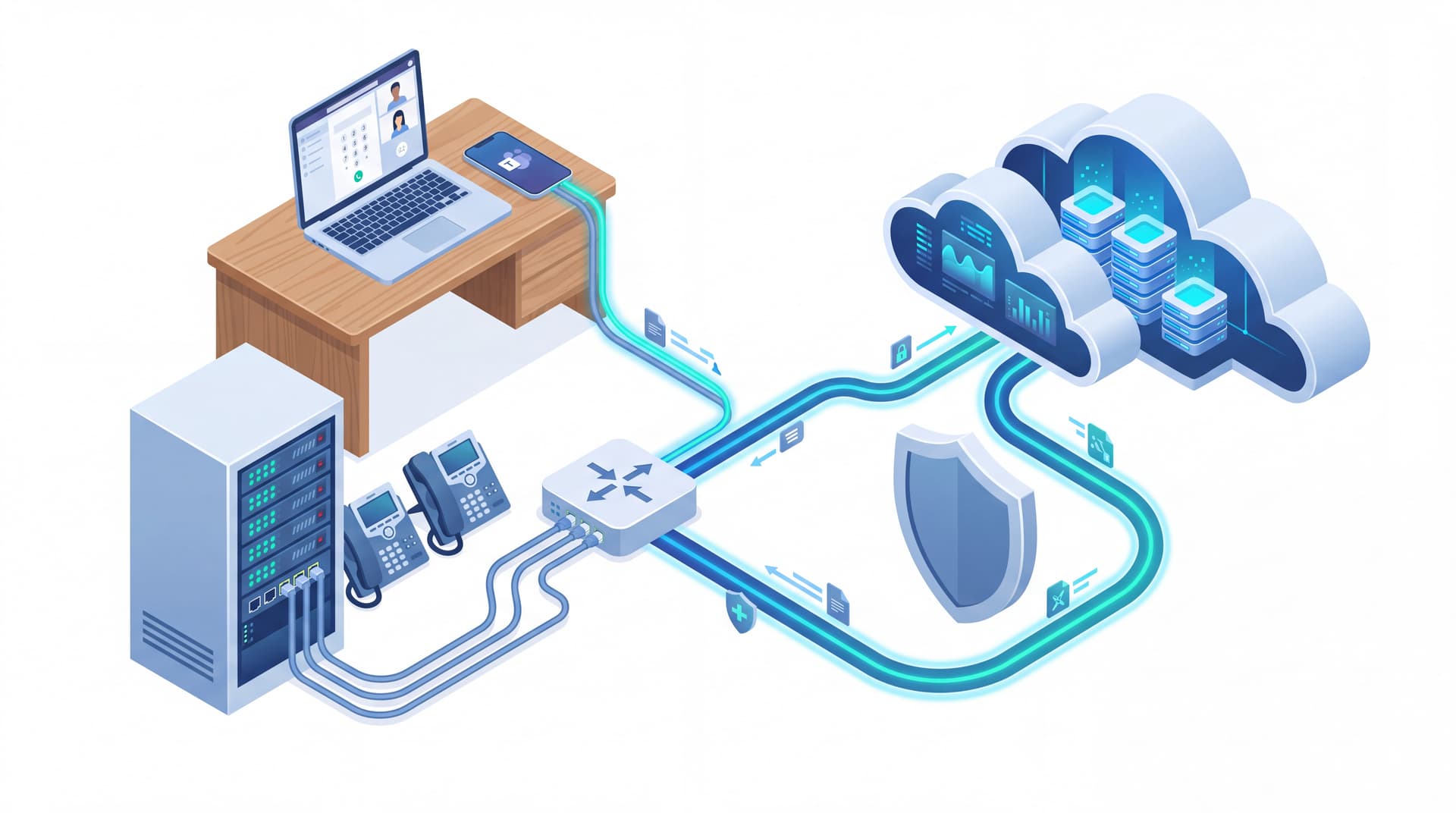
- Hybrid Deployment: Bridges both environments by maintaining local gateways (SBCs) for legacy connections while routing mainstream user traffic through cloud services.
Navigating Compliance and Logistics: E911 and Number Porting
Voice migrations involve legal and administrative hurdles that require early planning during the procurement phase.
E911 Emergency Requirements
Regulatory compliance frameworks like RAY BAUM'S Act and Kari's Law mandate that modern business voice deployments deliver accurate dispatchable location data to emergency call centers. In dynamic or hybrid environments, systems must automatically update user locations based on network subnets or Wi-Fi access points so first responders receive exact building, floor, and room details.
Local Number Porting (LNP)
Transferring phone numbers from legacy carriers to cloud providers remains a frequent source of project delays. To ensure a smooth transfer:
- Obtain exact Customer Service Records (CSR) from losing carriers.
- Match Billing Telephone Numbers (BTN) and authorized signer names precisely.
- Avoid making billing changes on legacy accounts during an active port request.
Microsoft Teams Phone Integration Strategies
For organizations heavily invested in Microsoft 365, extending collaboration tools into public switched telephone network (PSTN) voice via Microsoft Teams Phone is a common path.
- Operator Connect: Allows direct peering with managed voice carriers, minimizing administrative complexity while keeping carrier routing intact.
- Direct Routing: Utilizes Session Border Controllers (SBCs) to connect custom on-premises voice circuits or legacy PBX hardware directly to Teams. This is the preferred route for hybrid voice setups requiring local survival capabilities.
- Microsoft Calling Plans: Provides end-to-end cloud voice directly from Microsoft, ideal for offices without existing carrier contracts or complex hardware requirements.
Common Causes of Downtime and Mitigation
Unplanned outages during voice transitions usually stem from network layer oversights rather than platform failures:
- Insufficient Bandwidth & QoS: Voice packets competing with routine data traffic cause jitter and dropped calls. Ensure Quality of Service (QoS) prioritization is configured across all network switches and routers.
- Firewall and SIP ALG Issues: Application Layer Gateway (ALG) settings on firewalls frequently corrupt SIP signaling packets. Disable SIP ALG across gateway appliances before cutover.
- Incomplete Porting Validation: Cutover attempts executed before the carrier porting window officially opens lead to split-brain routing where inbound calls fail.
Practical Cutover Checklist
Use this checklist to structure your final deployment window:
- Pre-Migration Readiness: Verify network QoS, firewall rules, and local internet bandwidth availability.
- E911 Validation: Test dynamic location tracking policies across all physical sites.
- Hardware Pre-Provisioning: Program and test desk phones, headsets, and ATA adapters on target cloud accounts.
- Carrier Porting Confirmation: Re-confirm Firm Order Commitment (FOC) dates with all involved carriers.
- Pilot Testing: Run test calls across internal extensions, external inbound/outbound lines, and emergency test numbers.
- User Communication: Distribute quick-start training guides and establish a dedicated day-one IT help desk channel.
Next Steps
Upgrading enterprise telephony requires a clear balance of operational needs, network capability, and regulatory compliance. Whether you are transitioning fully to the cloud or building a resilient hybrid architecture, proper planning prevents costly downtime.
Plan a VoIP migration assessment with Bitscaled to audit your current voice infrastructure and design a secure, high-availability cutover plan tailored to your team.