Designing Fault-Tolerant System Integrations: APIs, Idempotency, and State Sync
In modern digital enterprises, operational efficiency rarely fails due to a lack of software tools. Instead, it fails in the spaces between them. Professional Services Automation (PSA) tools, Customer Relationship Management (CRM) platforms, financial ledgers, and line-of-business applications often operate as isolated silos. When business processes cross these platform boundaries, organizations frequently resort to manual data re-entry, fragile scripts, or unmonitored webhooks.
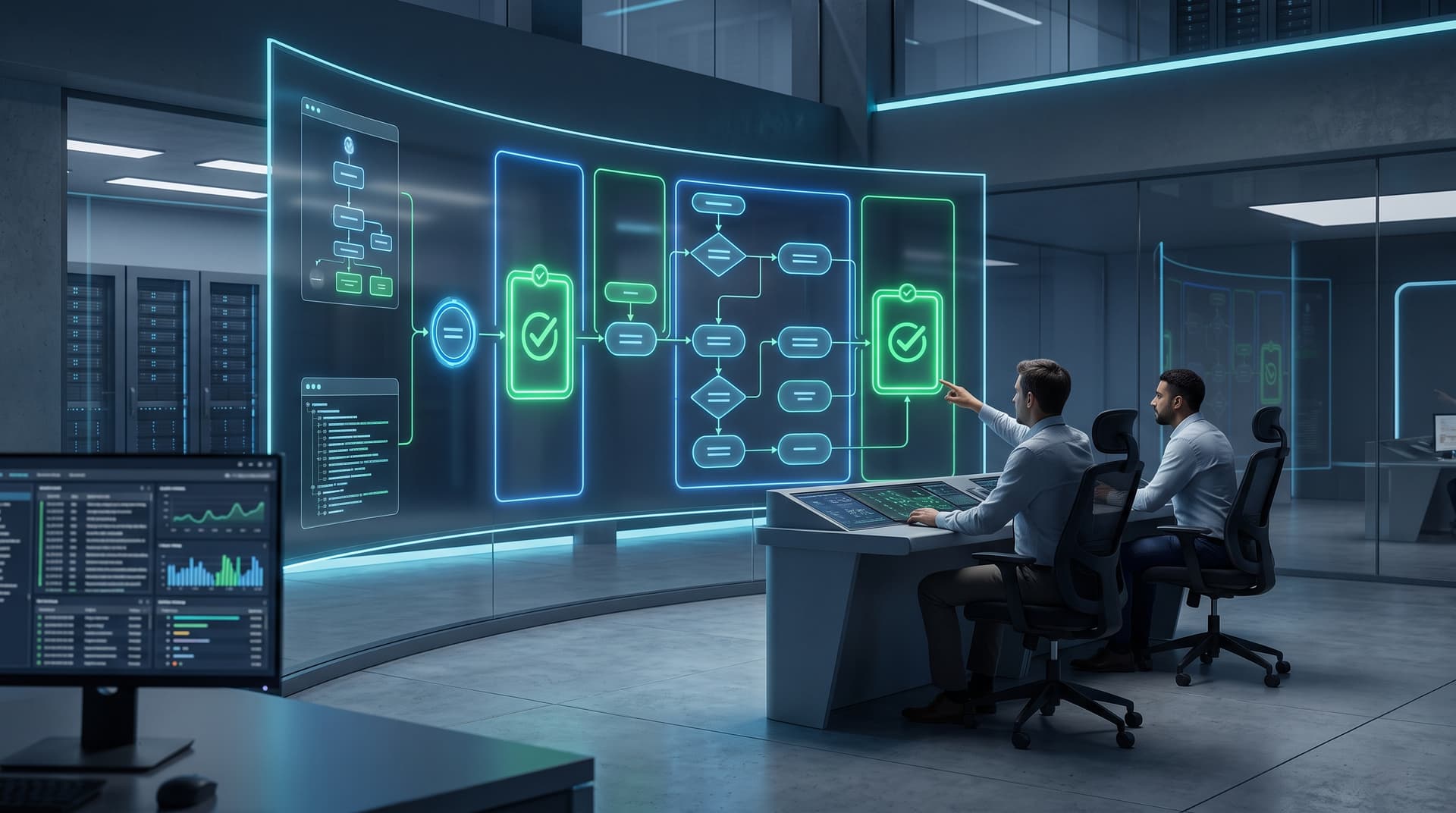
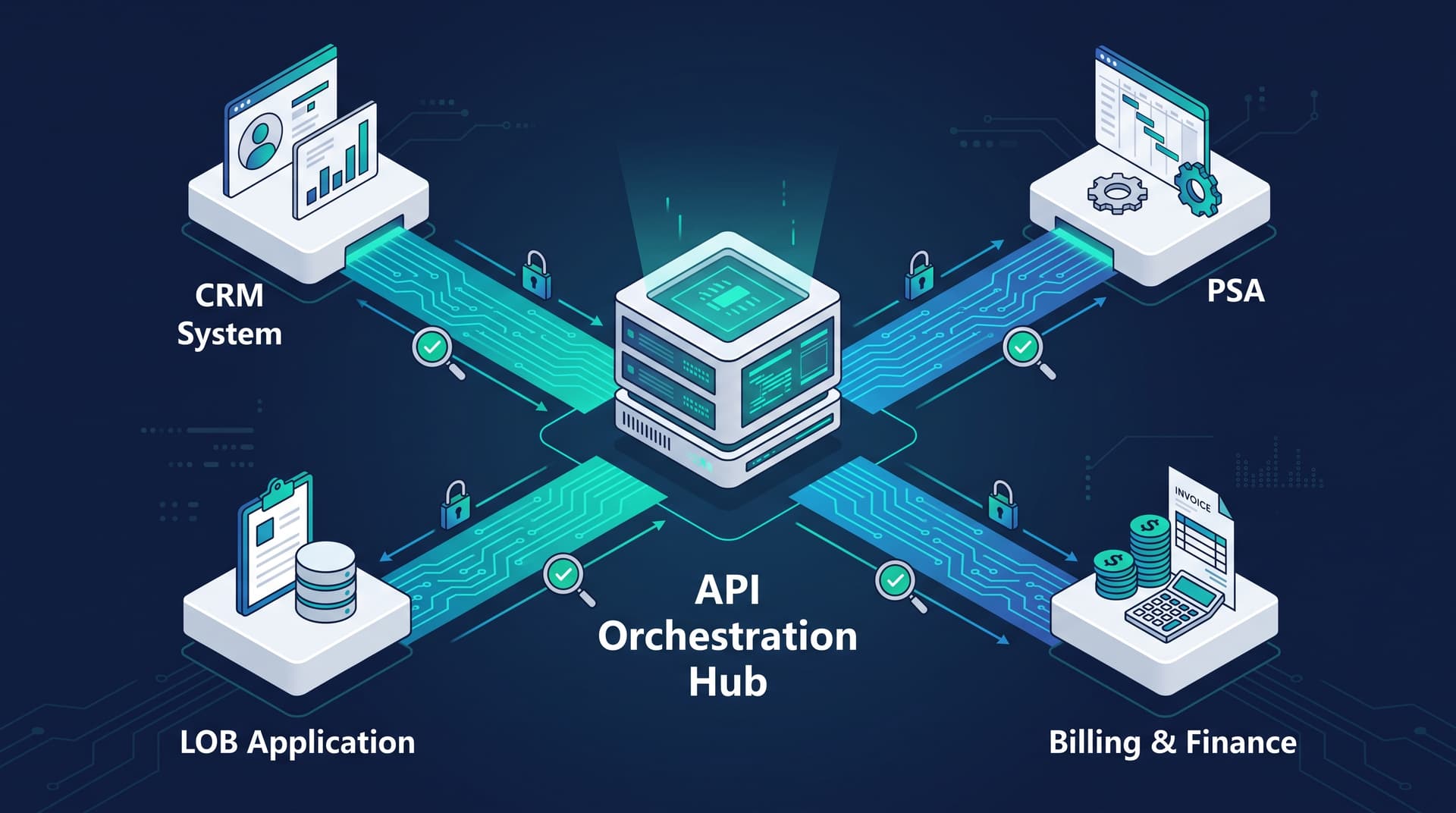
True cross-system orchestration bridges these gaps by establishing a deterministic, resilient integration layer across your software stack. Rather than merely moving payloads from System A to System B, enterprise workflow automation ensures data consistency, transaction safety, and transparent observability even when underlying endpoints experience downtime or API rate limits.
To build an integration architecture capable of supporting core business operations, engineering and operations leaders must understand the core trade-offs between integration paradigms, implement strict idempotency mechanisms, and design proactive failure management routines.
Architectural Paradigms: API-Based Orchestration vs. UI Bots
When automating processes across disparate platforms, architects generally evaluate two primary integration approaches: direct API-based orchestration and User Interface (UI) automation, commonly referred to as Robotic Process Automation (RPA).
API-Based Automation (The Preferred Baseline)
Direct API orchestration relies on REST, GraphQL, or gRPC protocols to communicate directly with application backends.
- High Throughput & Speed: Executed at machine speed via structured network requests, avoiding application rendering overhead.
- Schema Contract Stability: Leverages versioned API endpoints with clear request/response schemas, ensuring predictably structured payloads.
- Granular Error Codes: Provides precise HTTP status codes (e.g., 400 Bad Request, 429 Too Many Requests, 503 Service Unavailable) and structured error messages, enabling automated error recovery.
API-driven integrations should always serve as the foundation for modern enterprise workflows wherever programmatic interfaces exist.
UI Automation / RPA (The Fallback for Legacy Systems)
UI bots simulate human interactions by clicking buttons, reading visual text, and entering data into desktop or web interfaces.
- Legacy Compatibility: Essential when integrating legacy, on-premise, or proprietary applications that lack accessible APIs or database connectors.
- Fragility Concerns: Vulnerable to failure whenever UI layouts change, DOM structures update, or screen resolutions shift.
- Resource Overhead: Requires full visual application rendering, limiting throughput and demanding higher compute resources.
Takeaway: Use API-driven orchestration as your primary integration vector for speed, governance, and structural resilience. Reserve UI automation for legacy platforms where native APIs or direct database access are technically unviable.
The Mechanics of Reliability: Idempotency and State Synchronization
In distributed systems, network partitions, timeout errors, and transient infrastructure hiccups are statistical guarantees. When an orchestration engine sends a payload to a target system—such as an invoice creation request to a billing platform—a network timeout does not clarify whether the destination processed the request or failed before receipt.
Without fault-tolerant design, naive retry mechanisms risk duplicate operations: charged credit cards, double-generated client records, or flooded ticketing queues. Eliminating these risks requires rigorous idempotency and state management.
| Design Concept | Definition | Architectural Implementation | Operational Benefit |
|---|---|---|---|
| Idempotency | The property where an operation produces the exact same state regardless of how many times it is executed with identical parameters. | Unique transaction header keys (e.g., Idempotency-Key: uuid-v4) passed to target API endpoints. |
Prevents duplicate billing transactions or duplicate asset creation during retry cycles. |
| State Persistence | Centralized storage tracking the progress of multi-step cross-system workflows. | Transactional state databases (e.g., Redis or PostgreSQL) storing intermediate job execution logs. | Allows workflows to resume from the exact point of failure rather than restarting entirely. |
| Deduplication | Inbound message filtering that identifies and discards repeated trigger events. | Event hash tables comparing payload signatures within a defined time window. | Eliminates storm triggers caused by upstream webhook loops or redundant web triggers. |
Implementing Idempotency Keys in Orchestration Pipelines
When designing cross-system workflows, the orchestration layer must generate a deterministic idempotency key derived from the unique attributes of the source event. For example, when creating a customer billing record triggered by a closed-won CRM deal, the idempotency key might combine the CRM Opportunity ID and the contract renewal date:
idempotency_key = sha256(crm_opportunity_id + "-" + contract_sign_date)
When the orchestration engine calls the billing platform API, it passes this unique string within the request header or payload. If a network timeout occurs and the engine retries the request, the billing system checks its transaction log:
- If the key exists, it returns the previously generated billing ID without creating a duplicate account.
- If the key does not exist, it processes the transaction normally and records the key.
This deterministic pattern ensures safe retries across all line-of-business integrations.
Multi-System Orchestration in Practice: Onboarding, Tickets, and Billing
To understand how cross-system orchestration operates in a real-world enterprise environment, consider a common operational scenario: onboarding a new enterprise client. This workflow spans a CRM (e.g., HubSpot or Salesforce), a Professional Services Automation platform (e.g., ConnectWise or ServiceNow), and a financial management engine.
The Connected Onboarding Pipeline
-
Trigger Phase (CRM Event):
- An opportunity moves to "Closed-Won" status in the CRM.
- A webhook triggers the Bitscaled workflow automation engine, passing the deal payload, account contact details, and purchased service tiers.
-
Validation and State Initialization:
- The orchestration engine verifies payload schema completeness.
- A state record is created in the central execution store with status
IN_PROGRESS. - A deterministic workflow trace ID is assigned.
-
Provisioning Step 1: Customer Account & Billing Creation:
- The engine executes an API call to the billing engine to provision the account ledger, set up recurring subscription schedules, and generate the initial invoice.
- Safety Check: The idempotency key ensures that if this API call times out, subsequent retries won't create multiple financial accounts.
-
Provisioning Step 2: PSA Project & Ticket Generation:
- The engine queries the tickets module or PSA system to build the client onboarding workspace.
- Template-based task lists are instantiated, assigning setup tasks to engineers and account managers based on the specific service SKUs purchased in the CRM deal.
- Project milestones and SLA target dates are dynamically calculated using business day calendar rules.
-
Provisioning Step 3: Notification and Handshake:
- Upon verified confirmation from both the billing system and PSA platform, the engine updates the CRM record with the external Billing ID and PSA Project Link.
- An automated welcome message is dispatched to the client with secure portal credentials.
- The workflow execution state updates to
COMPLETED.
By orchestrating these steps centrally, organizations eliminate manual handoffs, guarantee data alignment across finance and operations, and reduce client onboarding cycle times from days to minutes.
Failure Handling, Dead-Letter Queues, and Alerting Strategies
Even well-designed API integrations encounter failures due to expired authentication tokens, unannounced target API schema shifts, or extended cloud vendor outages. A resilient automation system must anticipate errors and handle them without human intervention where possible, and with actionable context when human action is required.
Retries with Exponential Backoff and Jitter
When an API call returns a transient error code (such as HTTP 500, 502, 503, or 429), immediate retries often exacerbate server overload. The orchestration engine should implement exponential backoff with jitter:
- Base Delay: Wait 2 seconds before retry #1.
- Exponential Increase: Wait 4 seconds for retry #2, 8 seconds for retry #3, 16 seconds for retry #4.
- Jitter Addition: Add a randomized duration (+/- 500ms) to prevent thundering herd problems where hundreds of queued workflow instances hit a recovering endpoint simultaneously.
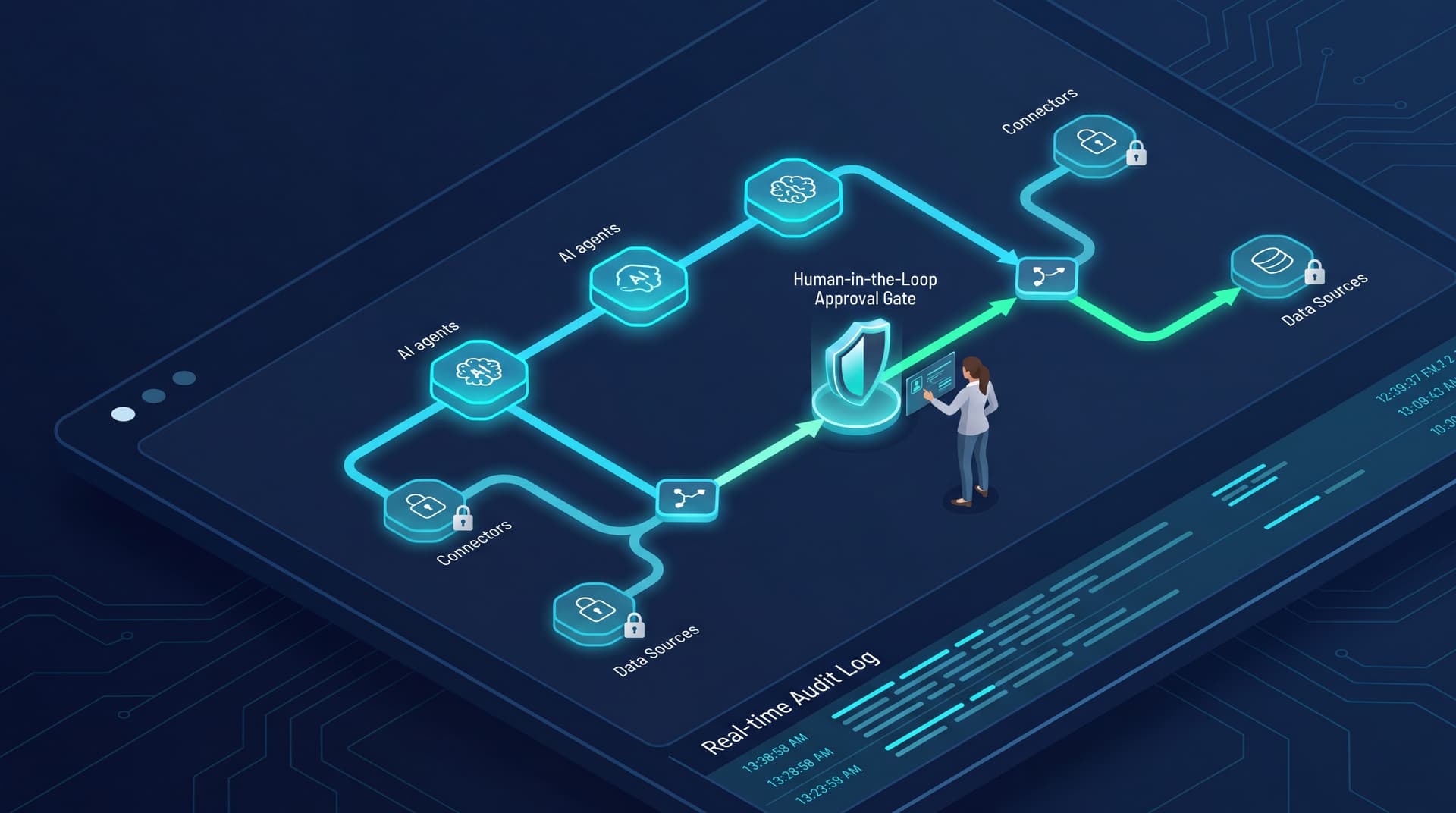
Dead-Letter Queues (DLQ) and Human-in-the-Loop Interventions
When a workflow exceeds its maximum retry threshold (e.g., 5 consecutive failures) or encounters a non-retryable error (e.g., HTTP 401 Unauthorized or HTTP 422 Unprocessable Entity due to missing required fields), the job must not fail silently.
- Isolation: The payload and current state vector are moved to a designated Dead-Letter Queue (DLQ).
- Context Enrichment: The failure event is enriched with debugging metadata: exact HTTP payload sent, header details, endpoint error response, and execution timeline.
- Targeted Alerting: High-priority alerts are dispatched to the operations or platform engineering team via automated ticket creation or incident management systems.
- Interactive Remediation: Platform operators review the blocked job in an administrative dashboard, edit payload errors (such as fixing a misspelled email domain or updating missing billing tax IDs), and execute a single-click replay of the exact step without resetting the entire workflow.
Building a Resilient Integration Roadmap
Enterprise workflow orchestration is not merely an IT task; it is a strategic discipline that directly dictates operational agility, data integrity, and customer satisfaction. By shifting from ad-hoc point-to-point scripts to structured, API-first orchestration built on idempotency and robust error recovery, organizations construct a resilient foundation for scalable growth.
Key takeaways for engineering and operations leaders include:
- Prioritize native API integrations over UI-based RPA to maximize reliability and execution speed.
- Enforce idempotency keys across all transactional APIs to prevent duplicate operations during retries.
- Maintain centralized workflow state to support atomic multi-system operations and step-level resume capability.
- Implement structured dead-letter queuing with enriched error logging to turn system failures into swift operational fixes.
Ready to transform your fragmented software stack into a synchronized operational ecosystem? Map your highest-friction workflows with Bitscaled automation architects to design secure, self-healing integration architectures tailored to your enterprise.