Safely Scaling Autonomous Workflows: The Architecture of Governed Workspace AI
The enterprise shift from rigid, rule-based scripts to dynamic AI agents promises unprecedented operational velocity. Modern AI agents reason over unstructured diagnostic logs, synthesize cross-system state data, and construct multi-step remediation strategies without requiring custom logic trees for every possible scenario. However, the rapid proliferation of unconstrained AI frameworks has introduced severe operational liabilities. Industry enthusiasm surrounding autonomous reasoning often obscures a fundamental engineering reality: without strict structural boundaries, non-deterministic agents pose unacceptable risks to multi-tenant security perimeters, enterprise data privacy, and regulatory compliance frameworks.
The strategic challenge is not whether artificial intelligence can generate effective action plans, but whether operational leaders can establish reliable control architectures that prevent rogue executions, credential leaks, and unchecked privilege escalation. Ungoverned agents operating with wide API access threaten the fundamental safeguards of enterprise IT management. Bringing client-safe automation into production requires moving past speculative demos into a hardened, policy-driven runtime environment. Through the Bitscaled Workspace platform, organizations can harness high-velocity agentic reasoning while maintaining complete, verifiable control over every system interaction.
Granular Identity and Least-Privilege Execution
Traditional automation frameworks frequently rely on static, high-privilege service accounts to execute tasks across distributed environments. When applied to generative AI models, this over-privileged paradigm introduces compounding risk. An unconstrained agent with write access to active directory services, cloud infrastructure, or financial databases can quickly execute unintended modifications if it encounters malformed inputs or context-window hallucinations.
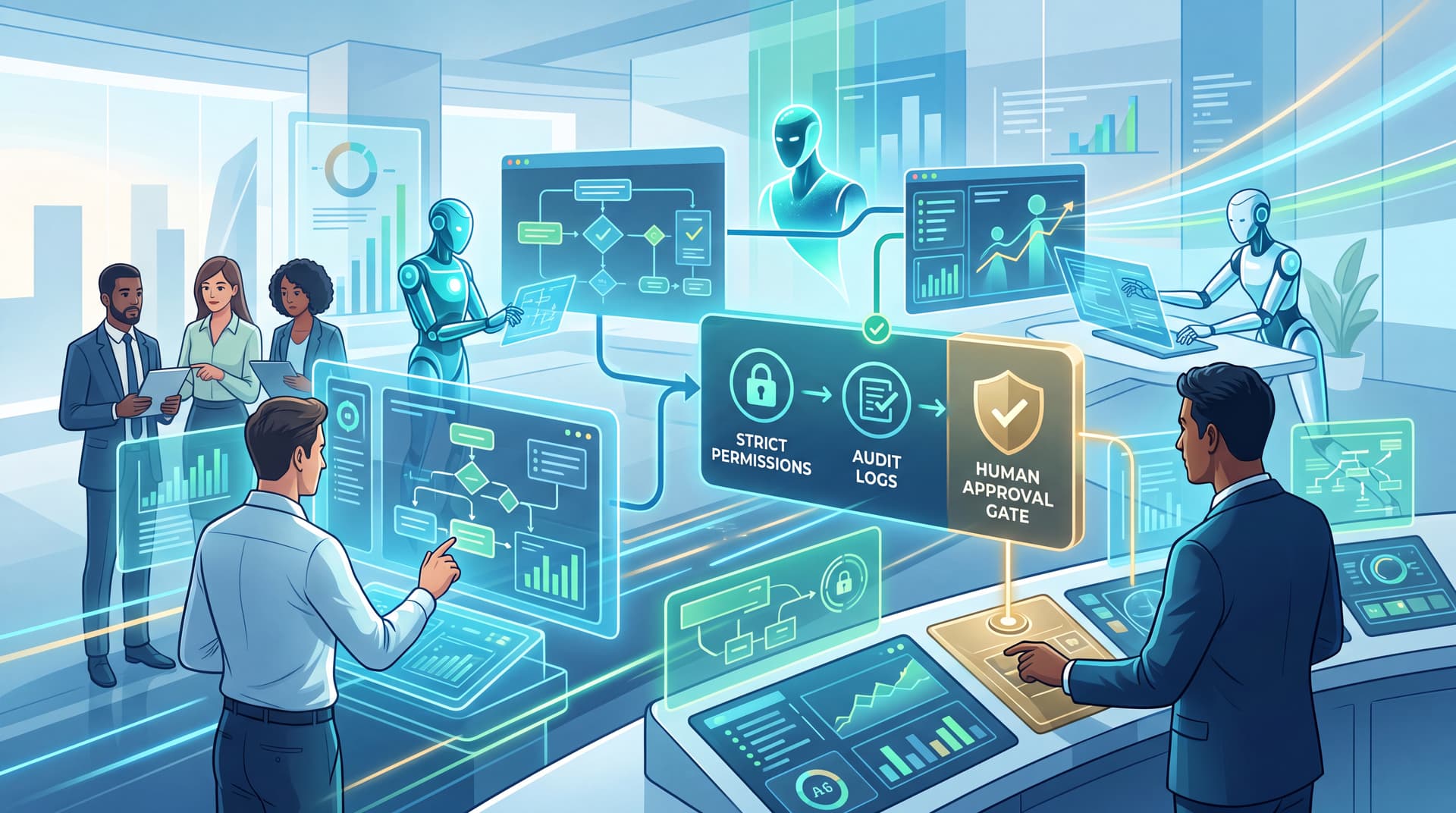
Governed Workspace AI fundamentally redefines agent execution by enforcing strict Role-Based Access Control (RBAC) and dynamic, short-lived token scoping. Instead of granting an agent permanent administrative rights, the system evaluates the precise scope required for a proposed action contextually.
- Identity Isolation: Every AI agent executes within an isolated security identity bound strictly to the tenant, group, or user invoking the workflow.
- Just-In-Time Entitlements: Elevated permissions are provisioned dynamically for individual actions and revoked immediately upon task completion.
- Context-Aware Entitlement Scoping: Even within an authorized service connection, read and write operations are strictly partitioned based on active organizational policy.
By ensuring that an AI agent can never access data or execute commands beyond the explicit entitlements of its assigned operational envelope, enterprises eliminate the risk of privilege escalation and cross-tenant data exposure.
Interactive Human-in-the-Loop Approval Gates
Not all automated tasks carry equal risk profiles. A workflow that gathers diagnostic telemetry or summarizes support history can execute autonomously without operational hazard. Conversely, actions that alter production configurations, modify access control lists, provision billable cloud resources, or send external communications demand explicit human verification prior to execution.
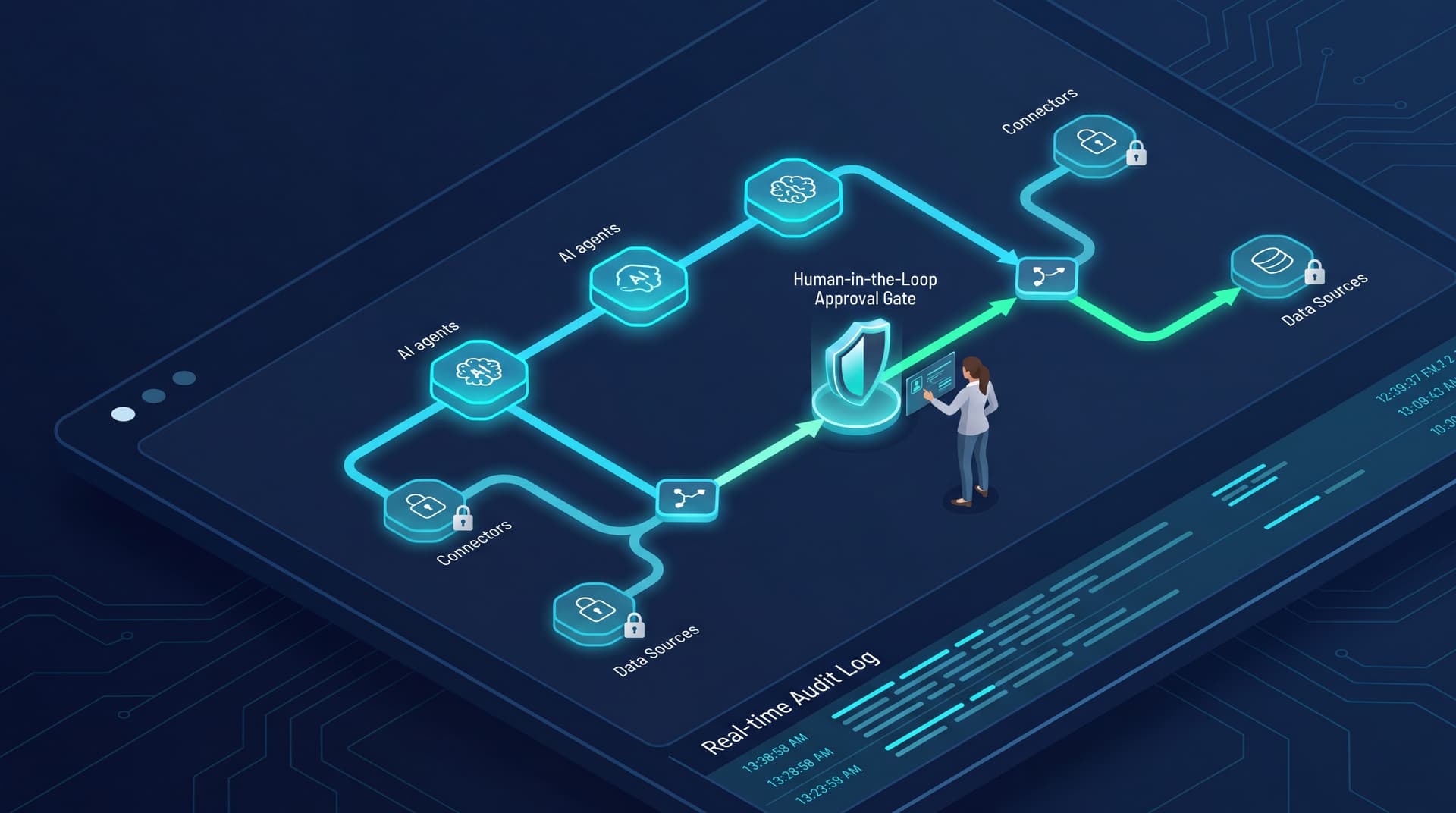
Governed AI architectures separate reasoning and plan generation from execution delivery. When a Bitscaled Workspace agent evaluates a problem, it formulates a structured execution plan comprising proposed actions, target systems, and risk assessments. If a proposed action exceeds predetermined risk thresholds, the system automatically pauses the workflow and routes a interactive approval gate to authorized personnel.
+-----------------------+
| AI Agent Plan Created |
+-----------+----------+
            |
            v
+-----------------------+
|  Risk Policy Check    |
+-----------+----------+
            |
     +------+------+
     |             |
 High Risk     Low Risk
     |             |
     v             v
+---------+   +----------+
| Human   |   | Direct   |
| Approval|   | Execution|
+----+----+   +----------+
     |
  Approved?
  /      \
 Yes      No
 /          \
v            v
Execute   Cancel & Log
Approvers receive full context—including the agent's underlying reasoning, expected state changes, and roll-back options—delivered directly via the Command Dashboard or flagged for urgent review through Voice Dispatch. The agent remains entirely suspended until an authorized human explicit signs off or declines the request, ensuring critical systems are protected from automated miscalculations.
Connector Boundaries and API Sandbox Isolation
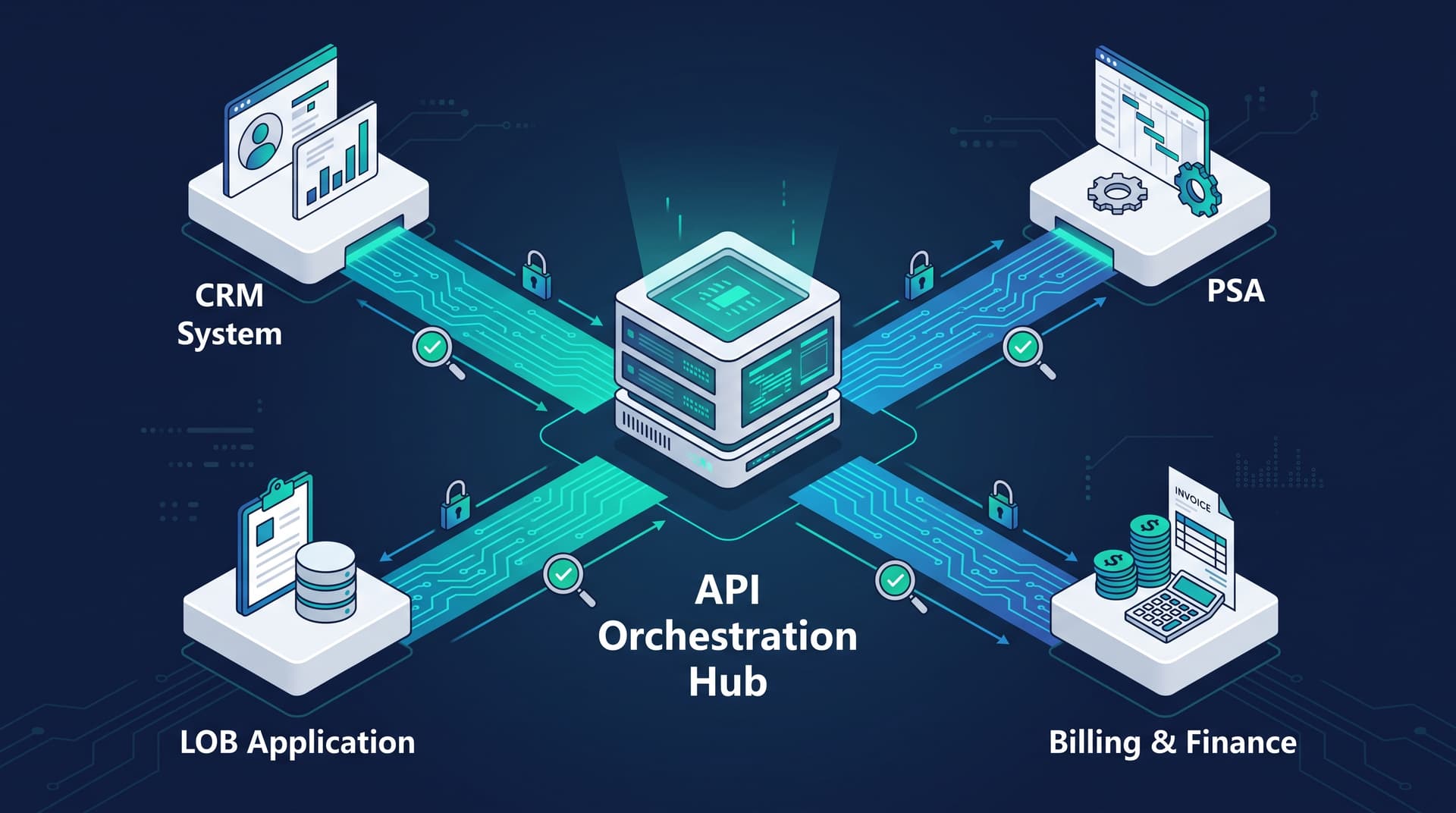
To interact with external environments, AI agents depend on API connectors to query endpoints and push configuration changes. In an ungoverned implementation, malicious actors can exploit these connectors using direct or indirect prompt injection—tricking the LLM into executing unauthorized third-party commands found within ticket contents, diagnostic logs, or incoming emails.
Governed Workspace AI protects against prompt injection and unauthorized side-effects by wrapping all integration points inside hardened connector boundaries:
- Strict Input/Output Sanitization: Incoming payload data is stripped of executable directives before entering the model's context window.
- Egress Boundary Controls: AI agents are physically restricted from making outbound network calls or contacting endpoints not explicitly registered on an approved whitelist.
- Deterministic Schema Enforcement: Agent outputs destined for API execution must strictly conform to predefined JSON schemas. Unrecognized keys, injected commands, or malformed parameters are dropped at the API gateway layer.
By enforcing network and schema boundaries, organizations can leverage custom models and workflow automations—such as those designed through Bitscaled AI Development Services—without opening side-channel vulnerabilities into core tenant environments like Cloud Control.
Immutable Audit Trails and Compliance Telemetry
In regulated industries such as healthcare, finance, and legal services, deploying unmonitored automation tools creates major audit and compliance hurdles. Standard execution logs often fail to capture why a dynamic system made a specific decision, leaving compliance teams unable to reconstruct the timeline of an incident.
Governed AI agents inside Bitscaled address this visibility gap through comprehensive, tamper-proof telemetry. Every step of the agent's operational cycle is recorded sequentially within the centralized audit pipeline:
- Prompt and System Context Snapshots: The exact contextual prompt, system instructions, and dynamic retrievals provided to the language model.
- Generated Plan and Risk Score: The raw structured proposal created by the model, alongside the platform's automated risk assessment.
- Human Approval Metadata: Timestamps, user IDs, comments, and decision outcomes associated with approval gates.
- Execution State Diffs: Pre-execution and post-execution environmental state snapshots confirming the actual results of the command.
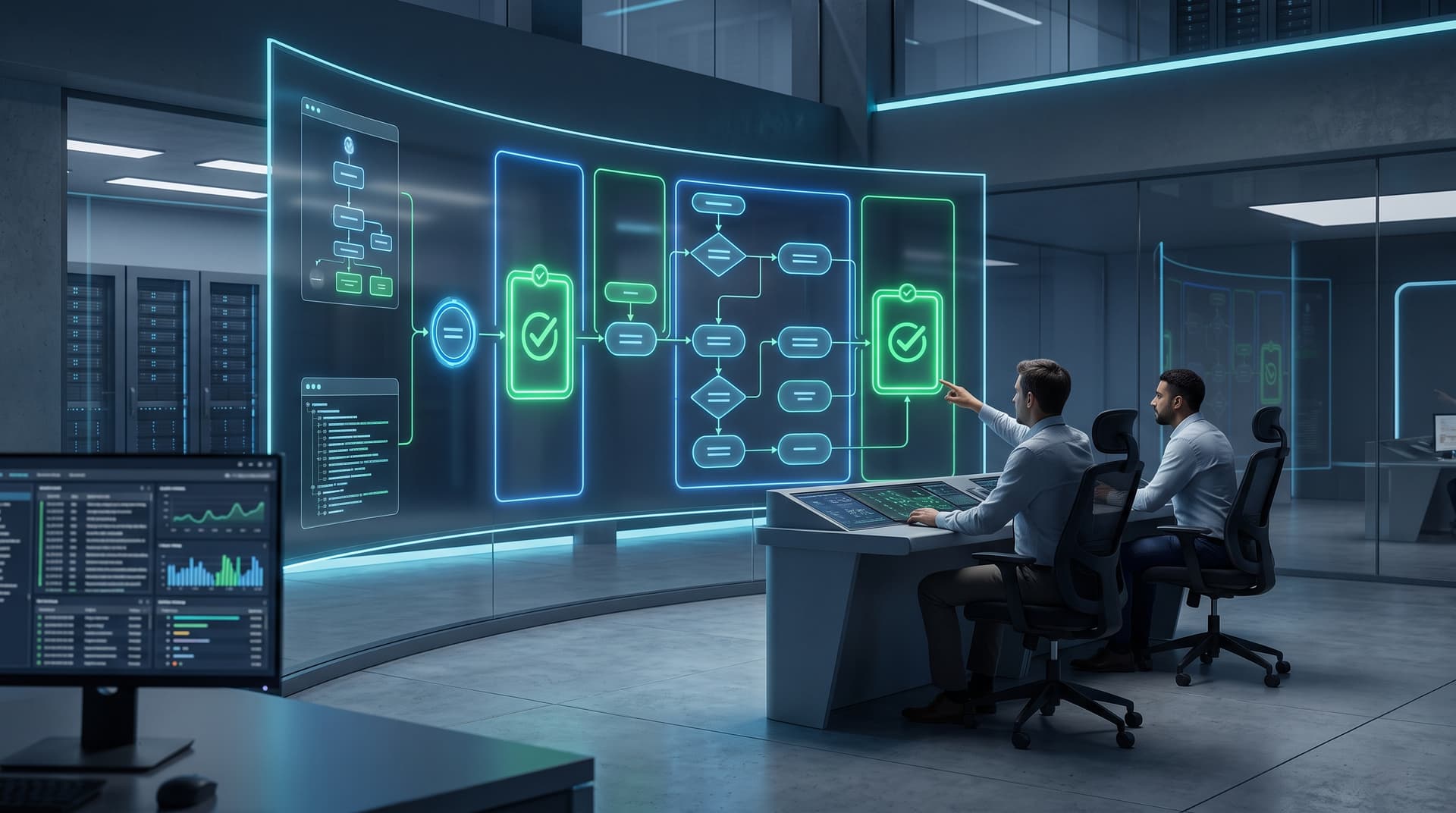
These immutable logs directly support frameworks like SOC 2 Type II, ISO 27001, and HIPAA by providing complete auditability for automated tasks. Operational leaders can review complete interaction timelines through the Bitscaled Governance Platform, transforming agentic automation into a fully defensible compliance asset.
Comparing Unconstrained vs. Governed AI Automations
| Feature Dimension | Unconstrained AI Agents | Governed Workspace AI Agents |
|---|---|---|
| Privilege Model | Static, broad administrative service keys | Dynamic, least-privilege short-lived tokens |
| Execution Oversight | Fully autonomous without intervention gates | Risk-tiered human-in-the-loop approval gates |
| Connector Safety | Open outbound API access; vulnerable to injection | Hardened schema enforcement and domain whitelisting |
| Audit Visibility | Basic text logs or raw API output streams | End-to-end telemetry capturing reasoning, approvals, and state diffs |
| Client Safety | High operational and multi-tenant exposure risk | Proven, policy-enforceable enterprise boundary guarantees |
Takeaway: Sustainable operational velocity with AI agents is achieved not by eliminating human oversight, but by embedding governance directly into the automated execution runtime.
Strategic Roadmap for Client-Safe AI Deployment
To successfully transition AI automation from experimental pilots to core production workflows, IT leaders should follow a structured, policy-first adoption roadmap:
- Establish Risk Classification Frameworks: Group everyday IT workflows into low, medium, and high-risk tiers based on data sensitivity and operational impact.
- Enforce Baseline Connector Isolation: Audit all API integrations to ensure third-party tools interact only through validated, schema-enforced gateways.
- Deploy Human Approval Routing: Configure real-time approval channels across command dashboards and mobile notification streams for all high-impact actions.
- Enable Centralized Audit Logging: Connect agent telemetry streams to continuous governance and monitoring dashboards to maintain compliance readiness.
By anchoring automation initiatives to these core architectural pillars, organizations unlock the transformative productivity of artificial intelligence without sacrificing control, security, or enterprise trust.
Experience Client-Safe Automation
Ready to transform your IT workflows with reliable, policy-driven intelligence? Explore governed AI agents inside Bitscaled Workspace or contact our automation team to schedule a custom platform architecture demonstration.