Navigating Your Next Phone System: Hybrid Voice, Teams Phone, and Cutover Essentials
Upgrading your organization's legacy PBX is no longer just about replacing physical desk phones; it is an opportunity to unify your communications. As businesses transition to modern workflows, IT leaders must navigate the complexities of on-premise versus cloud voice, Microsoft Teams Phone integrations, and strict regulatory requirements.
On-Premise vs. Cloud Voice (UCaaS)
The foundation of your communication strategy begins with choosing the right infrastructure.
- On-Premise Voice: Traditional on-premise systems offer maximum control and are often preferred by organizations with strict data sovereignty requirements, complex legacy analog devices, or locations with unreliable internet. However, they require significant capital expenditure, ongoing hardware maintenance, and complex VPN setups for remote workers.
- Cloud Voice (UCaaS): Unified Communications as a Service (UCaaS) shifts the PBX to the cloud. It offers scalability, predictable operational costs, and seamless remote access.
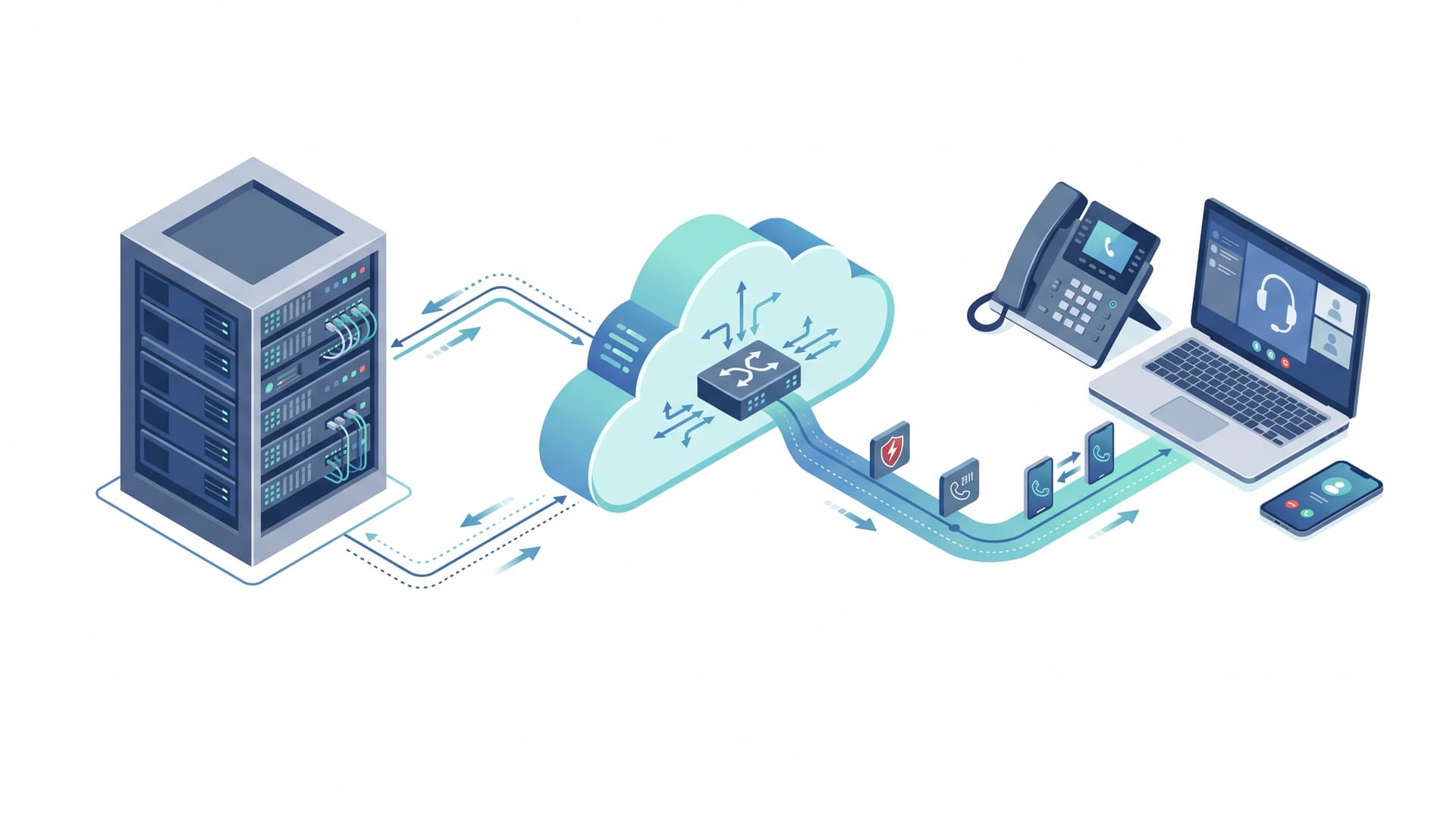
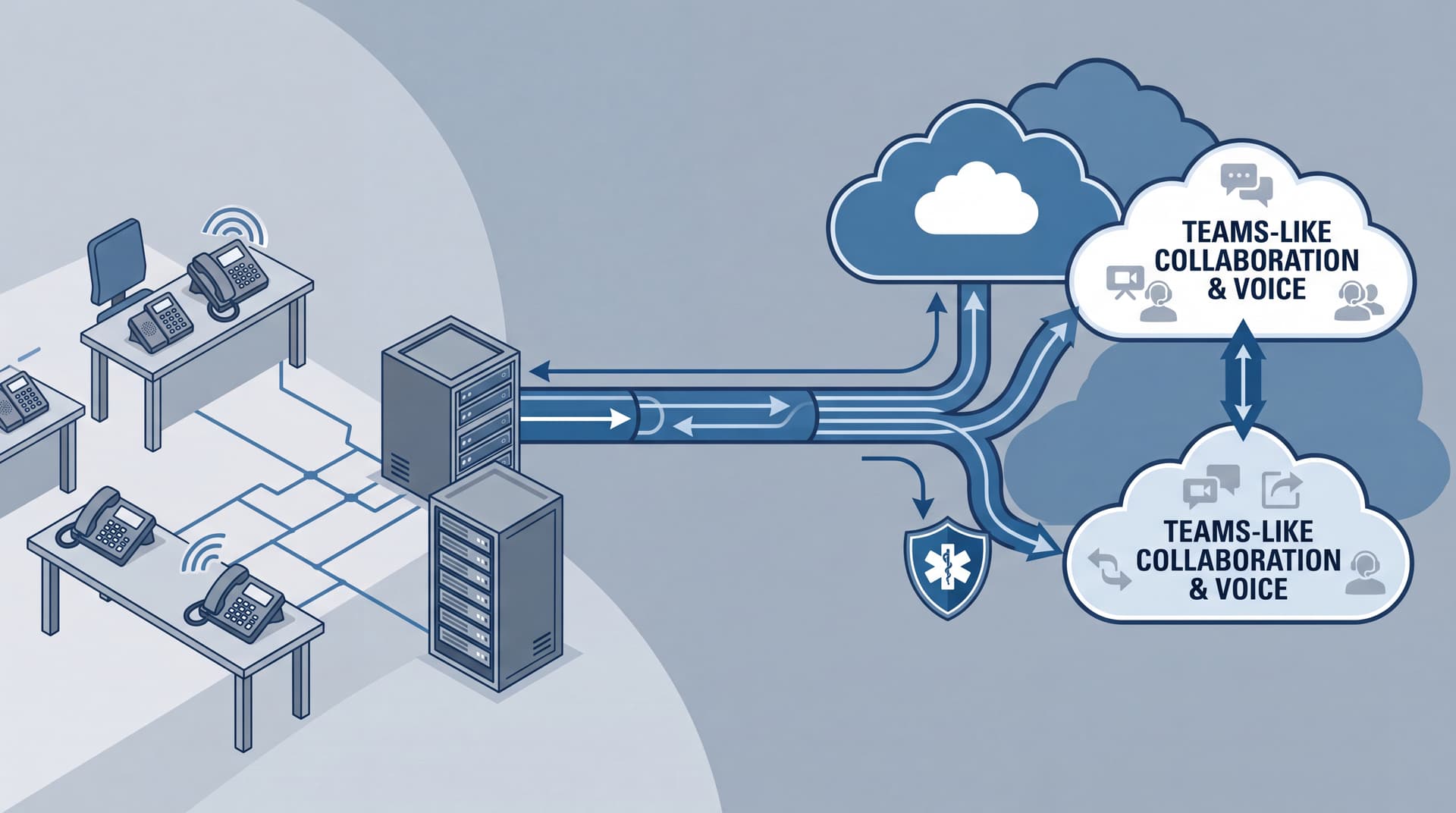
- The Hybrid Approach: Many enterprises adopt a hybrid voice strategy, keeping on-premise survivability nodes at critical sites (like manufacturing floors or hospitals) while migrating standard office users to a cloud-based platform.
Microsoft Teams Phone Considerations
For organizations already invested in the Microsoft 365 ecosystem, Microsoft Teams Phone is a logical step for collaboration. However, deployment requires careful planning:
- Calling Plans vs. Direct Routing vs. Operator Connect: You must decide how to connect Teams to the Public Switched Telephone Network (PSTN). Microsoft's native Calling Plans are simple but can be costly for high-volume users. Direct Routing allows you to bring your own SIP trunk, offering flexibility for hybrid environments. Operator Connect provides a middle ground with managed carrier integrations directly in the Teams admin center.
- Endpoint Hardware: Assess whether users actually need physical desk phones or if headsets and softphones will suffice.
Navigating E911 Requirements and Number Porting
Compliance and continuity are critical during any voice migration.
- E911 Compliance: Under Kari's Law and the RAY BAUM'S Act, your phone system must allow users to dial 911 without a prefix, notify a central location (like a front desk) when an emergency call is made, and provide a 'dispatchable location' (including building, floor, and room number). Cloud and hybrid systems use dynamic location routing (based on IP subnets or Wi-Fi access points) to ensure remote and roaming workers remain compliant.
- Number Porting: Transferring existing phone numbers to a new carrier requires precision. Ensure your Customer Service Record (CSR) matches your porting request exactly. Mismatched addresses or authorized contacts are the most common reasons for port rejections and delays.
Cutover Checklist and Common Downtime Causes
Switching from an old system to a new one is the highest-risk phase of a VoIP project.
Pre-Cutover Checklist:
- Verify all network firewalls are configured to prioritize SIP/RTP traffic (Quality of Service).
- Confirm all numbers have been successfully ported and tested in the new environment.
- Map out and test complex call routing, including auto-attendants, hunt groups, and after-hours rules.
- Train staff on the new softphone or hardware interfaces.
Common Causes of Cutover Downtime:
- Firewall Blocking: SIP ALG (Application Layer Gateway) left enabled on firewalls can mangle VoIP packets, causing one-way audio or dropped calls.
- Porting Bottlenecks: Assuming numbers port instantly. Always maintain the legacy system until the new carrier confirms the port is fully complete.
- Bandwidth Saturation: Failing to allocate dedicated bandwidth for voice traffic, resulting in poor call quality during peak office hours.
Next Steps
Transitioning to a modern hybrid voice or UCaaS environment requires technical precision and strategic planning. Avoid the common pitfalls of number porting delays and network misconfigurations.
Plan a VoIP migration assessment with Bitscaled today to ensure a seamless, compliant, and zero-downtime upgrade for your communications infrastructure.