Overcoming Legacy Barriers: A Digital Transformation Roadmap for SMBs
In 2026, the mandate for small and medium-sized businesses (SMBs) is clear: adapt or fall behind. For organizations in healthcare, manufacturing, and professional services, digital transformation is no longer just about staying competitive—it is about ensuring fundamental operational resilience. Yet, many B2B decision-makers find themselves constrained by legacy infrastructure that stifles innovation and agility.
This roadmap provides actionable strategies for modernizing systems, digitizing workflows, and leveraging data, all while maintaining a robust security posture.
Dismantling Legacy Bottlenecks
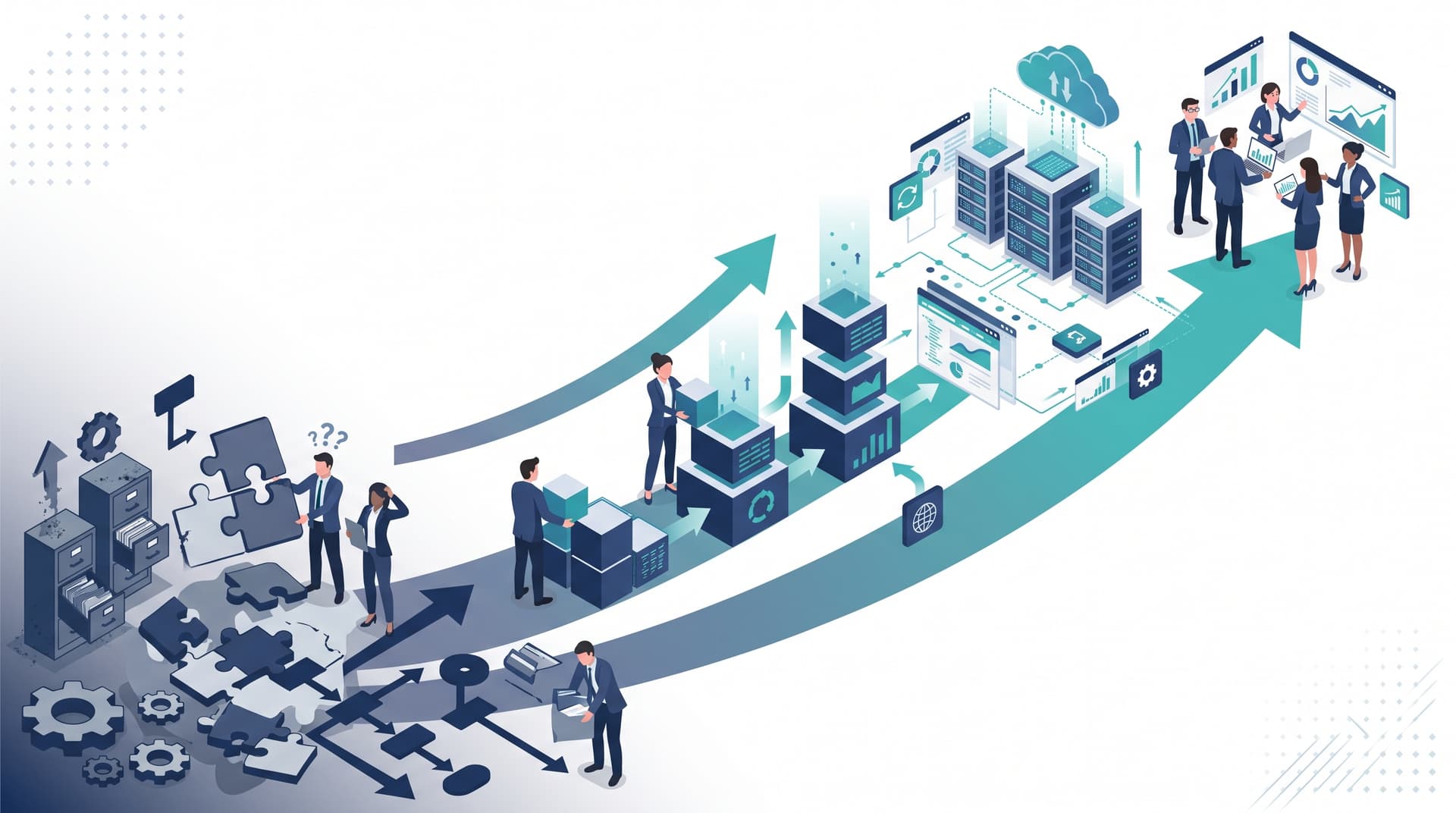
Legacy systems often serve as the primary roadblock to digital agility. In manufacturing, outdated ERPs limit supply chain visibility. In healthcare, legacy patient management systems create data silos that frustrate providers and delay care. Modernization begins with a thorough audit of existing infrastructure to identify bottlenecks. Transitioning away from monolithic applications toward modular, API-driven architectures allows SMBs to integrate new tools without disrupting core operations.
Embracing a Cloud-First Approach to Workflows
Digitizing workflows is the engine of operational efficiency. A cloud-first strategy enables professional services firms to collaborate seamlessly across distributed teams, while allowing manufacturing floors to sync real-time production data with back-office operations. By automating repetitive administrative tasks, businesses can redirect human capital toward high-value, strategic initiatives.
Driving Customer and Patient Experiences with Data
Data-driven decision making is the ultimate differentiator in today's market. By centralizing data from digitized workflows, organizations can unlock predictive analytics. For professional services, this means anticipating client needs. For healthcare providers, it translates to personalized patient experiences and proactive care models. Transforming raw data into actionable intelligence requires scalable cloud storage and modern analytics platforms.
Securing the Journey: Zero Trust and Azure M365
Digital transformation expands an organization's attack surface, making legacy perimeter-based security obsolete. Modernization must be built on a Zero Trust architecture, operating on the principle of "never trust, always verify."
Implementing frameworks like Microsoft Azure and Microsoft 365 (M365) provides a comprehensive security foundation. Azure's native security controls and M365's advanced identity and access management ensure that sensitive data—whether intellectual property in manufacturing or Protected Health Information (PHI) in healthcare—remains secure. By leveraging M365's compliance managers and Azure's continuous monitoring, SMBs can confidently deploy cloud-first strategies without compromising regulatory compliance or data integrity.
Conclusion
Digital transformation is a continuous journey of aligning technology with business outcomes. By retiring legacy systems, embracing cloud-first workflows, and securing the enterprise with Zero Trust and Azure M365, SMBs can build a resilient, future-ready foundation.
Ready to accelerate your modernization journey? Book a discovery call with Bitscaled today to explore how our tailored digital transformation strategies can drive your business forward.