De-Risking Digital Transformation: A Continuous Modernization Model for SMBs
For many mid-market executives, the phrase "digital transformation" triggers visions of ballooning budgets, missed deadlines, and disruption to core business operations. Traditional big-bang replatforming projects promise complete modernization but frequently fail due to scope creep and organizational resistance. Modernization does not require burning down existing infrastructure overnight.
By prioritizing phased delivery, active change management, and user adoption, small and medium-sized businesses (SMBs) can systematically modernize technology while maintaining operational continuity.
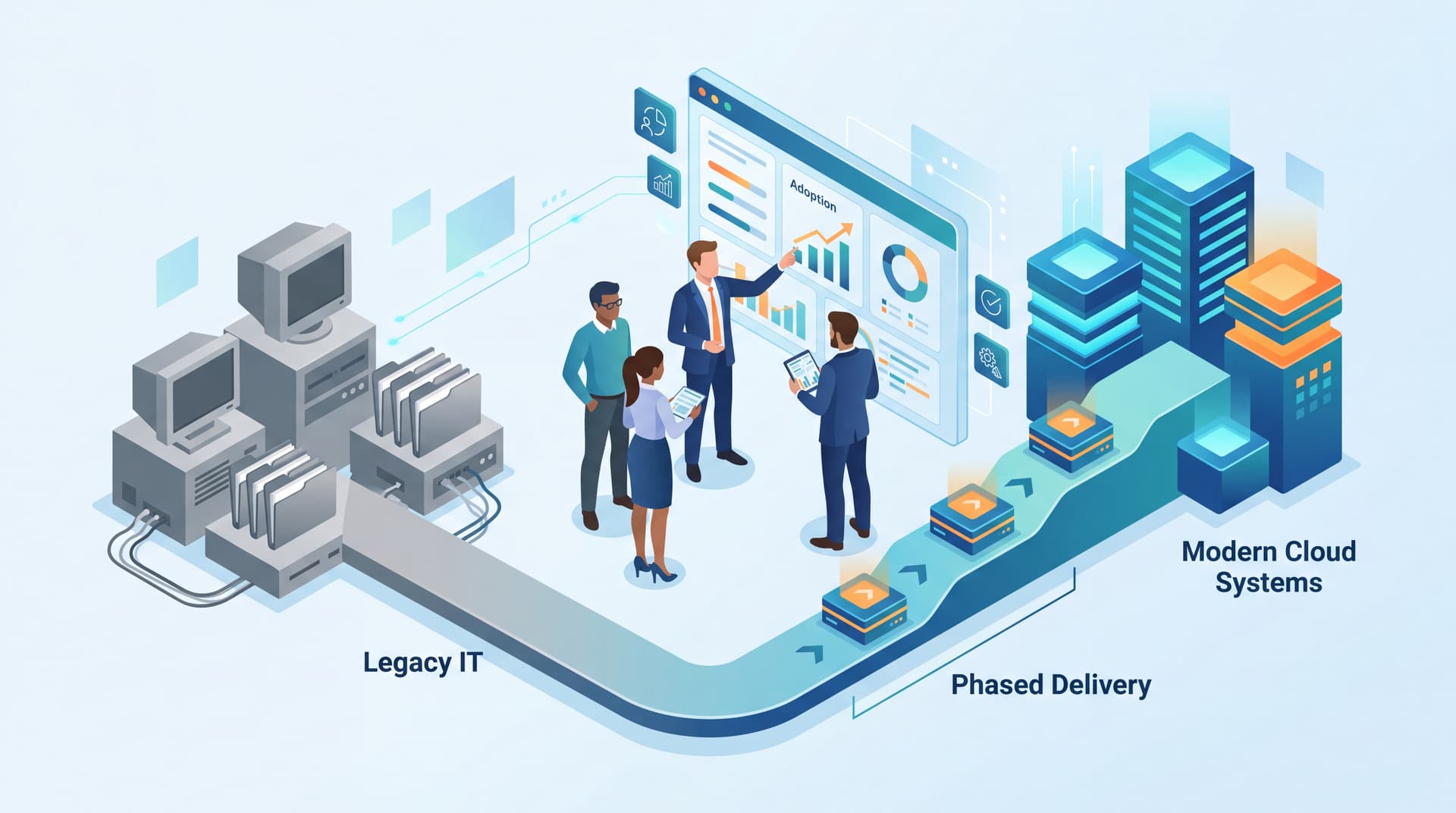
Why Phased Modernization Beats Big-Bang Replatforming
Big-bang overhauls assume that complex business processes can be completely mapped and replaced in a single go-live event. In reality, operational needs evolve faster than multi-year delivery cycles. Phased delivery mitigates risk through:
- Faster Time to Value: High-priority bottlenecks are resolved within weeks rather than years.
- Reduced Operational Risk: Core functions remain stable while edge capabilities are upgraded.
- Iterative Feedback Loops: Real user feedback shapes subsequent development phases.
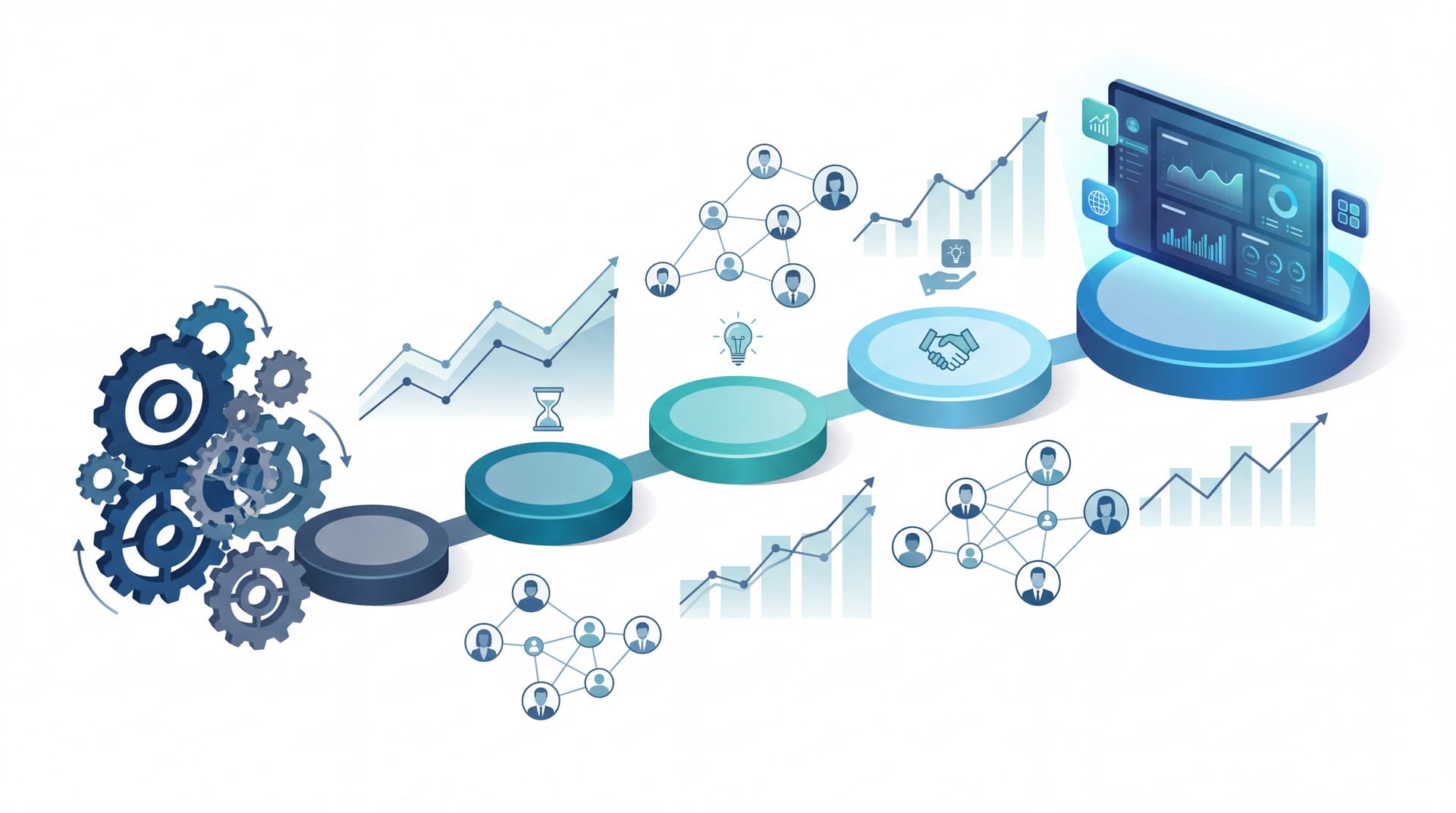
The SMB Modernization Maturity Model
To plan an effective roadmap, leaders must first establish an accurate baseline. Evaluate your organization across the following four tiers:
Level 1: Reactive & Siloed (Score: 1-3)
- Manual data entry across disconnected spreadsheets.
- High dependency on key individuals for process execution.
- IT viewed solely as a cost center for troubleshooting.
Level 2: Standardized & Digitized (Score: 4-6)
- Core operational software is deployed (ERP/CRM).
- Basic workflows are documented, but system integrations are minimal.
- Reporting is historical rather than real-time.
Level 3: Integrated & Automated (Score: 7-8)
- Seamless API connections exist between key line-of-business platforms.
- Routine operational tasks are automated using workflow triggers.
- Management utilizes real-time dashboards for decision-making.
Level 4: Adaptive & Continuously Optimized (Score: 9-10)
- Scalable micro-services or modular architectures allow rapid feature rollout.
- Data-driven predictive analytics guide daily operations.
- Change management is baked into operational culture.
Driving Adoption Through Active Change Management
New tools deliver zero ROI if employees refuse to adopt them. Successful digital transformation requires treating software updates as operational shifts rather than technical deployments:
- Define Clear Metrics: Track active daily users, process cycle times, and error rates rather than simple software login counts.
- Empower Internal Champions: Identify respected team leads early in the project to test iterations and mentor peers.
- Implement Continuous Training: Replace one-time workshops with concise, contextual bite-sized training modules integrated directly into user workflows.
Modernize Your Operations with Precision
Digital transformation is an ongoing operational capability, not a one-off project. By focusing on incremental value delivery and user adoption, SMBs can build modern, agile operations without risking stability.
Ready to elevate your technology infrastructure without multi-year delay? Plan a phased modernization roadmap with Bitscaled to pinpoint quick wins and build a resilient foundation for continuous growth.