Executive leadership faces an acute operational paradox: business units demand rapid AI automation to boost efficiency, while cybersecurity and compliance teams raise immediate red flags over data leakage, intellectual property exposure, and regulatory non-compliance. When leadership fails to provide a formal, secure channel for automation, employees default to shadow IT—pasting sensitive client tickets, proprietary contracts, and financial spreadsheets into consumer-grade AI tools.
To capture the productivity advantages of artificial intelligence without exposing the enterprise to systemic risk, organizations must move from ad-hoc prompting to architected, governed workflow integration. Through modern AI Development Services, IT leaders can implement automated guardrails that enforce data boundaries, mandate human sign-off, and preserve full auditability.
The Technical Pillars of Governed AI Integration
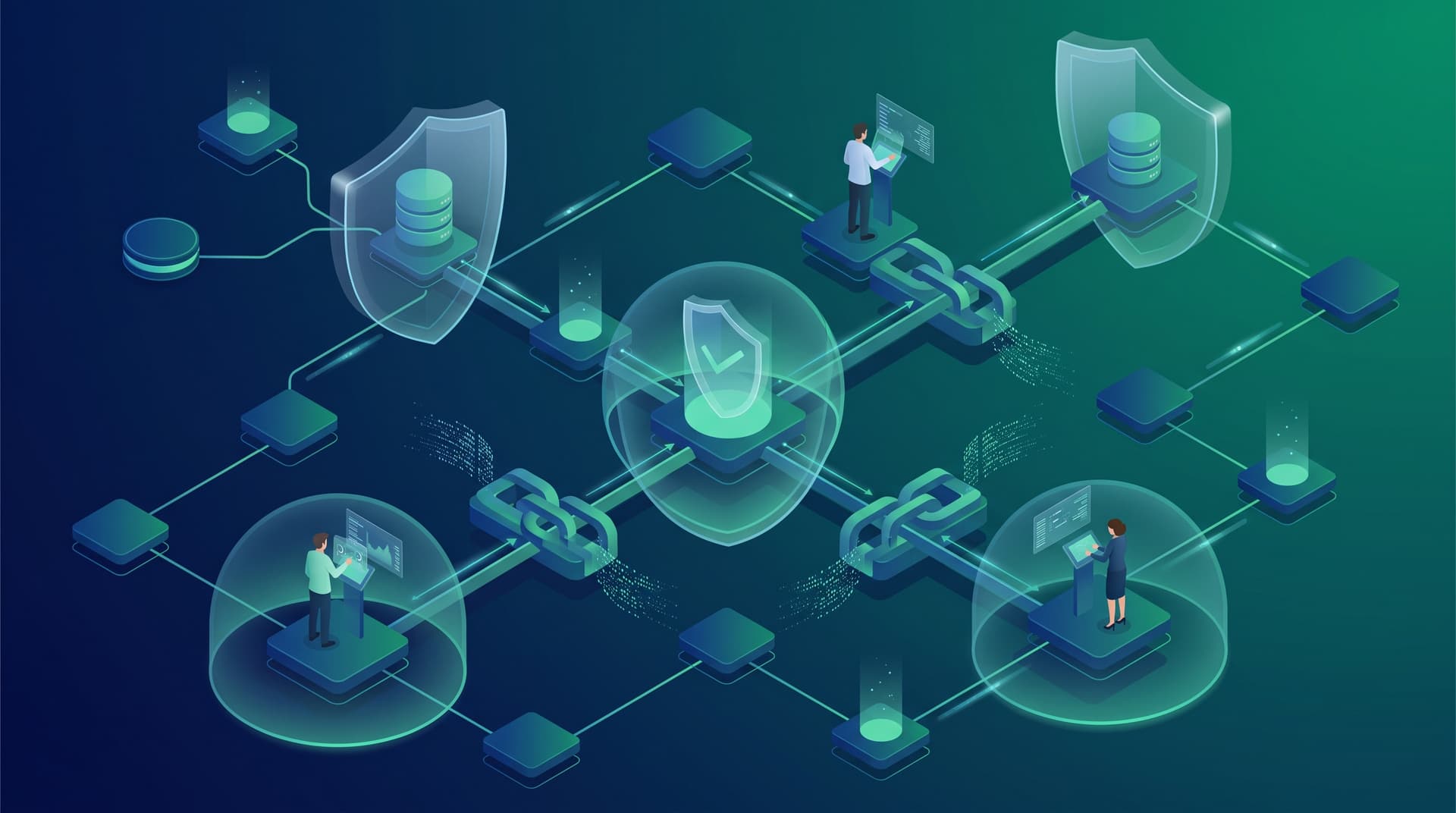
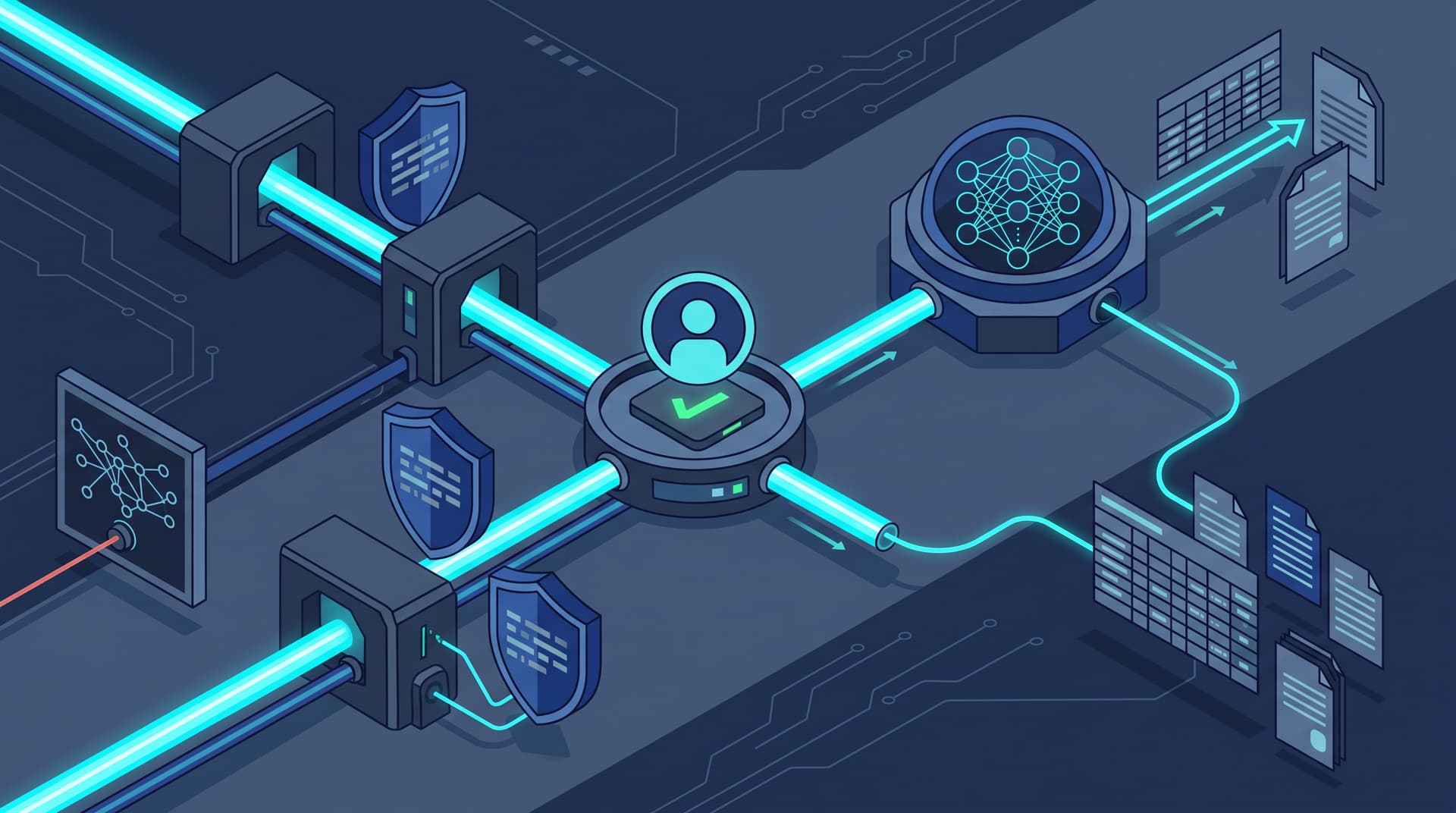
Governed AI adoption is not about restricting technology; it is about establishing control planes that render automation safe, repeatable, and compliant. A robust integration framework relies on four foundational architectural pillars.
+-----------------------------------------------------------------------+
|                   GOVERNED AI INTEGRATION ARCHITECTURE               |
+-----------------------------------------------------------------------+
|  1. Data Boundaries         | Zero-retention LLM endpoints, inline    |
|                             | PII redaction, contextual scrubbing     |
+-----------------------------+-----------------------------------------+
|  2. Connector Security      | OAuth 2.0 scoped tokens, RBAC parity,   |
|                             | API gateway payload validation          |
+-----------------------------+-----------------------------------------+
|  3. Human Approval Flows    | Step-up authorization, threshold logic, |
|                             | interactive human-in-the-loop validation|
+-----------------------------+-----------------------------------------+
|  4. Immutable Audit Logs    | Complete prompt/response telemetry,     |
|                             | correlation IDs, SIEM log forwarding    |
+-----------------------------------------------------------------------+
1. Enforcing Strict Data Boundaries
Data boundary management is the first defense against data spill. Generative models must never train on enterprise inputs, nor should sensitive data leave authorized tenant environments in plaintext. Building explicit data boundaries requires three controls:
- Zero-Retention Endpoint Configuration: Leveraging commercial-grade API agreements where model providers explicitly commit to zero data retention and zero training on API payloads.
- Client-Side Data Sanitization: Implementing automated preprocessing pipelines that mask Personally Identifiable Information (PII), secret keys, and client identifiers before payloads leave the internal network.
- Tenant Context Scoping: Ensuring vector databases used for Retrieval-Augmented Generation (RAG) enforce strict multi-tenant filtering, preventing one department or client from querying index data belonging to another.
2. Connector Security & API Scoping
AI agents and workflows must not run with unchecked super-user privilege. Connectors linking Large Language Models (LLMs) to line-of-business applications (e.g., PSA platforms, ERPs, CRM databases) must strictly mirror existing user access controls.
- Least-Privilege API Tokens: Granting AI services targeted OAuth 2.0 access tokens restricted strictly to read or update operations within specific scopes.
- Schema-Enforced Input Scrubbing: Validating input parameters prior to LLM execution to block prompt injection attacks that attempt to bypass API boundary constraints.
3. Human-in-the-Loop (HITL) Approval Gateways
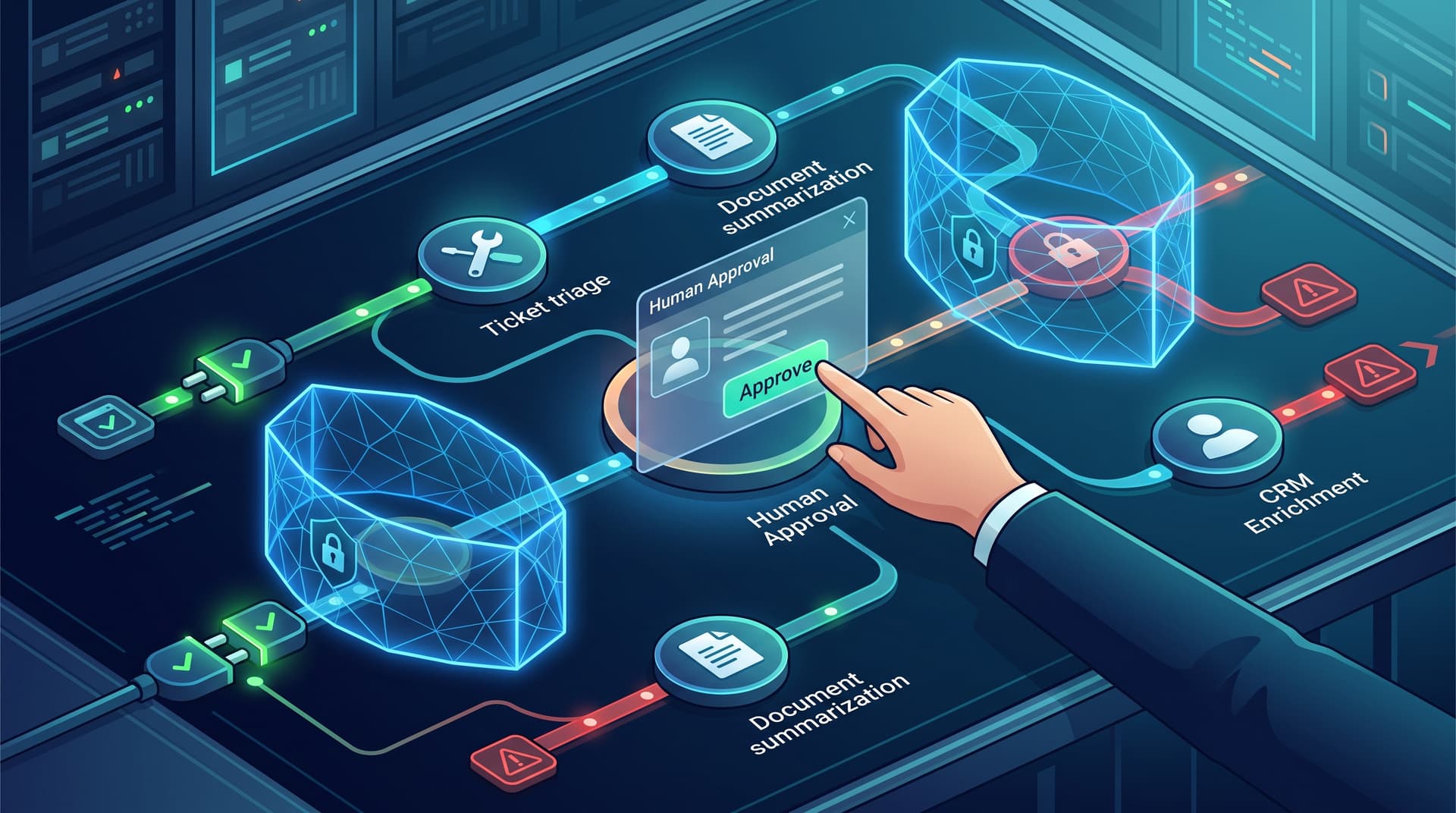
Fully autonomous AI operations introduce unnecessary risk into mission-critical environments. A governed architecture incorporates conditional human-in-the-loop approval triggers based on rule logic and model confidence scores.
- Deterministic Safeguards: If an AI model calculates an operational decision with a confidence metric below a predetermined threshold (e.g., 90%), the workflow automatically diverts to a human manager for manual review.
- Write-Action Authorization: Read-only operations (summarizing a thread) can execute automatically, whereas state-changing write operations (closing a ticket, altering a contract terms record, or updating billing metadata) require explicit user sign-off.
4. Comprehensive Telemetry & Immutable Logging
To pass regulatory audits and internal risk evaluations, every AI interaction must be completely trace-enabled. The integration platform must record the execution context, raw prompt, cleansed prompt, model outputs, token consumption, and approval histories, forwarding telemetry directly into existing SIEM architectures.
Takeaway: Enterprise AI governance transforms probabilistic language models into deterministic business assets by wrapping every API call in data masking, access scoping, and human validation controls.
High-Value MSP Use Cases: Operational Benefits & Risk Mitigation
Managed Service Providers (MSPs) and enterprise IT departments frequently target three operational workflows for initial AI integration. Below is an examination of these high-yield use cases, their inherent security risks, and the technical governance required to neutralize those risks.
1. Automated Help Desk Ticket Triage and Routing
- The Operational Workflow: Incoming support requests are ingested via web portals or email streams. An AI workflow analyzes the issue description, assigns priority tags, maps the ticket to the correct service category, and generates an initial troubleshooting checklist for tier-1 engineers.
- Inherent Risks: Misclassification of urgent system-down events, cascading routing loops, and potential exposure of embedded client credentials sent in raw ticket text.
- Governance Strategy: Deploy an automated regex and Named Entity Recognition (NER) pipeline to strip passwords and tokens before classification. Enforce an approval threshold where critical severity (P1) classifications execute instant escalation alerts to human dispatchers rather than relying solely on automated routing.
2. Unstructured Document & Contract Summarization
- The Operational Workflow: Technical account managers and legal teams upload complex vendor contracts, Service Level Agreements (SLAs), or architecture design documents to extract key deliverables, renewal dates, and indemnity obligations.
- Inherent Risks: Model hallucinations introducing false SLA terms, unmasked client identity data transferred across cloud regions, and shadow copies retained in vendor caching layers.
- Governance Strategy: Route all document processing through localized, zero-retention API pipelines integrated with Bitscaled's Governance Platform. The framework validates model summaries against source text references (grounded citations) and highlights extracted clauses alongside original paragraphs for human sign-off.
3. CRM Data Enrichment & Lead Hygiene
- The Operational Workflow: Sales and account management teams utilize AI agents to research prospect technologies, parse public filings, and update CRM records with relevant account intelligence and technographic data.
- Inherent Risks: Overwriting validated primary database records with hallucinated business facts, injecting unauthorized external script data, or corrupting historical account records.
- Governance Strategy: AI agents do not write directly to live CRM production tables. Instead, enriched attributes are directed into a staging schema. Account executives receive a quick visual diff interface where they can approve or reject proposed updates with a single click.
Governance Framework Matrix
The table below outlines how practical control mechanisms map directly to real-world risk domains across these primary operational use cases:
| Operational Use Case | Primary Operational Risk | Technical Guardrail Implemented | Human Approval Boundary |
|---|---|---|---|
| Ticket Triage | Misrouted critical incidents / PII exposure | NER credential masking & classification thresholds | Required for P1/P2 re-classifications |
| Document Summarization | Hallucinated SLA clauses / Data retention | Zero-retention API & grounded source mapping | Human validation of extracted terms |
| CRM Enrichment | Overwritten master data / Junk payload | Staging database schemas & input sanitization | One-click sales rep approval before sync |
A Roadmap for Phased AI Integration
Deploying governed AI workflows does not require an enterprise-wide overhaul overnight. Organizations achieve the highest success rate by adopting an incremental, structured rollout:
- Workflow Discovery & Risk Audit: Audit current shadow IT usage, identify high-volume repetitive tasks, and map data sensitivity classifications for all candidate inputs.
- Control Architecture Deployment: Establish centralized API gateways, data masking filters, and uniform telemetry routing before connecting LLM providers to enterprise data.
- Piloting Low-Blast-Radius Workflows: Deploy internal-facing, read-only automation (such as internal ticket categorization or documentation search) to validate performance and refine confidence thresholds.
- Expanding to Interactive Operations: Introduce human-in-the-loop write operations for CRM updates, automated dispatching, and client communication drafting.
- Continuous Telemetry & Audit Review: Periodically review audit logs, hallucination rates, and user override frequency to continually tune guardrails and prompt templates.
Secure Your Automation Strategy with Bitscaled
AI automation should accelerate your enterprise productivity without introducing unacceptable operational, legal, or security risks. By establishing clear data boundaries, robust connector controls, and mandatory human approval points, your leadership team can comfortably adopt modern generative workflows while maintaining total compliance.
Partner with Bitscaled to design, build, and deploy custom AI workflow integrations tailored specifically to your operational ecosystem. Discover our specialized AI Development Services or explore our enterprise platform tools at Bitscaled.tech.
Ready to eliminate shadow IT and deploy secure automation? Talk to Bitscaled about starting guided AI workflow pilots equipped with production guardrails and measurable ROI.