Guardrails Over Gimmicks: Deploying Enterprise AI Workflows Without Exposing Client Data
When enterprise operations and Managed Service Providers (MSPs) rush to integrate artificial intelligence into daily operations, the immediate impulse is usually speed. Teams want instant answers, automated ticket routing, and automatic document summaries. However, without a governed framework, unmonitored Large Language Model (LLM) calls quickly create massive blind spots—introducing shadow IT, unvetted API endpoints, and potential regulatory breaches.
Achieving sustainable AI automation requires replacing unmanaged scripts and ad-hoc plugins with structured, governed AI workflows. This guide breaks down the core architecture of governed adoption—focusing on strict data boundaries, human-in-the-loop approvals, comprehensive audit logging, and secure connectors—before examining three specific use cases that modern MSPs and enterprise IT organizations rely on every day.
The Four Non-Negotiable Pillars of Governed AI Integration
Before routing a single line of client or operational data through an AI model, technical leaders must institute structural guardrails. Governance cannot be an afterthought wrapped around a finished prompt; it must be built directly into the workflow architecture.
1. Enforcing Strict Data Boundaries
The primary risk of enterprise AI adoption is data spillage—sending proprietary code, customer personally identifiable information (PII), or confidential contract terms to public training corpora.
A governed integration solves this by establishing strict data boundary enforcement before requests ever reach an inference engine:
- Zero-Data Retention (ZDR) Contracts: Enterprise agreements must ensure underlying model providers do not retain or train on submitted prompts or output tokens.
- Client-Side Sanitization: Inline inspection engines strip sensitive attributes—such as Social Security Numbers, API keys, password strings, and financial account details—prior to model payload construction.
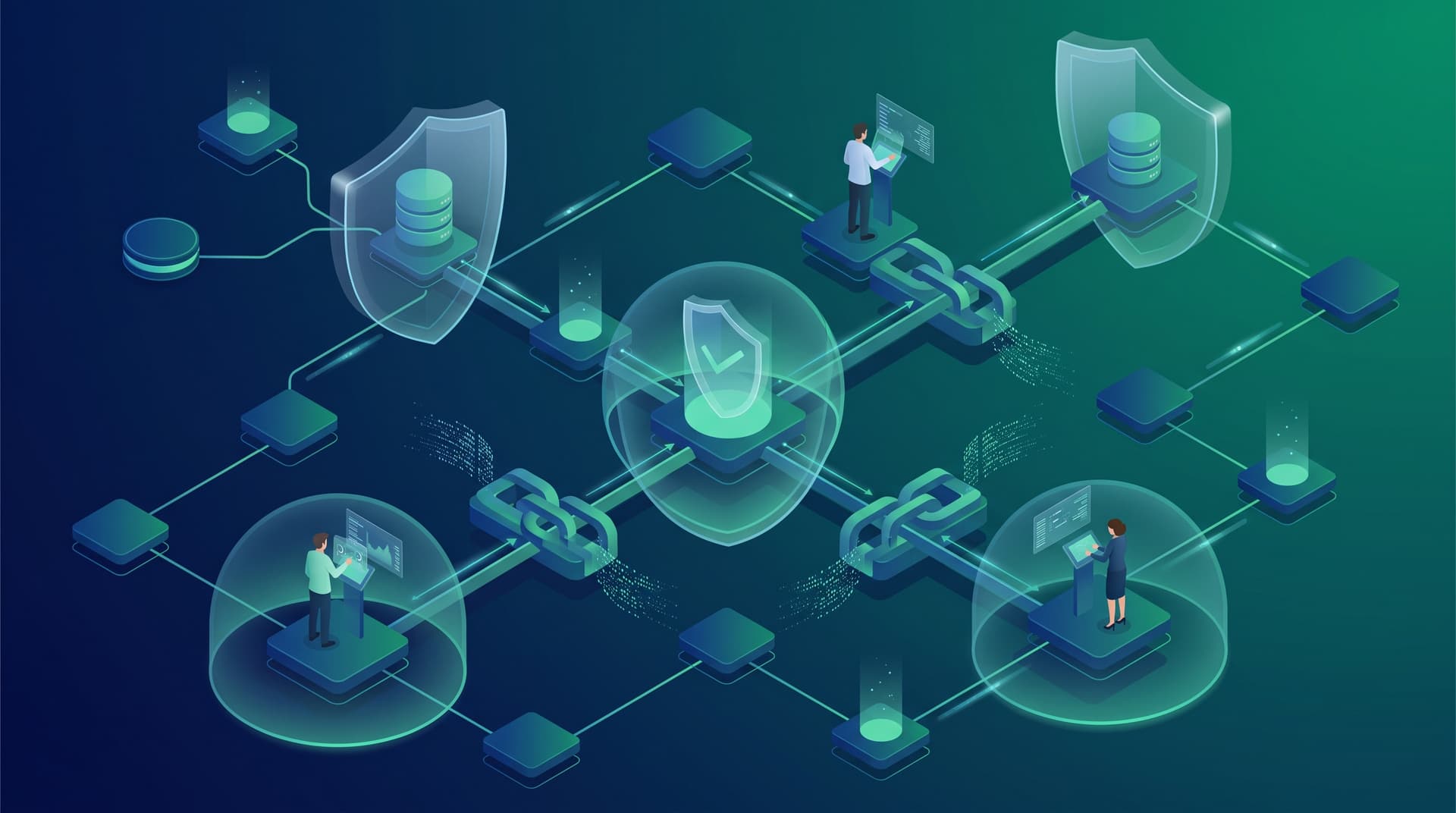
- Tenant Isolation: In multi-tenant environments, workflow orchestration services must run inside isolated network perimeters, ensuring prompt context from Client A cannot bleed into inference calls for Client B.
2. Human-in-the-Loop (HITL) Approval Flows
Fully autonomous AI systems operating without supervision inevitably fail at the margins. Governed adoption relies on multi-tiered approval policies that match task confidence and impact levels.
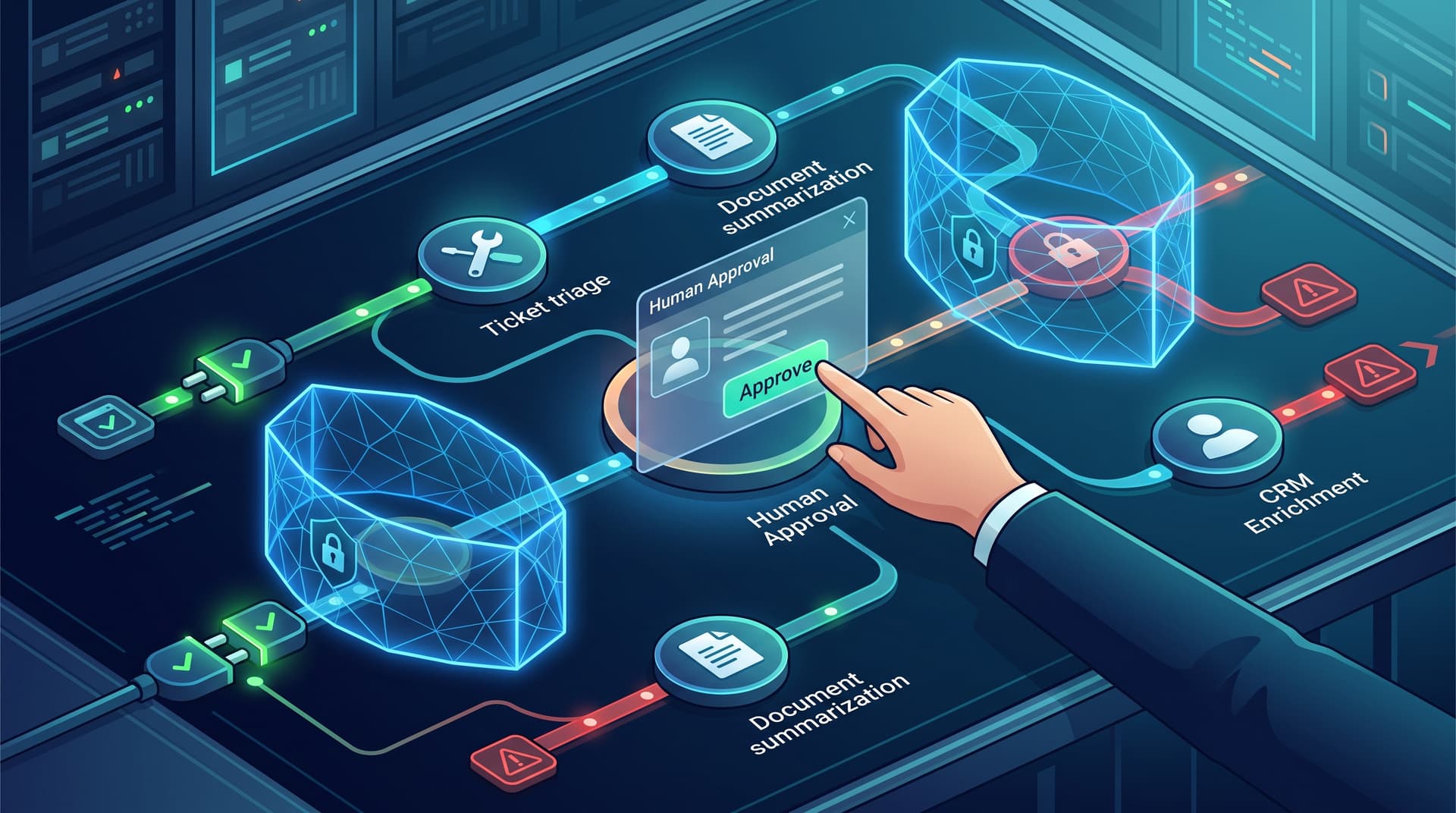
High-risk actions—such as modifying firewall rules, updating billing contacts, or executing external system scripts—must require explicit human sign-off via interactive messaging prompts or ticket approvals before execution. Low-risk, high-confidence actions can proceed automatically, provided they carry deterministic rollback mechanisms.
3. Immutable Logging, Telemetry, and Auditability
If a model generates a hallucinated instruction or flags a benign ticket as critical, security and compliance teams must be able to trace every step of the decision tree.
Governed workflow architectures maintain central audit trails that store:
- The exact system prompt version and user input parameter.
- Sanitized model request and response payloads.
- Model versioning metadata, token consumption, and latency metrics.
- Human approval timestamps, approver identity, and execution outcome status.
This level of record-keeping ensures compliance with regulatory standards such as SOC 2, HIPAA, and ISO 27001 while giving engineering teams the diagnostic data needed to refine system prompts.
4. Connector Security and Scoped Privileges
AI agent connectors should never run with superuser credentials or unrestricted database access. Governed architectures apply the principle of least privilege to model tools and function calls.
Connectors to core operational platforms must utilize granular OAuth scopes and restricted service accounts. If an AI workflow only needs to read ticket descriptions, its connector token must be strictly restricted from updating, deleting, or exporting database tables.
Takeaway: Speed without structure creates operational liabilities. Governed AI workflow integration establishes security perimeters, deterministic logging, and approval gates at every integration point.
3 High-Impact MSP Use Cases (And Their Real-World Risks)
MSPs and IT departments frequently ask for AI integration across three specific operational areas. While these workflows deliver measurable productivity gains, each presents specific risks that require tailored governance.
| Use Case | Core Operational Benefit | Key Vulnerability / Risk | Mitigation Strategy |
|---|---|---|---|
| 1. Ticket Triage & Routing | Reduces initial response time and categorizes inbound issues instantly. | Misclassification & PII exposure in ticket notes. | Automated regex/NER masking + low-confidence escalation fallback. |
| 2. Document Summarization | Accelerates review of lengthy technical reports and vendor contracts. | Hallucination of binding terms and missed critical clauses. | Dual-pass verification against source text + required human review. |
| 3. CRM Contact Enrichment | Fills missing firmographic data and categorizes client leads automatically. | Silent data overwrite & unverified third-party scraping. | Staging fields for proposed edits + admin approval thresholds. |
Use Case 1: Automated Ticket Triage and Prioritization
Inbound help desk queues are often clogged with ambiguous titles like "System Down" or "Need Help." AI-driven triage workflows read incoming ticket bodies, assign appropriate categories, estimate impact, and assign priority tags.
The Operational Risk
- PII & Credential Leaks: End-users regularly paste passwords, credit card numbers, or sensitive HR issues directly into ticket bodies. Sending unmasked ticket data directly to external LLM APIs breaches data privacy mandates.
- Misclassification Escalation: An uncalibrated model might incorrectly down-prioritize a critical ransomware alert as a standard desktop support request, delaying emergency response protocols.
The Governed Workflow Design
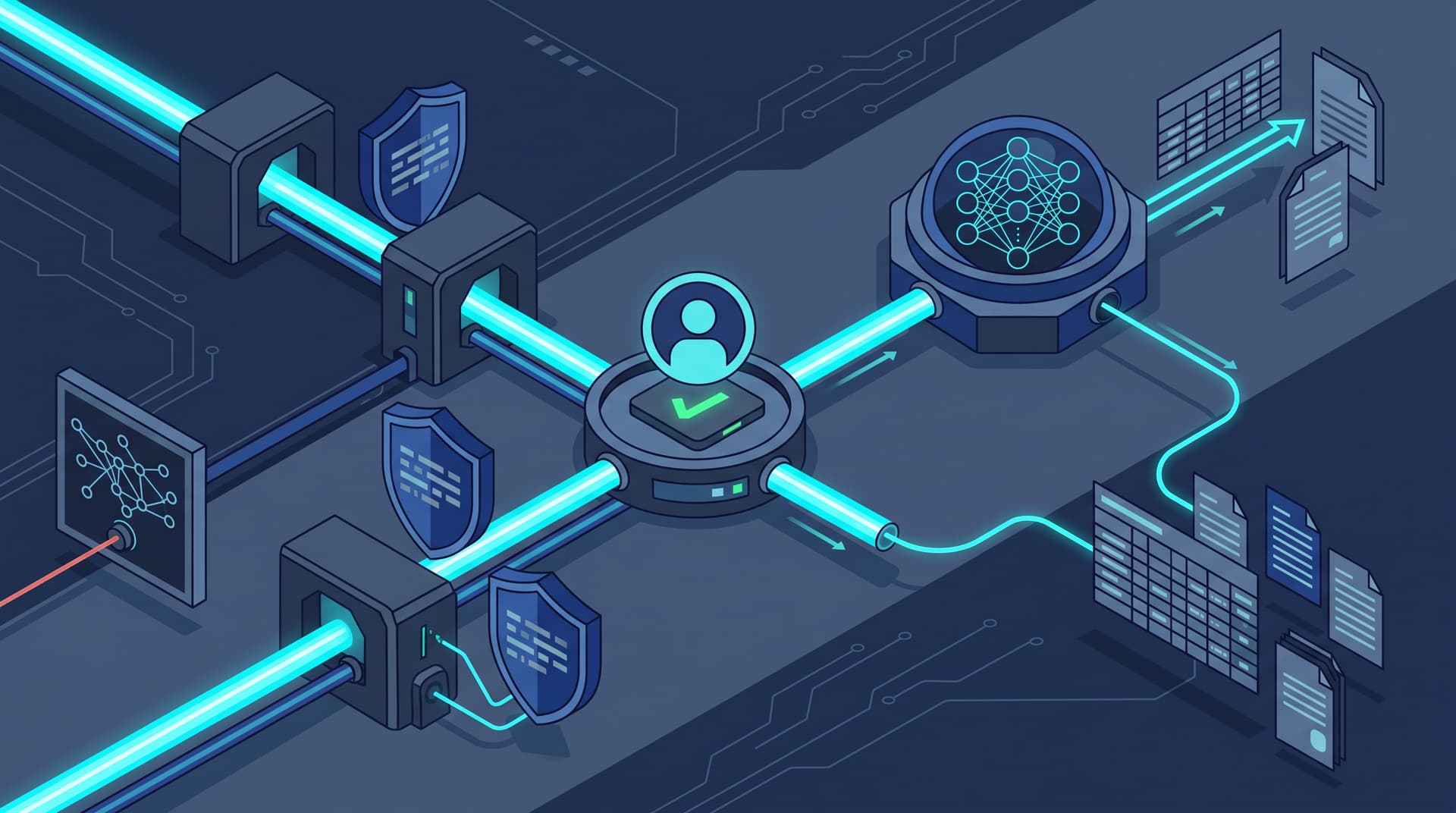
- Ingest & Sanitize: An inbound webhook fires from the service desk to an internal orchestrator. Named Entity Recognition (NER) models mask sensitive values locally.
- Deterministic Context Augmentation: The orchestrator attaches client SLA metadata and historical asset tags without sending raw database tables.
- Structured Classification: The LLM returns JSON formatted outputs specifying category, suggested priority, and a confidence score between 0.00 and 1.00.
- Threshold Routing: If confidence is higher than 0.85, the workflow updates the ticket automatically. If below 0.85, it routes to a human dispatcher with suggested tags pre-populated.
Use Case 2: Technical Document and Contract Summarization
Engineers and executive advisors routinely process multi-page network assessment audits, SOC 2 reports, and vendor contracts. AI summarization condenses complex documents into structured executive summaries in seconds.
The Operational Risk
- Model Hallucination: Generative models can confidently invent compliance certificates, misquote service level agreements (SLAs), or overlook critical liability exclusion clauses.
- Intellectual Property Exposure: Uploading confidential client network diagrams or vendor agreements into unvetted SaaS tools risks exposing sensitive structural topology.
The Governed Workflow Design
- Isolated Processing Pipeline: Documents are ingested through safe document parsing engines inside enterprise perimeter networks.
- Context-Constrained Prompting (RAG): System prompts restrict the model to answer only using explicitly provided document snippets, instructing it to return "Information Not Present" when uncertain rather than guessing.
- Citation Anchoring: The output workflow generates clickable anchors back to exact page and paragraph numbers in the original document, allowing human reviewers to verify every summary point in seconds.
Use Case 3: CRM Contact and Account Enrichment
Keeping account data accurate across management platforms requires continuous updates. AI workflows can parse public business registers, press releases, and email threads to populate account records with industry verticals, headcount ranges, and primary contact titles.
The Operational Risk
- Destructive Overwrites: An autonomous agent might overwrite verified, human-entered phone numbers or billing addresses with outdated or hallucinated data scraped from web directories.
- Uncontrolled External API Egress: Poorly governed enrichment agents can trigger uncontrolled third-party API queries, incurring massive usage costs or triggering rate limits across partner services.
The Governed Workflow Design
- Staging Buffer Pattern: Enriched attributes are written to a temporary "Proposed Changes" custom object in the CRM rather than directly updating production fields.
- Change Delta Auditing: The system highlights proposed updates against existing values and calculates a delta score.
- Batch Approval Interface: Account managers receive a periodic digest to approve or reject proposed enrichment updates with a single click, preventing automated data corruption.
A Phased Framework for Safe AI Rollout
Transitioning from experimental prompts to enterprise-grade AI automation requires a phased deployment strategy. Rather than turning on autonomous capabilities all at once, organizations should follow a structured progression:
-
Phase 1: Shadow Operations (Read-Only) Run AI workflows in parallel with existing human processes. The model generates predictions, categories, and summaries in a staging environment, but executes no actions. Compare model predictions against human decisions to measure baseline accuracy and establish confidence thresholds.
-
Phase 2: Guided Execution (Human-in-the-Loop) Enable the workflow to generate ready-to-execute drafts, tags, and suggested responses directly inside technician interfaces. Humans must review and explicitly click "Approve" before any database state change or external communication occurs.
-
Phase 3: Governed Autonomy with Strict Error Budgets Grant full automation rights only to highly repetitive, low-risk tasks that exceed predefined confidence scores. Maintain continuous error budgeting—if hallucination rates or low-confidence fallbacks exceed 2% over a rolling 30-day window, the system automatically reverts the workflow to Phase 2 for recalibration.
Next Steps for Secure Enterprise AI Integration
AI automation holds immense potential to reduce manual ticket fatigue, accelerate sales pipelines, and deliver faster service to clients. However, long-term ROI is achieved only when innovation is paired with rigorous operational guardrails.
By enforcing zero-data retention boundaries, designing human-in-the-loop controls, maintaining complete execution logs, and securing API connectors, organizations can harness the speed of AI while eliminating shadow IT exposure.
Bitscaled works with MSPs and enterprise technology teams to architect custom AI workflows, deploy secure middleware pipelines, and implement production guardrails. To learn how we can help your team launch governed AI pilots with measurable ROI, explore our AI Development Services, evaluate your environment on our Platform Overview, or Schedule a Strategy Call with Bitscaled.