Beyond Alert Fatigue: Building a Layered Defense Strategy with MDR
For small and mid-sized businesses (SMBs), cybersecurity strategy can no longer rely on a single firewall or antivirus tool. As threat actors refine automated phishing, identity theft, and living-off-the-land attacks, organizations need a cohesive, layered defense model.
However, implementing security software often creates a secondary challenge: notification overload. Without active detection and human analysis, security tools simply generate noise. Here is how SMBs can structure a resilient layered defense and determine when Managed Detection and Response (MDR) is essential.
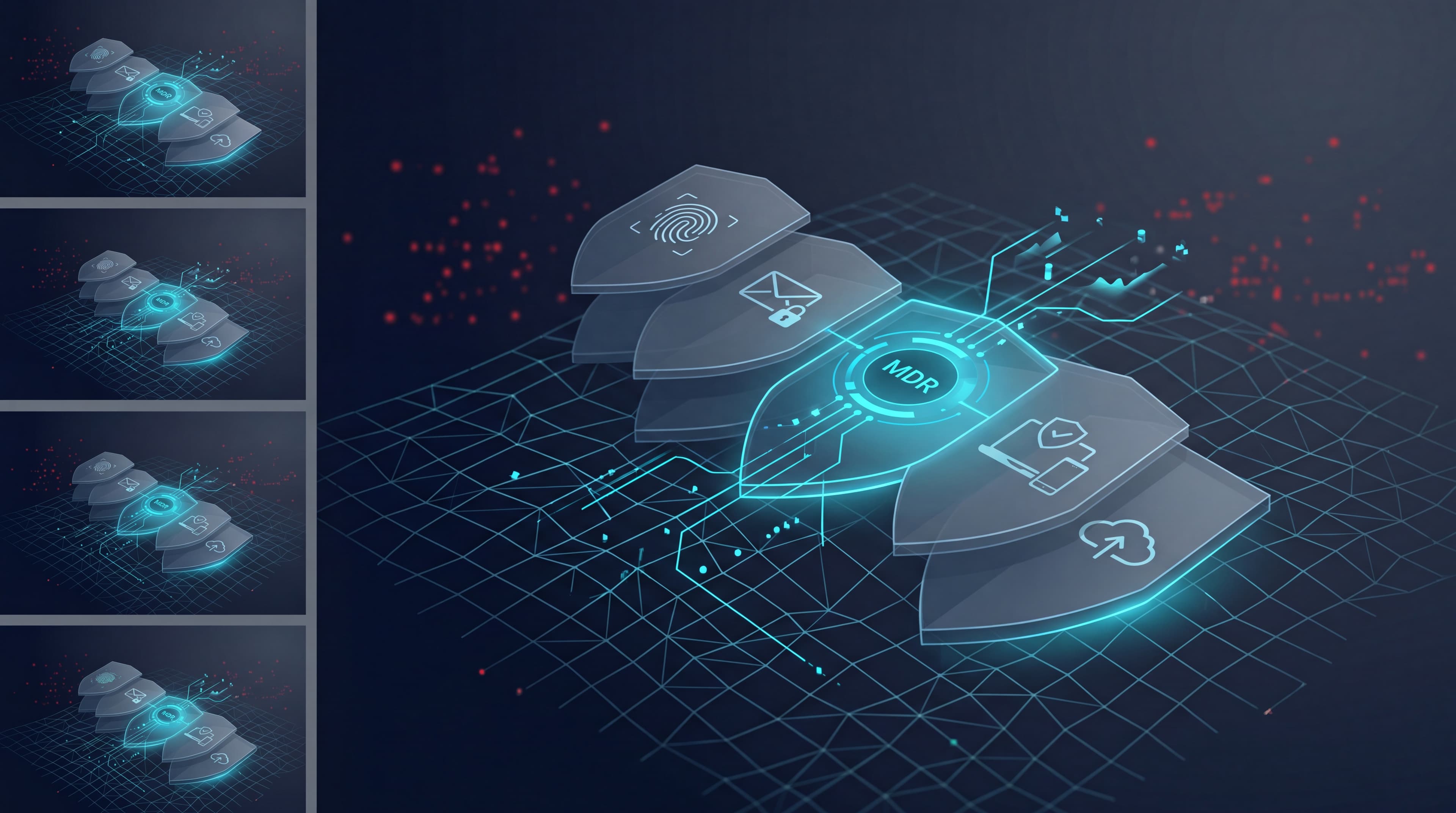
The Five Essential Layers of SMB Security
A modern defense-in-depth framework assumes that no single security control is foolproof. If one layer fails, subsequent layers must slow down or isolate the adversary.
- Identity & Access Management (IAM): Enforce strict Multi-Factor Authentication (MFA), role-based access control, and continuous identity verification. Identity is the new perimeter.
- Email Security: Implement advanced threat protection with automated phishing detection, sandboxing, and DKIM/DMARC alignment to block vector entry.
- Endpoint Protection (EDR): Deploy Endpoint Detection and Response tools that monitor process behavior, script execution, and memory manipulation rather than relying purely on file signatures.
- Immutable Backup & Recovery: Maintain isolated, encrypted, and immutable backups to ensure business continuity in the event of ransomware encryption.
- Human Response & Vigilance: Combine ongoing security awareness training with structured operational procedures to turn employees from targets into active telemetry sources.
Alert-Only Tooling vs. MDR: Knowing the Difference
Deploying EDR or SIEM software generates telemetry, but software alone only generates alerts, not responses.
- Alert-Only Tooling: Sends an email or dashboard notification when suspicious behavior is detected at 2:00 AM on a Sunday. If your internal IT team is off the clock or overloaded, that critical alert sits unaddressed for hours.
- Managed Detection and Response (MDR): Combines advanced threat hunting software with a 24/7 Security Operations Center (SOC). When a threat triggers an alert, human analysts immediately investigate, isolate affected endpoints, and actively contain the blast radius.
When is MDR Worth the Investment?
For SMBs operating under regulatory compliance frameworks (such as HIPAA, CMMC, or SOC 2) or those with limited in-house security teams, MDR bridges the operational gap. It delivers enterprise-grade 24/7 SOC capabilities without the massive overhead of hiring round-the-clock analysts.
Pragmatic First-Hour Incident Response (IR) Actions
When a potential breach occurs, the first 60 minutes determine whether an incident remains an isolated event or escalates into a public crisis. Follow this practical, FUD-free action plan:
- Isolate, Don't Power Down: Disconnect infected devices from Wi-Fi and Ethernet immediately. Avoid powering off machines, as volatile RAM memory holds critical forensic data.
- Preserve Audit & System Logs: Ensure domain controller logs, cloud directory logs, and network firewall events are secured to allow accurate root-cause investigation.
- Initiate Out-of-Band Communication: Shift internal response communications to an isolated channel (such as a secure external messaging app) in case internal email systems are compromised.
- Engage Your Security Operations Partner: Notify your MDR provider or Incident Response team immediately to begin forensic analysis and threat containment.
Take Control of Your Security Posture
Building a mature cybersecurity defense does not require an enterprise budget, but it does require clarity, integration, and round-the-clock vigilance.
Ready to eliminate security blind spots and evaluate your readiness?
Book a cybersecurity posture review with Bitscaled today to evaluate your layered defense and response capabilities.