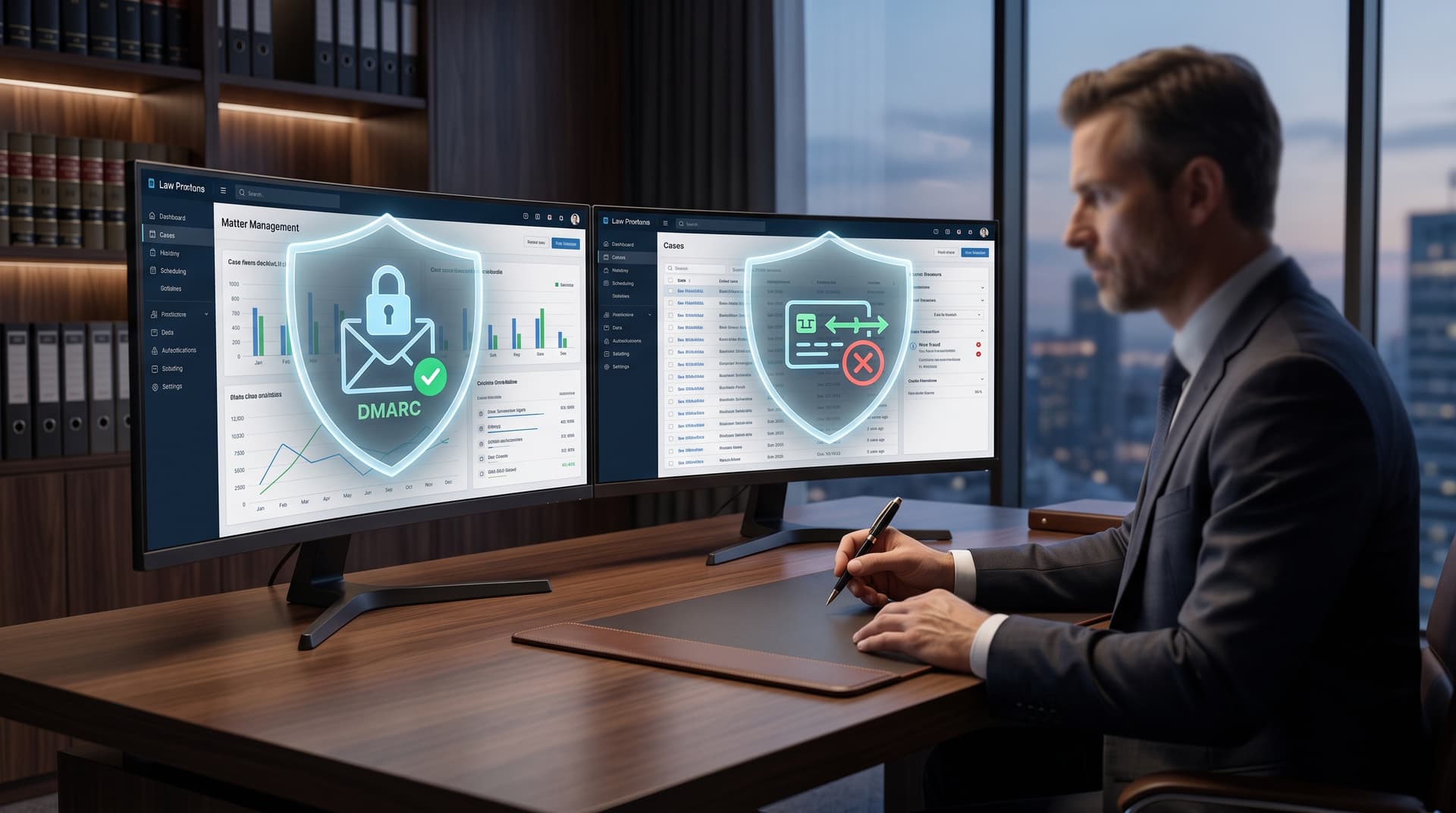
Legal Cybersecurity Frameworks: Preserving Confidentiality and Preventing Email Wire Fraud
In the legal sector, client trust is the core currency of practice management. A single security breach, misplaced document, or compromised email thread can lead to severe regulatory penalties, loss of reputation, and significant malpractice liability. As law firms adopt cloud collaboration tools and remote work environments, legal technology infrastructure must evolve beyond perimeter defenses to enforce granular confidentiality, email trust, and verified transaction workflows.
Modern Threat Landscapes Facing Legal Practices
Law firms process high-value confidential information, including proprietary trade secrets, pending M&A data, private financial records, and sensitive litigation strategy. Cybercriminals recognize that legal practices often act as central hubs for multi-party financial transactions and sensitive disclosures. Common threat vectors targeting law firms include:
- Business Email Compromise (BEC): Spoofing executive or partner emails to divert real estate transfers or escrow disbursements.
- Unauthorized Matter Sprawl: Permissive access rights that allow internal staff or contractors to view confidential client files across unrelated matters.
- Unencrypted Document Transfer: Sharing sensitive discovery files or contracts via standard email without access controls or audit logging.
Addressing these vulnerabilities requires a defense-in-depth posture tailored specifically to legal ethics rules and operational realities.
Granular Matter Data Isolation
Traditional file shares organized by department or general folders leave firms vulnerable to internal data leaks and ethical wall violations. Modern law firm IT architectures enforce matter-centric access controls.
Key Practices for Matter Isolation:
- Need-to-Know Access Controls: Restrict file directory and document management system (DMS) access strictly to assigned attorneys, paralegals, and support staff working on that specific matter.
- Automated Ethical Walls: Implement dynamic access governance policies that restrict personnel with conflicts of interest from viewing related case files or communications.
- Audit Trails and Access Logging: Log every view, edit, download, and external share event to maintain complete chain-of-custody documentation and compliance reporting.
Establishing Email Authenticity: DMARC, SPF, and DKIM
Email remains the primary vector for impersonation attacks and wire fraud schemes targeting law firms and their clients. Without robust domain authentication, malicious actors can easily fake sender headers to sound like trusted partners or accounting leads.
To eliminate domain spoofing, law firms must implement a triad of email security protocols:
- SPF (Sender Policy Framework): Specifies which mail servers are authorized to send email on behalf of your firm's domain.
- DKIM (DomainKeys Identified Mail): Attaches a cryptographic signature to outgoing messages, ensuring the email content has not been tampered with in transit.
- DMARC (Domain-based Message Authentication, Reporting, and Conformance): Enforces policies on how receiving servers handle unauthenticated emails (e.g., rejecting or quarantining spoofed messages) while providing continuous reporting on domain abuse.
Moving DMARC policy from p=none to full enforcement (p=reject) stops attackers from impersonating your firm's domain to trick clients or financial institutions.
Secure File Sharing and Wire-Fraud Prevention Workflows
Email attachments lack encryption and centralized access revocation. Standard email should never be used to transmit wire instructions or highly sensitive client documents.
Implementing Hardened Transaction Protocols:
- Client Portals for Secure Transfer: Use end-to-end encrypted client portals with multi-factor authentication (MFA) for sharing sensitive closing binders, financial statements, and litigation files.
- Out-of-Band Wire Verification: Mandate dual-factor, out-of-band phone calls using known, independently verified phone numbers before executing any wire transfer or changing bank details.
- Time-Limited Links and DRM: Apply digital rights management (DRM) policies to external shares, revoking access after designated time limits or preventing unauthorized printing and downloading.
Safeguarding Client Trust and Reducing Malpractice Risk
Proactive legal technology management directly mitigates legal liability and malpractice risk. Insurance carriers increasingly scrutinize email authentication protocols, access management standards, and incident response readiness when evaluating cyber liability policies. Demonstrating continuous compliance and technical safeguards reassures clients and underwrites firm continuity.
Next Steps for Law Firm IT Leadership
- Audit existing domain security records and transition DMARC policies to full rejection mode.
- Review document management system permissions to enforce strict matter-level isolation.
- Replace insecure email attachments with encrypted client portals and verified wire confirmation procedures.
Harden email authentication and access controls with Bitscaled to safeguard your firm's reputation and protect client confidentiality.