Small and mid-sized businesses (SMBs) operate in an environment where modern cyber threats no longer target organizations based solely on enterprise scale. Automated exploit kits, credential stuffing, business email compromise (BEC), and supply chain vectors strike organizations of every size. Relying on a single perimeter defense—such as a legacy firewall or standalone antivirus software—leaves critical blind spots across identity, endpoints, and cloud workloads.
Building a resilient security posture requires a structured, multi-layered approach paired with clear operational workflows. For many growing organizations, managing this architecture raises a crucial decision: when is standalone alert tooling sufficient, and when does Managed Detection and Response (MDR) become a necessary investment?
At Bitscaled, our Cybersecurity Services help organizations design robust defense systems, streamline incident response, and reduce operational overhead. This guide outlines the five foundational layers of SMB security, evaluates alert-only tools against full MDR, and provides an actionable first-hour incident response playbook.
Section 1: The Five Foundational Layers of SMB Cybersecurity
A defense-in-depth architecture ensures that if an attacker bypasses one security control, additional mechanisms prevent lateral movement and data exfiltration. SMBs should structure their defense around five interconnected operational layers.
1. Identity Layer
Identity is the new primary security perimeter. Attackers frequently bypass traditional network controls by using compromised credentials or social engineering.
- Enforce Adaptive Multi-Factor Authentication (MFA): Require phishing-resistant MFA (such as FIDO2 security keys or authenticator apps with number matching) across all email, cloud services, and virtual private networks (VPNs).
- Implement Least Privilege Access: Restrict administrative privileges. Users should operate with standard user accounts, elevating access only through time-bound, audited privileges when required.
- Monitor Identity Anomalies: Continuously audit login behavior, flag impossible travel logins, and detect sudden changes in user behavior or tenant configurations.
2. Email & Communication Layer
Email remains the leading entry point for ransomware, credential theft, and financial fraud. Traditional spam filters often miss sophisticated text-based spear-phishing or compromised vendor accounts.
- Authenticate Mail Domains: Rigorously configure DMARC (Domain-based Message Authentication, Reporting, and Conformance), DKIM, and SPF protocols to prevent unauthorized domain spoofing. You can test your domain readiness using Bitscaled's Email Spoof Test.
- API-Integrated Threat Protection: Deploy cloud email security solutions that analyze message intent, links, and attachments inside inbox workflows using natural language processing.
- In-Box Reporting Tools: Provide employees with a single-click button to report suspicious emails directly to the IT or security operations team.
3. Endpoint Layer
Endpoints—including laptops, workstations, and cloud servers—are primary targets for post-exploitation activities.
- Deploy Endpoint Detection and Response (EDR): Move beyond signature-based antivirus. Modern EDR tools record behavioral telemetry, flag process injection, detect memory manipulation, and enable remote host isolation.
- Automated Patch Management: Enforce strict patching schedules for operating systems and third-party software, prioritizing critical vulnerabilities within 14 days of discovery.
- Device Hardening: Disable unnecessary protocols (such as legacy SMBv1 or PowerShell execution for standard users) and enforce full-disk encryption across all mobile endpoints.
4. Backup & Data Resilience Layer
When technical controls fail, robust data backups serve as the ultimate insurance policy against destructive ransomware and data wiping attempts.
- Apply the 3-2-1-1-0 Rule: Maintain three copies of critical data across two different media types, with one copy offsite, one immutable or air-gapped copy, and zero unverified restore tests.
- Enforce Immutable Snapshots: Ensure backup repositories use write-once-read-many (WORM) storage controls so that compromised admin accounts cannot delete backup archives.
- Structured Data Recovery: Align backup workflows with business continuity mandates. Learn more about architecting resilient recovery systems through Bitscaled's Backup & Business Continuity guidelines.
5. Human Response Layer
Technology alone cannot defend an organization if staff members lack operational security awareness and clear escalation paths.
- Role-Based Training: Deliver contextual training tailored to high-risk roles, such as finance personnel handling wire transfers or executive assistants processing external requests.
- No-Blame Reporting Culture: Encourage immediate reporting of accidental clicks or credential entries without fear of punitive action. Early disclosure drastically reduces containment time.
- Regular Tabletop Exercises: Conduct bi-annual scenario walk-throughs with leadership, IT staff, and legal teams to test incident management playbooks.
Takeaway: A balanced cybersecurity posture does not rely on a single expensive tool. It integrates identity controls, email filtering, endpoint telemetry, immutable backups, and informed human decisions into an interconnected defense system.
Section 2: Evaluating Alert-Only Tooling vs. Managed Detection and Response (MDR)
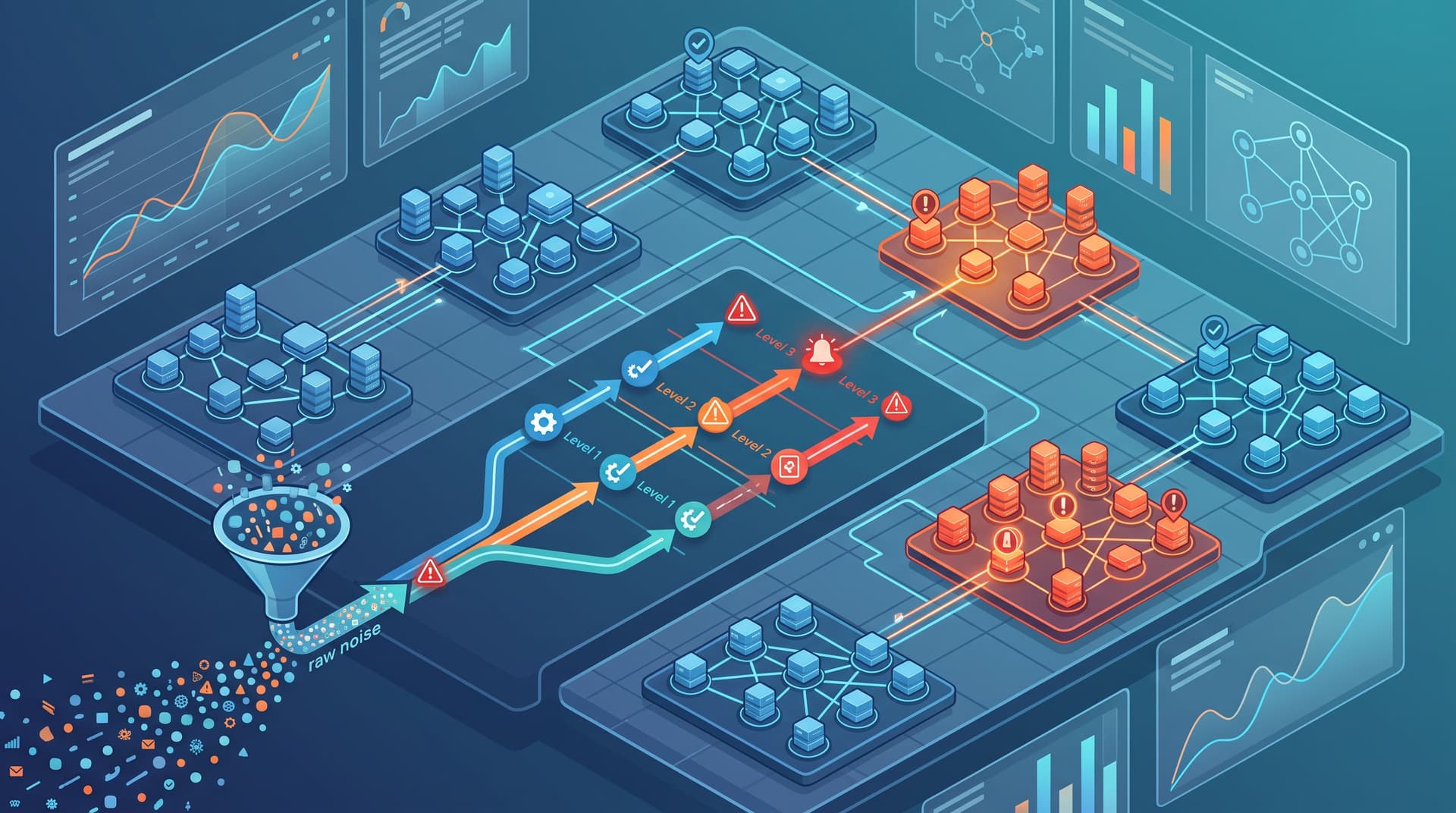
As IT teams deploy advanced tools like EDR and cloud security posture managers, they often face a common operational hurdle: alert fatigue. Every security tool generates telemetry, but turning raw alerts into actionable containment requires continuous human monitoring and expertise.
Understanding the Difference
- Alert-Only Tooling (e.g., Standalone EDR/SIEM): Software generates real-time notifications when anomalous activity occurs. The burden of reviewing logs, investigating false positives, determining scope, and performing remediation rests entirely on the internal IT team.
- Managed Detection and Response (MDR): Combines advanced threat detection software with a dedicated 24/7/365 Security Operations Center (SOC). MDR analysts proactively hunt for hidden threats, validate alerts, eliminate noise, and execute direct containment actions (such as isolating an infected host) on your behalf.
| Operational Capability | Standalone Alert Tooling | Managed Detection & Response (MDR) |
|---|---|---|
| Monitoring Window | Business hours (typically 8x5) | Continuous 24/7/365 SOC coverage |
| Alert Triage | Internal IT staff manually reviews | Human security analysts filter and validate |
| Mean Time to Detect (MTTD) | Hours to days (dependent on staff availability) | Minutes (automated + human analysis) |
| Active Containment | Requires internal manual intervention | Instant isolation by SOC via playbooks |
| Resource Impact | High burden on internal IT teams | Low operational footprint for internal staff |
When is MDR Worth the Investment?
Investing in MDR becomes compelling when specific organizational conditions and operational realities arise:
- After-Hours Vulnerability: Ransomware groups frequently execute attacks during nights, weekends, and holidays when internal IT staff are off-duty. If an alert triggers at 2:00 AM on a Sunday, an alert-only system will wait until Monday morning, whereas MDR acts within minutes.
- Lean Internal IT Teams: IT generalists are responsible for uptime, help desk, infrastructure, and user onboarding. Expecting generalists to perform deep forensic analysis or threat hunting leads to burnout and missed threats.
- Compliance and Insurance Requirements: Cyber insurance underwriters and regulatory frameworks (such as HIPAA, CMMC, or PCI-DSS) increasingly require documented 24/7 monitoring, rapid containment SLAs, and verified EDR/MDR deployment.
Section 3: First-Hour Incident Response Playbook
When a potential breach or ransomware outbreak is detected, the actions taken during the first 60 minutes determine whether the event is a minor disruption or a catastrophic breach. Organizations should execute a calm, methodical response without relying on vendor fear, uncertainty, and doubt (FUD).
The First 60 Minutes: Step-by-Step Actions
Minute 0–15: Immediate Isolation and Triage
- Isolate Affected Systems: Instantly disconnect compromised endpoints from the local network and Wi-Fi using EDR management consoles or physical network cable disconnection. Do not power off or reboot the machine, as volatile RAM memory holds crucial forensic evidence.
- Verify Threat Scope: Determine if the alert represents an isolated malicious file execution or active lateral movement across active directory domain services.
Minute 15–30: Identity Containment
- Revoke Active Sessions: Immediately revoke active OAuth refresh tokens and terminate logged-in sessions for compromised user accounts across Microsoft 365, Google Workspace, and VPN portals.
- Reset Access Credentials: Enforce an immediate password reset for affected accounts and temporarily restrict administrative capabilities if a privileged account was involved.
Minute 30–45: Evidence Preservation & Log Securing
- Secure Audit Trails: Export and lock audit logs from firewalls, domain controllers, cloud identity providers, and email gateways to prevent attackers from overwriting command history.
- Document Action Timelines: Assign a recorder to keep a minute-by-minute log of all observed indicators of compromise (IOCs), isolated IP addresses, and containment actions taken.
Minute 45–60: Communication and Escalation
- Notify Core Escalation Team: Inform key internal stakeholders—including executive management, lead IT personnel, and legal counsel—using pre-established out-of-band communication channels (such as dedicated signal groups or separate phone calls).
- Engage External Incident Response: Contact your managed security provider or cyber insurance incident response hotline to initiate deeper forensic investigation and regulatory review if required.
Section 4: Operational Readiness and Security Posture
A successful cybersecurity strategy aligns technological layers, operational processes, and business requirements into a sustainable governance model.
Key Steps to Achieve Operational Readiness
- Audit External Exposure: Periodically scan public-facing assets to identify open ports, legacy protocol exposure, and unpatched web interfaces using tools like Bitscaled's External Footprint Scan.
- Test Backup Integrity: Conduct quarterly restoration tests to ensure backup archives can be restored within established Recovery Time Objectives (RTO) and Recovery Point Objectives (RPO).
- Validate Coverage SLAs: Ensure your MDR partner or internal team has explicit Service Level Agreements (SLAs) for triage time, active host isolation, and communication updates during critical events.
Structuring Your Security Roadmap with Bitscaled
Securing an SMB does not require enterprise-sized budgets, but it does require disciplined operational choices. By establishing clear defenses across identity, email, endpoint, backup, and human response, organizations significantly lower their risk profile and build true operational resilience.
When evaluating whether to add Managed Detection and Response to your defense layers, evaluate your team's internal capacity, after-hours coverage, and response speed demands.
Ready to evaluate your organization's security posture and eliminate operational blind spots? Book a cybersecurity posture review with Bitscaled today to build a pragmatic, resilient defense tailored to your business.