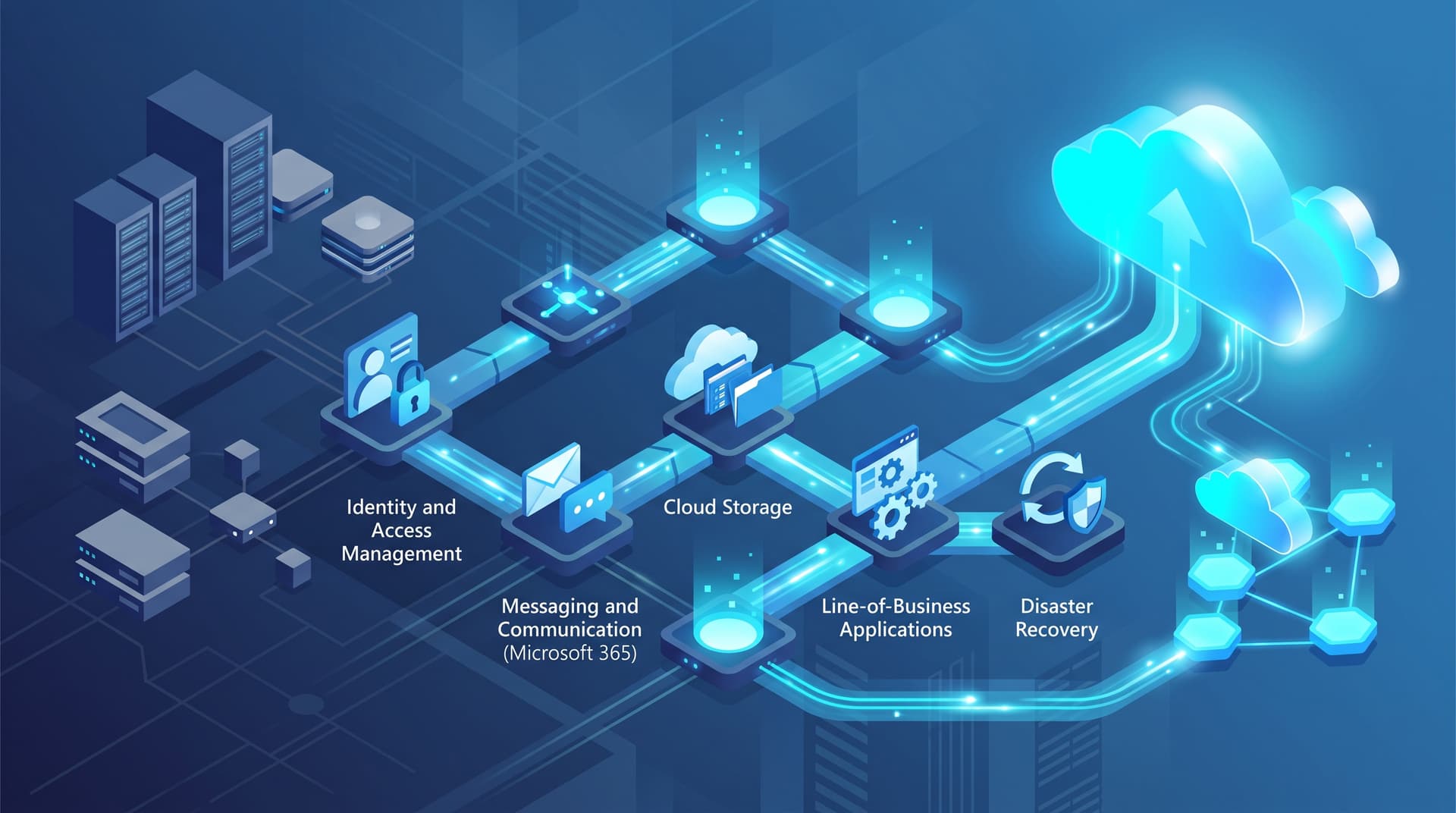
Navigating the Cloud: Azure and Multi-Cloud Strategies for Modern SMBs
Cloud computing has transitioned from a competitive advantage to a fundamental operational requirement. For small and medium-sized businesses (SMBs) in healthcare, manufacturing, and professional services, modernizing IT infrastructure is critical to maintaining agility, ensuring compliance, and supporting scalable growth. However, transitioning to cloud-native architectures requires careful planning and a robust security posture to maximize ROI and minimize risk.
Crafting a Tailored Cloud Migration Strategy
A successful transition to the cloud begins with a comprehensive assessment of your existing workloads. Rather than attempting a complete overnight overhaul, SMBs benefit most from a phased migration strategy. Begin by categorizing applications based on their criticality, resource usage, and strict compliance requirements. For healthcare providers managing electronic health records (EHR) or manufacturing firms operating resource-heavy ERPs, executing a staged lift-and-shift or selectively refactoring legacy applications minimizes operational disruption and ensures continuous service availability.
Maximizing Value with Azure and Microsoft 365
For many professional services and healthcare organizations, Microsoft Azure and Microsoft 365 provide an ideal unified ecosystem. Adopting Azure allows businesses to leverage enterprise-grade infrastructure without the prohibitive capital expenditure of on-premises hardware. Microsoft 365 complements this by streamlining team communication, document management, and remote collaboration. Furthermore, the built-in compliance manager in Azure simplifies adherence to strict regulatory standards, such as HIPAA for healthcare and SOC 2 for professional services, ensuring that data is handled according to industry best practices.
Embracing Hybrid and Multi-Cloud Architectures
Not all workloads belong exclusively in the public cloud. Manufacturing SMBs, for instance, often rely on industrial IoT devices and shop-floor automation systems that require ultra-low latency. A hybrid cloud approach enables these businesses to keep critical, latency-sensitive processes on-premises while utilizing the public cloud for scalable data analytics and backup operations. Additionally, adopting a multi-cloud management strategy allows organizations to distribute specific workloads across multiple providers, effectively mitigating vendor lock-in, optimizing operational costs, and increasing overall redundancy.
Securing the Cloud with a Zero Trust Framework
As cloud footprints expand, traditional perimeter-based security models are no longer sufficient. Implementing a Zero Trust framework is absolutely non-negotiable for modern cloud deployments. Zero Trust operates on the core principle of "never trust, always verify." By enforcing strict identity verification, multi-factor authentication (MFA), and least privilege access controls, SMBs can drastically reduce their attack surface. This methodology is especially vital when protecting sensitive patient data in healthcare or proprietary intellectual property in manufacturing across complex hybrid and multi-cloud environments. Zero Trust ensures that even if a network segment is compromised, lateral movement by threat actors is severely restricted.
Conclusion
Transitioning to a scalable, secure cloud environment empowers SMBs to innovate faster and operate more efficiently. Whether you are optimizing an existing Azure deployment, navigating a complex hybrid architecture, or implementing essential Zero Trust security measures, expert guidance ensures a seamless transformation.
Ready to elevate your IT infrastructure? Book a discovery call with Bitscaled today to build a cloud strategy tailored to your unique business needs.