Resilient Multi-System Orchestration: Designing Enterprise Workflows
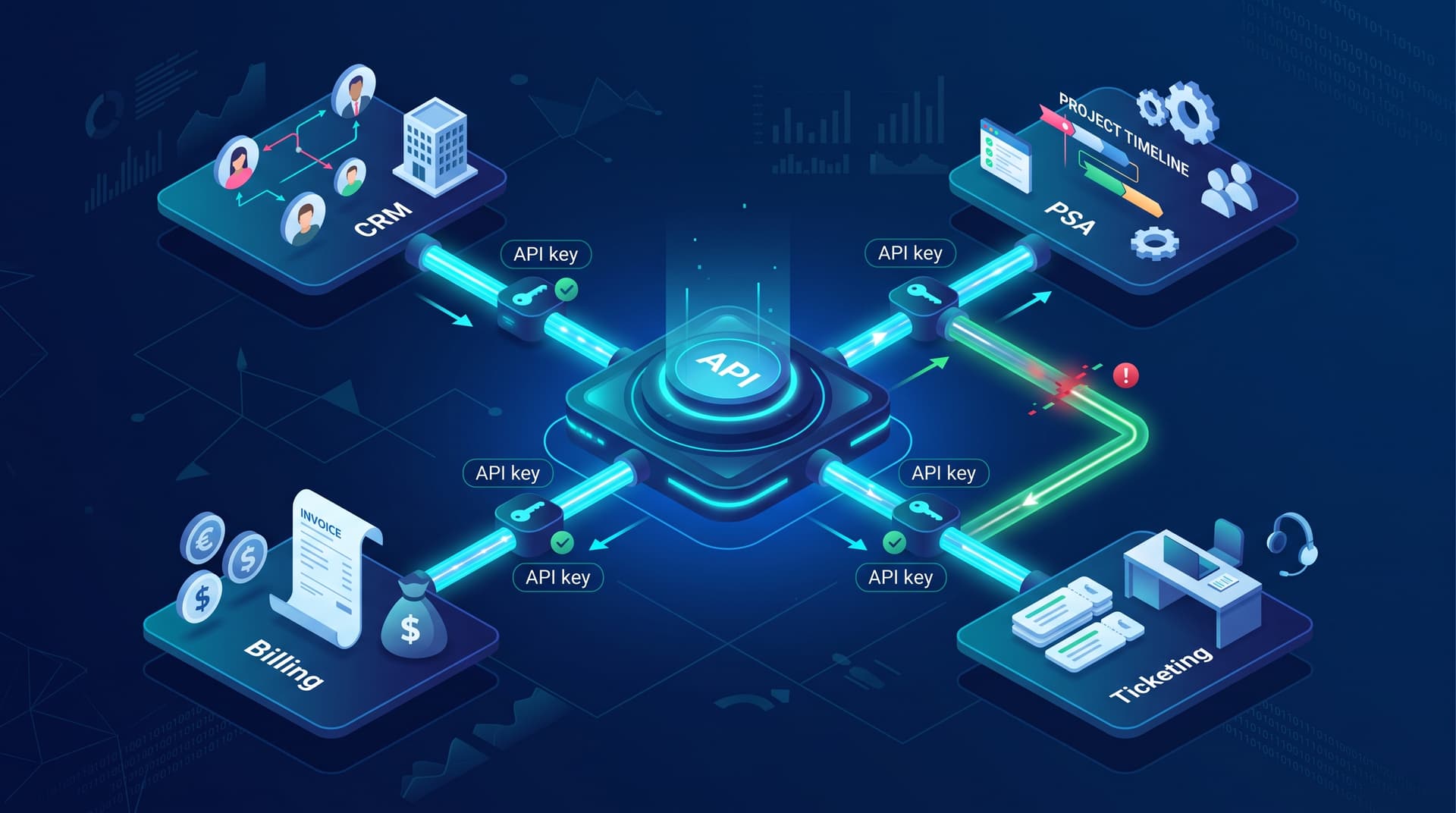
Modern operations rely on a web of specialized platforms—PSA systems, CRMs, ERPs, and billing engines. Connecting these systems requires more than simple point-to-point scripts; it demands enterprise-grade orchestration capable of handling distributed states and unexpected system outages.
API-Based Orchestration vs. UI Bots
While Robotic Process Automation (RPA) UI bots interact with visual interfaces, API-based orchestration communicates directly with underlying system backend protocols. UI bots are inherently fragile, prone to breakage whenever front-end layouts or CSS classes update.
In contrast, API-driven integration offers:
- Predictable Performance: Fast, structured JSON/REST payload exchanges.
- Transactional Integrity: Clear success and error codes (HTTP status responses) rather than visual scraping guesses.
- Maintainability: Stable versioned endpoints that insulate workflows from UI redesigns.
For core operations across PSA, CRM, and financial suites, API orchestration provides the foundation needed for mission-critical reliability.
Ensuring State Consistency with Idempotency
In distributed systems, network timeouts and transient errors are inevitable. Without proper design, retrying a failed step can cause duplicated records, such as duplicate invoices or double-provisioned user accounts.
Idempotency guarantees that executing an operation multiple times yields the exact same outcome as executing it once. Implementing idempotency key patterns and state validation ensures:
- Safe retry policies for dropped network connections.
- Strict deduplication across billing and ticketing events.
- Atomic execution across long-running onboarding pipelines.
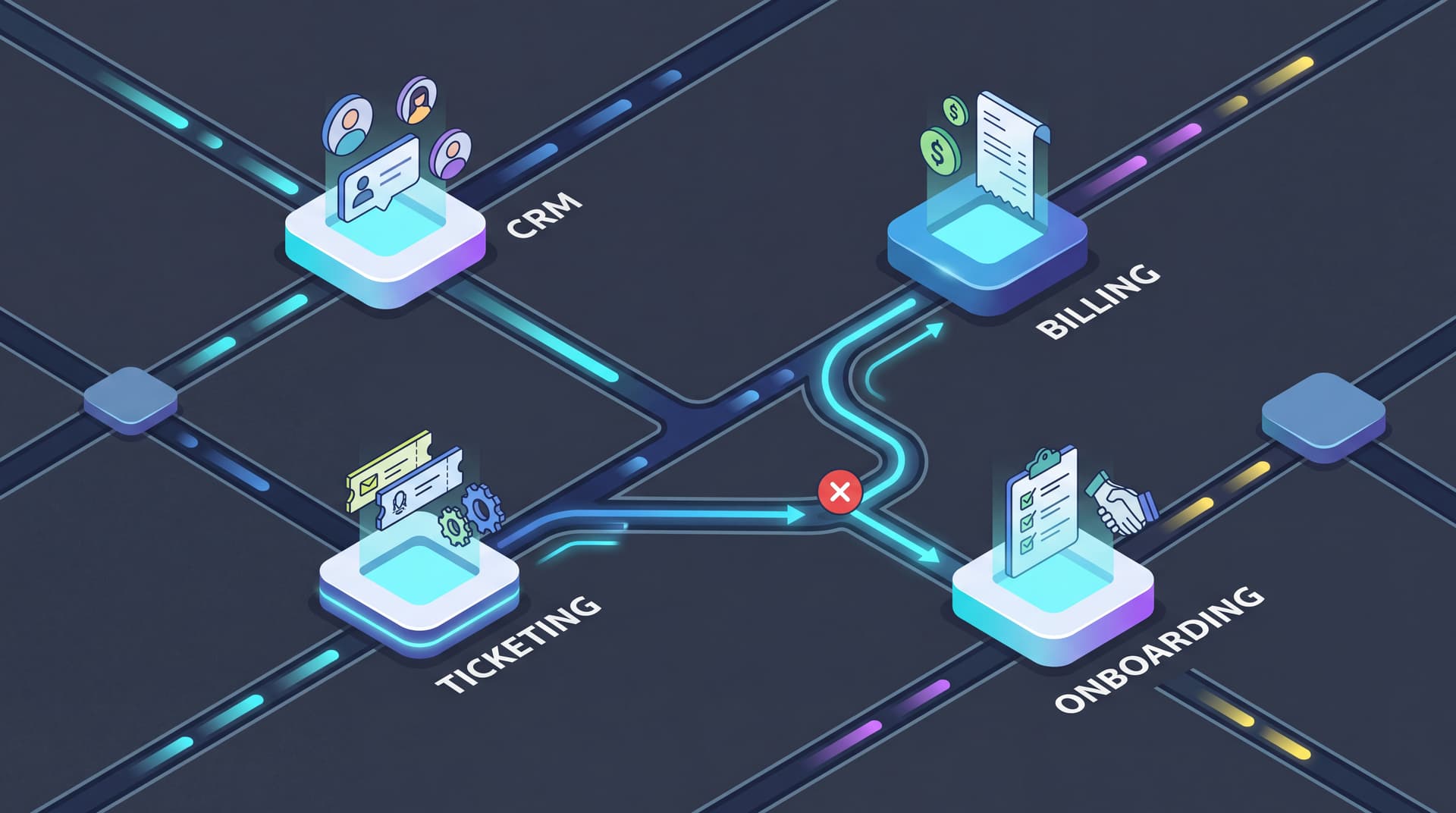
Real-World Cross-System Scenario: Ticketing, Billing, and Onboarding
Consider an enterprise onboarding pipeline triggering actions across multiple operational platforms:
- Client Onboarding Trigger: A CRM deal closes, triggering an automated pipeline.
- Ticketing System Provisioning: The pipeline creates a client workspace and project tracking board in the PSA/ticketing platform.
- Billing Platform Synchronization: An account is established in the billing suite, generating an initial recurring invoice using an idempotent transaction key.
- Access Provisioning: Security permissions and user accounts are created via identity APIs.
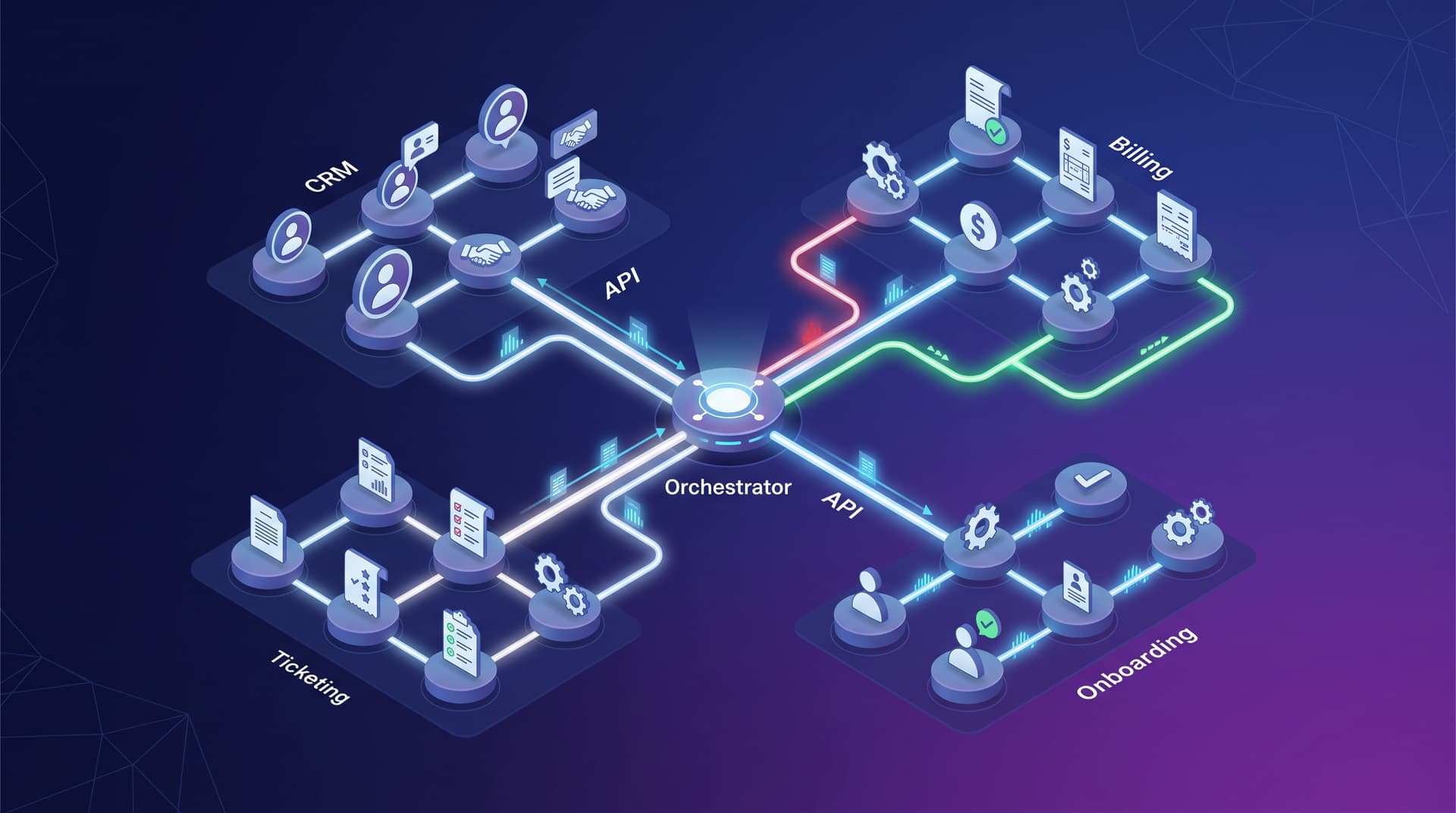
If the billing API experiences a temporary timeout, the orchestration layer checks state, logs the exact failure point, and retries safely without re-creating the ticketing board or duplicating client records.
Intelligent Failure Notifications and Recovery
Automation should fail gracefully. Rather than silently halting or swamping engineering teams with raw stack traces, robust workflow design includes contextual alert routing:
- Categorized Alerts: Differentiate between transient network glitches, schema validation errors, and authentication failures.
- Actionable Notification Payloads: Deliver actionable tickets or Slack messages containing payload data, retry links, and exact execution contexts.
- Human-in-the-Loop Recovery: Allow operators to approve manual overrides or re-trigger workflows from the point of failure.
Next Steps
Architecting seamless cross-system workflows transforms isolated software stacks into an agile operational engine.
Map your highest-friction workflows with Bitscaled automation architects.