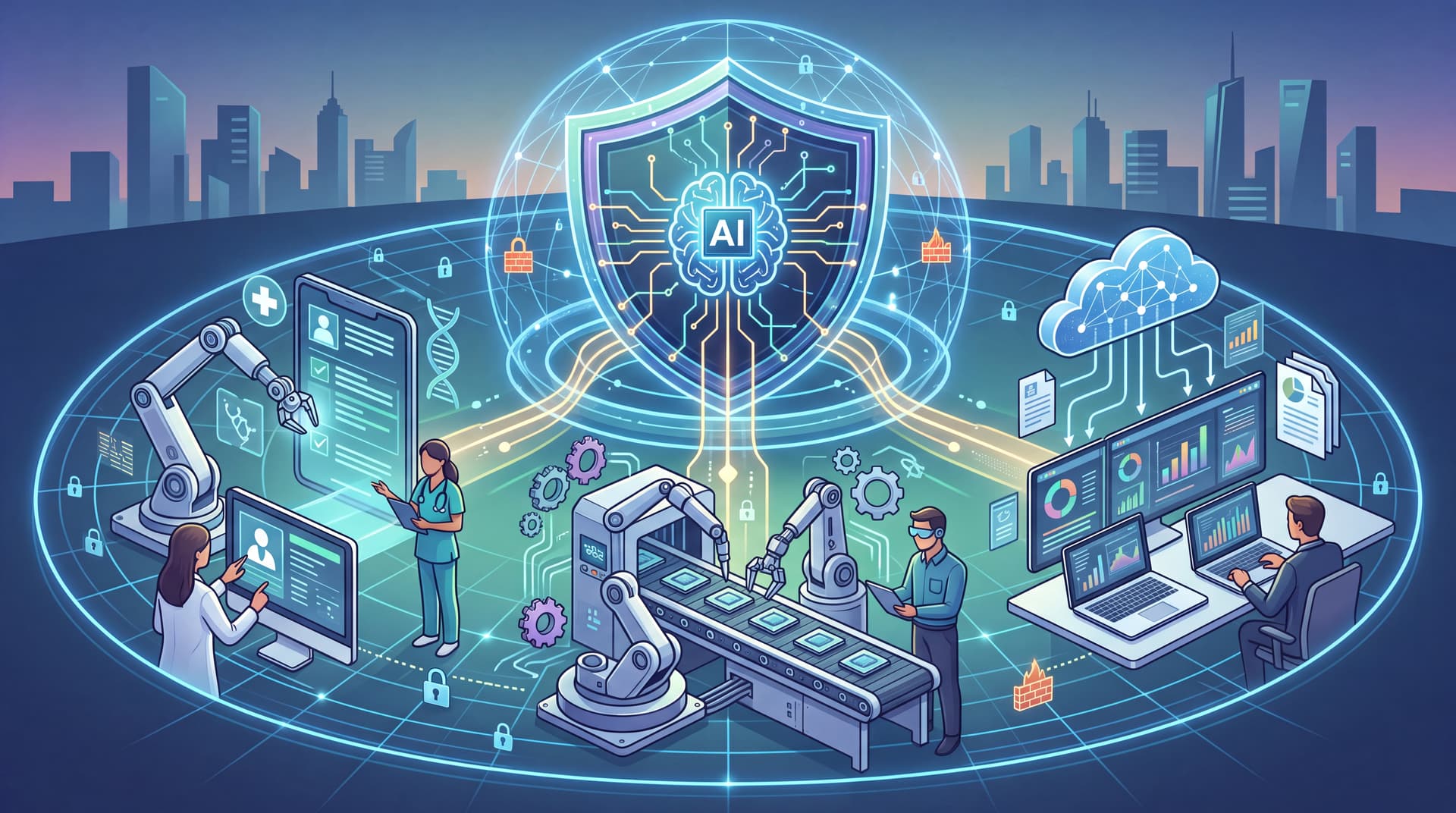
Securing the AI Advantage: Practical Automation Strategies for SMBs
Artificial intelligence and automation have evolved from experimental technologies into essential growth drivers for small and medium-sized businesses (SMBs). For organizations in healthcare, manufacturing, and professional services, intelligent process automation and machine learning offer unprecedented operational efficiency. However, deploying these capabilities requires a strategic approach that prioritizes data security and compliance from day one.
Transforming Healthcare with AI-Powered Workflows
In the healthcare sector, administrative burdens often detract from patient care. AI-driven workflow automation is changing this dynamic by streamlining patient onboarding, appointment scheduling, and claims processing. By implementing Intelligent Process Automation (IPA), clinics and medical practices can route patient inquiries to the right departments automatically and extract critical data from intake forms with high accuracy. This reduces human error and accelerates the revenue cycle while allowing medical professionals to focus on patient outcomes.
Machine Learning and RPA in Manufacturing
Manufacturing SMBs face constant pressure to optimize supply chains and maintain rigorous quality control. Robotic Process Automation (RPA) combined with machine learning is providing mid-market manufacturers with enterprise-level visibility. RPA bots can automatically sync inventory levels across disparate ERP and warehouse management systems in real-time. Meanwhile, machine learning models analyze historical production data to predict equipment maintenance needs, reducing costly unplanned downtime and minimizing waste.
Intelligent Process Automation for Professional Services
For law firms, accounting practices, and consulting agencies, time is literal money. Professional services firms are increasingly adopting AI-driven decision-making tools and document automation. Natural Language Processing (NLP) algorithms can rapidly parse lengthy contracts, financial statements, or compliance documents to flag anomalies or extract key clauses. This shifts the workforce's focus from tedious data entry to high-value advisory services.
Safeguarding Innovation: Zero Trust and Azure M365
The integration of AI and automation introduces new vectors for potential data exposure. Implementing these technologies safely requires a robust security framework. A Zero Trust architecture ensures that every user, device, and AI application is continuously verified before accessing sensitive company data.
By leveraging the security features embedded within Azure and Microsoft 365, SMBs can safely adopt AI tools. Features like Microsoft Purview Information Protection help classify and encrypt sensitive data—such as Protected Health Information (PHI) or proprietary manufacturing blueprints—ensuring that automated workflows do not inadvertently expose critical assets. Conditional access policies guarantee that RPA bots and AI integrations operate strictly within defined security boundaries.
Conclusion
Adopting AI and automation is no longer optional for SMBs looking to remain competitive, but it must be done securely. By aligning intelligent workflows with a Zero Trust security posture, businesses can unlock new efficiencies without compromising their critical data.
Ready to transform your operations with secure, AI-driven automation? Book a discovery call with Bitscaled today to explore how our tailored solutions can accelerate your business growth.